 15 citations
,
August 2015 in “Scanning”
15 citations
,
August 2015 in “Scanning” This study suggests that corkscrew hairs in tinea capitis result from internal hair damage by Trichophyton violaceum and external resistance from scalp scales.
 15 citations
,
July 2002 in “Clinical and Experimental Dermatology”
15 citations
,
July 2002 in “Clinical and Experimental Dermatology” This review discusses the role of hair microscopy in diagnosing alopecia, stating that while it excludes diagnoses related to hair breakage, it only confirms nonspecific short anagen in alopecia cases.
 3 citations
,
November 1999 in “Journal of Cutaneous Medicine and Surgery”
3 citations
,
November 1999 in “Journal of Cutaneous Medicine and Surgery” Examining scalp biopsies in different ways helps better diagnose hair loss types.
 1 citations
,
January 2017 in “International Journal of Dermoscopy”
1 citations
,
January 2017 in “International Journal of Dermoscopy” This article reviews the use of dermoscopy as a noninvasive tool for diagnosing various types of nonscarring alopecia but presents no new clinical findings.
 February 2026 in “Frontiers in Medicine”
 This study reported that trichoscopy can identify specific hair shaft abnormalities linked to increased serological activity, highlighting its use as a valuable non-invasive diagnostic tool in pediatric dermatology for neonates with ECS.
 September 1997 in “JEADV. Journal of the European Academy of Dermatology and Venereology/Journal of the European Academy of Dermatology and Venereology”
 Blocking IL-1 could help treat some hair loss conditions; alopecia affects liver detox systems; spironolactone is better than finasteride for female hair growth; focusing on the catagen hair phase could lead to new alopecia treatments.
 39 citations
,
April 2020 in “Clinical, Cosmetic and Investigational Dermatology”
39 citations
,
April 2020 in “Clinical, Cosmetic and Investigational Dermatology” This review discusses the unique characteristics and disorders of Asian hair, emphasizing the need for more comprehensive studies in this area.
 1 citations
,
October 2014
1 citations
,
October 2014 The document concludes that diagnosing and managing plaque psoriasis, particularly in sensitive areas, is challenging and requires careful differentiation from similar skin conditions.
 1 citations
,
June 2022 in “Zagazig Veterinary Journal/Zagazig Veterinary Journal (Online)”
1 citations
,
June 2022 in “Zagazig Veterinary Journal/Zagazig Veterinary Journal (Online)” This study found that mange was the most common cause of alopecia in dogs, with cases being more prevalent during the summer and among dogs less than one year old.
 1 citations
,
January 2013 in “Elsevier eBooks”
1 citations
,
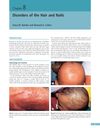
January 2013 in “Elsevier eBooks” The document reviews various hair and nail disorders, their causes, and treatments, emphasizing the need for proper diagnosis and the link between nail changes and systemic diseases.
 February 2014 in “Medicine - Programa De Formación Médica Continuada Acreditado”
 This paper reviews various types of scarring and non-scarring alopecia, including their etiology, diagnosis, and treatment, but it reports no new clinical results.
January 2026 in “Indian Journal of Paediatric Dermatology” This study found trichoscopy to be a quick and effective method for diagnosing and monitoring tinea capitis in children, with improvements in trichoscopic features observed by week 2 and full recoveries confirmed mycologically by week 8.
11 citations
,
January 2014 in “Open journal of veterinary medicine” In these clinical cases, topical propolis treatment effectively resolved canine dermatophytosis, including hair regrowth, with no known side effects, suggesting it as a promising natural treatment option.
2 citations
,
December 2019 in “Chinese medical journal/Chinese Medical Journal” This case report describes a rare instance of tinea capitis caused by Trichophyton tonsurans in a Chinese patient, followed by the development of herpes zoster, suggesting a potential link to immunosuppression.
3 citations
,
January 2021 in “Therapeutic advances in infectious disease” This report describes a 9-year-old girl with a scalp kerion treated successfully with terbinafine and ketoconazole shampoo, leading to hair regrowth after two months.
1 citations
,
November 2020 in “International journal of infectious diseases” This case report describes a 6-month-old girl in China who experienced complete remission of tinea capitis after 8 weeks of treatment with oral fluconazole and ketoconazole cream.
4 citations
,
January 2018 in “Indian dermatology online journal” This case report found that dermoscopy, showing characteristic "comma" and "corkscrew" hairs, effectively identified tinea capitis in a 7-year-old girl, allowing for early treatment before confirmation with fungal culture.
May 2024 in “Journal of Fungi” This review reports that tinea capitis is uncommon in adults, with postmenopausal African American or Black women at higher risk, and emphasizes the importance of prompt antifungal treatment to prevent complications.
3 citations
,
March 2023 in “ACTA SCIENTIAE VETERINARIAE” This case report describes how real-time PCR rapidly identified Trichophyton mentagrophytes in a dog's dermatophytosis when traditional mycological methods were slower.
1 citations
,
June 2018 in “Journal of General-Procedural Dermatology & Venereology Indonesia” This case study reports that combining skin debridement with topical and systemic antifungals improved treatment outcomes for kerion celsi in a 5-year-old boy, preventing scarring alopecia.
1 citations
,
January 2025 in “Journal of Fungi” This narrative review and case report identified a rare association between erythema nodosum and kerion caused by *Trichophyton mentagrophytes*, with successful treatment using antifungals and corticosteroids.
 July 2023 in “Journal of Clinical Medicine”
 This paper identifies challenges in diagnosing alopecia variants, emphasizing the importance of pathologists understanding hair follicle histology, biopsy types, and collaborating with dermatologists to improve diagnostic accuracy.
24 citations
,
August 2023 in “Journal of the American Academy of Dermatology” Trichoscopy helps diagnose and manage different types of hair loss effectively.
 73 citations
,
April 2019 in “Experimental Dermatology”
73 citations
,
April 2019 in “Experimental Dermatology” This review explores the hair follicle microbiome's interaction with the immune system, discussing its potential clinical implications for scalp health and disease but reports no new clinical results.
 42 citations
,
August 2013 in “International Journal of Women's Health”
42 citations
,
August 2013 in “International Journal of Women's Health” This review discusses the current therapeutic options for female pattern hair loss and emphasizes the need for managing patient expectations of permanent regrowth, reporting no new clinical results.
 January 2026 in “Indian Journal of Dermatopathology and Diagnostic Dermatology”
 This report highlights a case where dermoscopic observation of corkscrew hairs in a young woman led to the diagnosis of trichotillomania, emphasizing its role in distinguishing this psychiatric disorder from other forms of non-scarring alopecia and highlighting the importance of timely intervention.
 8 citations
,
January 2020 in “International Journal of Trichology”
8 citations
,
January 2020 in “International Journal of Trichology” The authors concluded that trichoscopy is a valuable noninvasive tool for diagnosing and monitoring nonscarring alopecia, aiding in the identification of new hair signs in difficult cases.
5 citations
,
February 2025 in “Journal of Clinical Medicine” This study introduced a non-invasive, three-step diagnostic algorithm for alopecia that combines clinical and trichoscopic features to accurately identify alopecia subtypes, potentially reducing reliance on invasive histopathology.
December 2023 in “JAAD Case Reports” In this study, a 55-year-old man with a localized patch of alopecia areata achieved hair regrowth through intralesional triamcinolone acetonide injections, demonstrating this treatment as an effective initial therapy for localized alopecia areata.
March 2022 in “Journal of Investigative Dermatology” In this study, Wang et al. (2022) found that in patients with cutaneous lupus erythematosus, chronic lesions contained more senescent progenitor cells, marked by p16 and p21, than subacute lesions, suggesting a link between disease chronicity and cellular senescence.