 April 2012 in “Journal of the American Academy of Dermatology”
 Dermoscopy can help diagnose tinea capitis in children by looking for comma hairs, black dots, and broken hairs with white bands.
This study found that prenatal exposure to finasteride in rats disrupted male reproductive development, causing physical alterations such as delayed preputial separation and increased nipple retention.
January 2012 in “Journal of Northwest A & F University” In this study, the researchers observed that Eda mRNA expression in goat skin peaks during the catagen phase of the hair cycle, suggesting its involvement in hair cycle regulation.
June 2009 in “Faculty Opinions – Post-Publication Peer Review of the Biomedical Literature” This study found that Lrig1-positive cells in mouse epidermis are a previously unidentified source of adult interfollicular epidermal stem cells, which can contribute to sebaceous gland and epidermal lineage formation.
January 2009 in “Epsilon: Revista de la Sociedad Andaluza de Educación Matemática "Thales"” This report describes a Cronkhite-Canada syndrome patient with severe sepsis and disseminated intravascular coagulation successfully treated using combined therapies, including recombinant human soluble thrombomodulin.
 January 2006 in “Yearbook of Dermatology and Dermatologic Surgery”
 Hair graying is caused by the loss of pigment cells due to poor maintenance of stem cells in the hair follicle.
January 2005 in “Doctoral thesis, University of London.” In this study using transgenic mice, activating P-catenin signaling induced new hair follicle formation and maintained follicle tumors, with implications for understanding skin homeostasis.
 June 1997 in “Australasian Journal of Dermatology”
 This article discusses hair and nail research contributions in dermatology but reports no new clinical findings.
 June 1995 in “International Journal of Gynecology & Obstetrics”
 This article discusses immunohistochemical analysis of estrogen and progesterone receptors in endometrium and peritoneal endometriosis, introducing a new quantitative method, but reports no new experimental results.
 January 1993 in “Side effects of drugs annual”
 This chapter covers various dermatological drugs, cosmetics, and topical agents, focusing on the properties and uses of propolis, but does not present new clinical findings.
 89 citations
,
September 2010 in “Annual Review of Genomics and Human Genetics”
89 citations
,
September 2010 in “Annual Review of Genomics and Human Genetics” This review discusses the genetic factors involved in hair follicle morphogenesis and cycling and reports no new clinical results; it emphasizes the role of genes in hereditary hair diseases.
39 citations
,
March 2022 in “Nature Protocols” This study describes a protocol for generating hair-bearing skin organoids from human pluripotent stem cells, achieving full complexity resembling fetal skin tissue by day 130 in vitro.
25 citations
,
May 2019 in “Biologics” In this case report, a 28-year-old woman developed a rash on her face and neck after receiving a dupilumab injection for atopic dermatitis.
18 citations
,
June 2014 in “Anais Brasileiros de Dermatologia” This case report describes a patient with Clouston Syndrome who developed eccrine syringofibroadenoma, marking only the fourth such association documented in existing literature.
 16 citations
,
January 2005 in “The International Journal of Developmental Biology”
16 citations
,
January 2005 in “The International Journal of Developmental Biology” This study found that Hex gene expression patterns in chick embryo dorsal skin during feather bud development suggest a significant role in initiating feather morphogenesis.
14 citations
,
September 2001 in “Archives of Dermatological Research” This study reported that Sonic hedgehog signaling is crucial for hair follicle development, with its expression being significantly induced in normal embryonic hair germs but inhibited in certain experimental models.
6 citations
,
October 2022 in “Frontiers in Physiology” This review discusses the roles of store-operated Ca 2+ entry proteins in skin cell function and their links to various skin diseases, but it reports no new results.
2 citations
,
August 2020 in “CRC Press eBooks” This article discusses the impact of the tabby mutation on secondary vibrissae and hair follicle patterns in mice and reports no new clinical results.
 2 citations
,
January 2013 in “Elsevier eBooks”
2 citations
,
January 2013 in “Elsevier eBooks” The document explains the genetic causes and characteristics of inherited hair disorders.
 1 citations
,
February 2013 in “InTech eBooks”
1 citations
,
February 2013 in “InTech eBooks” Genetic mutations cause various hair diseases, and whole genome sequencing may reveal more about these conditions.
March 2026 in “Experimental Dermatology” This study developed an in vitro model using NTERT keratinocytes expressing AEC-related TP63 mutations, which replicated skin defects observed in AEC patients and offers a valuable tool for understanding the disorder and developing new treatments.

research Skin
August 2022 This review examines the structure and function of the skin in goats and the factors affecting fiber growth, particularly in cashmere and mohair-producing breeds, without presenting new research data.
December 2014 in “TDX (Tesis Doctorals en Xarxa)” This study suggests that while cellular senescence impairs epidermal stem cells in aging, it also serves an essential role during embryonic development, highlighting its dual functional nature.
 February 2010 in “Journal of the American Academy of Dermatology”
 This case report describes a 4-month-old boy with anhidrotic ectodermal dysplasia and immunodeficiency who showed minimal improvement with initial treatments but significant improvement after an umbilical cord blood transplantation.
 November 2003 in “Journal of Investigative Dermatology”
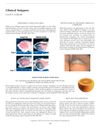
 This article includes summaries of multiple studies on dermatological topics like Imiquimod's effects on tumors, vitamin C absorption enhancement, and ferritin levels in hair loss, but reports no new results itself.
 109 citations
,
September 2011 in “Human molecular genetics online/Human molecular genetics”
109 citations
,
September 2011 in “Human molecular genetics online/Human molecular genetics” This review discusses keratin disorders and potential RNA interference therapeutics, reporting no new clinical findings but highlighting the promise of siRNA for future treatments.
86 citations
,
December 2002 in “Tissue Antigens” In this study, researchers found that the AIRE G961C variant is a significant risk factor for severe alopecia areata and early-onset cases, particularly in patients with alopecia universalis.
 25 citations
,
May 2013 in “Journal of mammary gland biology and neoplasia”
25 citations
,
May 2013 in “Journal of mammary gland biology and neoplasia” This review examines the roles of Hedgehog and Gli proteins in mouse embryonic mammary development and suggests that Gli3-repressor-mediated off-state of Hedgehog signaling determines mammary fate over hair follicle fate.
 18 citations
,
August 2015 in “Biochemical and Biophysical Research Communications”
18 citations
,
August 2015 in “Biochemical and Biophysical Research Communications” This study found that the XEDAR receptor can activate the non-canonical NF-kB pathway involving p100 processing, which is regulated by interactions with TRAF proteins and specific kinases.
10 citations
,
July 2001 in “PubMed” This case report describes two patients with a likely new type of pachyonychia, characterized by nail thickening and severe generalized hypotrichosis, possibly linked to a mutation in a hard keratin.