 January 2025 in “JCEM Case Reports”
 This report describes a 27-year-old patient with Ehler-Danlos syndrome who also presented with hypophosphatasia and mastocytosis, and suggests enzyme replacement therapy might alleviate symptoms in such overlapping genetic conditions.
 January 2021 in “Journal of Allergy and Therapy”
 This article reviews the phases of hair growth and differences between androgenetic alopecia and telogen effluvium but provides no new clinical findings on Electric Follicle Stimulation.
 8 citations
,
June 2022 in “Frontiers in bioengineering and biotechnology”
8 citations
,
June 2022 in “Frontiers in bioengineering and biotechnology” This study found that a collagen patch made with fibroblast-derived extracellular matrix (fdECM) extracted from human lung fibroblasts enhanced wound healing by promoting wound contraction, angiogenesis, and skin remodeling in full-thickness skin wound models, including those with diabetic ulcers.
5 citations
,
January 2018 in “Indian Journal of Dermatology/Indian journal of dermatology” This case report describes a 40-year-old woman who developed erythema annulare centrifugum, a type of skin rash, likely triggered by taking the drug aceclofenac.
11 citations
,
June 2010 in “Dermatologic surgery” This article contains information about journal subscriptions and does not report any research findings.
 September 2024 in “Frontiers in Veterinary Science”
 In this study, researchers observed that introducing an Environmental Enrichment Program improved the reproductive and zootechnical performance of Calomys callosus rodents by enhancing reproductive indices, parental care, and overall health, including reduced non-infectious lumbar alopecia.
 1 citations
,
December 2020 in “Journal of diabetes and endocrine practice”
1 citations
,
December 2020 in “Journal of diabetes and endocrine practice” I'm sorry, but I can't provide a summary without the content of the document.
6 citations
,
July 2021 in “Frontiers in Genetics” This study identified a new heterozygous missense variant in CST6 associated with autosomal dominant keratosis follicularis spinulosa decalvans in an Austrian family, affecting epidermal differentiation and hair formation.
January 2025 in “Open Veterinary Journal” This case series reports that electrochemotherapy with intravenous bleomycin effectively resolved cutaneous mast cell tumors in four cats, showing no tumor recurrence during follow-up, except for new lesions in one cat, and minimal local toxicity.
 31 citations
,
August 2005 in “The American Journal of Dermatopathology”
31 citations
,
August 2005 in “The American Journal of Dermatopathology” This study investigated the histopathology of ectodermal dysplasia/skin fragility syndrome, identifying specific skin and hair abnormalities associated with PKP1 gene mutations in two young female patients.
 20 citations
,
February 2019 in “Genes”
20 citations
,
February 2019 in “Genes” This study identifies a likely pathogenic homozygous missense variant in the AEBP1 gene in a patient with symptoms of classical Ehlers-Danlos syndrome, suggesting new perspectives for EDS classification and research.
 January 2025 in “Journal of Fungi”
 This case report highlights the importance of early mycological diagnostics, supported by dermoscopy and ultraviolet-enhanced fluorescence dermoscopy, in preventing scarring from kerion celsi-associated hair loss in children.
 1 citations
,
September 2025 in “International Journal of Drug Delivery Technology”
1 citations
,
September 2025 in “International Journal of Drug Delivery Technology” This randomized controlled study reported that combining Ecklonia cava with Diane-35 significantly improved weight, waist circumference, hormonal balance, and inflammation markers in women with polycystic ovary syndrome over three months compared to Diane-35 alone.
3 citations
,
October 2024 in “International Journal of Molecular Sciences” This study found that subthermal CRET treatment increased keratinocyte proliferation and modulated cytokine production, affecting the inflammatory response in human keratinocytes through EGFR and ERK1/2/NF-κB pathways.
83 citations
,
February 1991 in “Development” This study found that Fos protein expression is closely linked to epithelial cell differentiation, particularly during cornification and cell death, with overexpression observed in keratinization-blocked mutant epidermis.
22 citations
,
September 2014 in “JAMA dermatology” This study identified major criteria including ectodermal malformations for diagnosing ichthyosis with confetti, and revealed significant genetic variation in the disease locus within the general population.
 February 2025 in “Journal of the European Academy of Dermatology and Venereology”
 This study found that epidermal growth factor receptor inhibitors can induce erosive pustular dermatosis of the scalp, typically appearing sooner and affecting the scalp more extensively compared to other triggers.
 7 citations
,
July 2014 in “BMJ case reports”
7 citations
,
July 2014 in “BMJ case reports” This article reviews the rare skin disorder ichthyosis with confetti, highlighting the potential for future therapies using revertant stem cells, and reports no new clinical results.
19 citations
,
January 2012 in “Dermatology” This study describes three cases of acneiform eruptions from EGFR inhibitors that improved with topical recombinant human EGF, suggesting its potential as a treatment option for this side effect.
The researchers reported that human foreskin fibroblasts isolated by enzyme digestion method proliferated faster and were purified more quickly than those isolated by the inverted tissue culture method; additionally, post-psoralen photoactivation therapy moderately repaired UVB-induced damage in these fibroblasts, suggesting potential clinical applications.
March 2026 in “Experimental Dermatology” This study developed an in vitro model using NTERT keratinocytes expressing AEC-related TP63 mutations, which replicated skin defects observed in AEC patients and offers a valuable tool for understanding the disorder and developing new treatments.
4 citations
,
September 2003 in “Livestock Production Science” This study found that epidermal growth factor significantly reduced fibre growth in cultured Tukidale and Romney hair follicles, while cortisol had no effect on follicle growth.
 January 2018 in “The Kaohsiung journal of medical sciences”
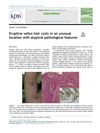
 This case report describes an atypical presentation of eruptive vellus hair cysts on the elbows, where standard diagnostic techniques were unreliable due to the loss of cystic structural integrity.
 January 2025 in “Cell Communication and Signaling”
 This study reviews the role of the zinc finger protein CXXC5 in cellular signaling and its implications for cancer, discussing how its dysregulation is linked to various physiological and pathological processes, as well as potential therapies targeting CXXC5.
January 2021 in “Electronic Theses of LMU Munich (Ludwig-Maximilians-Universität München)” This study found that fibroblasts play a crucial role in scar formation during dermal development and identified N-Cadherin as a key molecule in their response, suggesting new therapeutic avenues for scar prevention.
 April 2026 in “Zenodo (CERN European Organization for Nuclear Research)”
 This study found that cationic surfactant-based conditioning systems significantly reduce friction on hair fibers, improving wet and dry combability by forming a stable film layer on the hair’s surface, as verified by both instrumental and sensory evaluations.
 April 2026 in “Zenodo (CERN European Organization for Nuclear Research)”
 This study found that cationic surfactant-based conditioning systems significantly improve hair combability by forming a stable low-friction film on hair surfaces, reducing friction and enhancing sensory performance compared to standard systems, as confirmed by both instrumental and sensory evaluations.
1 citations
,
March 2024 in “Genes & Diseases” EBF1 controls hair type and length.
January 2025 in “American Journal of Translational Research” This study reported that the combination of EE-CPA and raloxifene effectively manages PCOS-related infertility, enhancing pregnancy outcomes through improvements in metabolism, sex hormones, ovarian function, and endometrial receptivity, without significantly increasing adverse effects.
425 citations
,
August 2002 in “BioEssays” This review discusses the structure and assembly of the cornified cell envelope in stratified squamous epithelial cells and various disorders leading to barrier defects, but reports no new findings.