 23 citations
,
October 2018 in “Expert Opinion on Drug Safety”
23 citations
,
October 2018 in “Expert Opinion on Drug Safety” This review discusses the safety concerns associated with new treatments for non-scarring alopecias, highlighting that while these therapies such as JAK inhibitors and oral minoxidil show efficacy in hair regrowth, their safety profiles vary significantly, requiring careful consideration of benefits and risks.
 22 citations
,
August 2014 in “Clinical endocrinology”
22 citations
,
August 2014 in “Clinical endocrinology” This study suggests that the use of finasteride for benign prostate hyperplasia may increase the risk of osteoporosis diagnosis, particularly at higher doses.
21 citations
,
March 2018 in “JEADV. Journal of the European Academy of Dermatology and Venereology/Journal of the European Academy of Dermatology and Venereology” This review reported that 5-alpha-reductase inhibitors were effective in stabilizing disease progression or reducing the rate of progression in some cases of frontal fibrosing alopecia, though evidence on safety remains limited.
 21 citations
,
May 2016 in “The Cochrane library”
21 citations
,
May 2016 in “The Cochrane library” This review found that while topical minoxidil is effective for treating female pattern hair loss, finasteride showed no more effectiveness than placebo, and low-level laser therapy increased hair count but with inconsistent results.
 20 citations
,
January 2017 in “Actas Dermo-Sifiliográficas”
20 citations
,
January 2017 in “Actas Dermo-Sifiliográficas” This review discusses recent therapeutic advances in treating various types of hair loss, including androgenetic alopecia, alopecia areata, frontal fibrosing alopecia, and hair transplant technologies, but reports no new clinical results.
 20 citations
,
January 2016 in “Intractable & Rare Diseases Research”
20 citations
,
January 2016 in “Intractable & Rare Diseases Research” In this clinical experience, treating frontal fibrosing alopecia with oral finasteride, hydroxychloroquine, tacrolimus, and excimer laser was associated with optimal results in patients with active inflammation.
20 citations
,
August 2014 in “Talanta” This study developed a novel method to simultaneously measure finasteride, dutasteride, and related biomarkers in serum, finding that both drugs lowered DHT levels while increasing substrate concentrations.
 20 citations
,
March 2005 in “Current Medicinal Chemistry”
20 citations
,
March 2005 in “Current Medicinal Chemistry” This study reports that newly synthesized steroidal trienones exhibit higher 5α-reductase inhibitory activity than dienones in various biological models, suggesting potential use in treating androgen-dependent diseases.
20 citations
,
January 2004 in “PubMed Central” This article reviews the use of 5α-reductase inhibitors for treating benign prostatic hyperplasia, suggesting potential benefits beyond symptom relief, but it reports no new clinical results.
 19 citations
,
April 2020 in “Dermatologic Therapy”
19 citations
,
April 2020 in “Dermatologic Therapy” This review found that dutasteride is more potent than finasteride as a dual receptor dihydrotestosterone blocker for treating androgenetic alopecia and shares a similar safety profile in terms of fertility, teratogenicity, neurotoxicity, and hepatotoxicity.
18 citations
,
November 2012 in “Current opinion in urology” This review discusses hormonal control and treatment options for benign prostatic hyperplasia, highlighting similar efficacy and safety between finasteride and dutasteride, and reports no clinical results; further studies are suggested for new therapeutic agents.
 17 citations
,
February 2019 in “Journal of steroid biochemistry and molecular biology/The Journal of steroid biochemistry and molecular biology”
17 citations
,
February 2019 in “Journal of steroid biochemistry and molecular biology/The Journal of steroid biochemistry and molecular biology” This study found that manipulating AKR1D1 expression in human liver cells effectively regulates glucocorticoid clearance and receptor activation, highlighting its role in liver-specific steroid hormone regulation.
 17 citations
,
December 2018 in “The World Journal of Men s Health”
17 citations
,
December 2018 in “The World Journal of Men s Health” This study concluded that administering dutasteride for more than 8 weeks in rats could lead to irreversible erectile dysfunction, even after stopping the medication.
 17 citations
,
January 2015 in “International Journal of Trichology”
17 citations
,
January 2015 in “International Journal of Trichology” This case report suggests that frontal fibrosing alopecia with nail involvement may be associated with lichen planus and improved with oral dutasteride due to an inflammatory reaction related to androgenetic alopecia.
 17 citations
,
August 2011 in “Current Medicinal Chemistry”
17 citations
,
August 2011 in “Current Medicinal Chemistry” This review summarizes recent advancements in steroidal 5α-reductase inhibitors for benign prostatic hyperplasia and reports no new clinical results.
16 citations
,
November 2018 in “The journal of pain/Journal of pain” This study found that in a rat model, 14,15-EET may alleviate central poststroke pain by enhancing thalamic inhibition through neurosteroid signaling, potentially outperforming gabapentin in early-stage treatment.
 16 citations
,
August 2014 in “Archives of Pharmacal Research”
16 citations
,
August 2014 in “Archives of Pharmacal Research” This study found that surface-modified liquid crystalline nanoparticles significantly enhanced skin permeation of finasteride and dutasteride compared to unmodified nanoparticles, suggesting potential for improved treatment efficacy in androgenetic alopecia.
 16 citations
,
August 2011 in “Annals of Allergy Asthma & Immunology”
16 citations
,
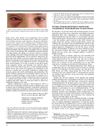
August 2011 in “Annals of Allergy Asthma & Immunology” This report describes a case of a 19-year-old woman experiencing severe recurrent angioedema with airway issues, leading to multiple emergency visits and unsuccessful treatment with typical steroid-sparing agents.
15 citations
,
July 2022 in “Nano Research” This study suggests that using cholesterol-free liposomes, specifically PPD-Lip, as a delivery system with dutasteride may enhance the treatment of androgenetic alopecia by promoting hair regrowth in mice models.
 15 citations
,
January 2017 in “Advances in Experimental Medicine and Biology”
15 citations
,
January 2017 in “Advances in Experimental Medicine and Biology” This review discusses the effects of 5ARI drugs on male reproductive parameters, reporting potential decreases in sperm count and motility more significantly in men with pre-existing oligozoospermia, but does not provide fertility outcomes.
 15 citations
,
July 2016 in “Urologic Clinics of North America”
15 citations
,
July 2016 in “Urologic Clinics of North America” This study found that combining 5-alpha reductase inhibitors with alpha-blockers provided the best symptomatic relief and reduced the risk of clinical progression for BPH, while PDE5 inhibitors could offset sexual side effects.
 15 citations
,
October 2014 in “Hormone Molecular Biology and Clinical Investigation”
15 citations
,
October 2014 in “Hormone Molecular Biology and Clinical Investigation” This report advances the hypothesis that finasteride and dutasteride inhibit 5α-reductase activities, potentially altering steroid metabolism and increasing the risk of insulin resistance, diabetes, and vascular disease.
15 citations
,
December 2006 in “Clinical interventions in aging” This analysis of the Prostate Cancer Prevention Trial found that finasteride reduces prostate cancer risk by nearly 25% and enhances the PSA test's ability to detect prostate cancer and high-risk diseases.
 14 citations
,
April 2019 in “International Journal of Women's Health”
14 citations
,
April 2019 in “International Journal of Women's Health” This review highlights current treatment options for frontal fibrosing alopecia, noting that 5-α-reductase inhibitors, intralesional steroids, and hydroxychloroquine have the highest evidence of effectiveness, while other therapies show variable results and need further research.
14 citations
,
July 2016 in “Journal of Endocrinology” This study observed that equine epididymis mainly expresses the type 1 isoform of 5α-reductase and effectively converts progesterone and testosterone to DHP and DHT, while finasteride and dutasteride inhibited this activity.
 14 citations
,
August 2013 in “Facial Plastic Surgery Clinics of North America”
14 citations
,
August 2013 in “Facial Plastic Surgery Clinics of North America” This review discusses current and emerging medical therapies for androgenetic alopecia but reports no new clinical findings, emphasizing the importance of stabilizing the condition as a complement to surgical hair restoration.
 14 citations
,
December 2010 in “Dermatologica Sinica”
14 citations
,
December 2010 in “Dermatologica Sinica” This article reviews recent advances and therapeutic approaches in treating alopecia areata, highlighting new potential treatments like pulse corticosteroid therapy, but reports no new research findings.
 14 citations
,
July 2009 in “Current Opinion in Otolaryngology & Head and Neck Surgery”
14 citations
,
July 2009 in “Current Opinion in Otolaryngology & Head and Neck Surgery” This review discusses recent developments in hair restoration, highlighting the continued prominence of follicular unit strip surgery and the growing literature on the relatively new technique of follicular unit extraction, without presenting new clinical results.
 14 citations
,
May 2008 in “Journal of proteome research”
14 citations
,
May 2008 in “Journal of proteome research” This study found that dutasteride reduced β-amyloid plaque load in a cerebral amyloidosis model, seemingly linked to mitochondrial apoptosis and autophagy processes.
 13 citations
,
February 2022 in “JAMA Dermatology”
13 citations
,
February 2022 in “JAMA Dermatology” This meta-analysis reported that 0.5 mg/d of dutasteride significantly increased total hair count at 24 weeks compared to finasteride and minoxidil in men with androgenetic alopecia.