November 2025 in “Journal of Investigative Dermatology” N,N-Dimethylglycine sodium salt may improve skin health and treat hair loss.
 43 citations
,
July 2016 in “European journal of pharmaceutical sciences”
43 citations
,
July 2016 in “European journal of pharmaceutical sciences” This study found that dexamethasone-loaded Eudragit® L 100 nanoparticles displayed controlled drug release depending on pH levels, with minimal toxicity to human fibroblasts.
September 2014 in “The Journal for Nurse Practitioners”  27 citations
,
December 2005 in “Journal of Cosmetic Dermatology”
27 citations
,
December 2005 in “Journal of Cosmetic Dermatology” This study found that topical application of niacin derivatives significantly increased hair fullness in women with female pattern hair loss compared to a placebo after six months.
July 2025 in “Ultrasound in Medicine & Biology” This study found that nanobubble-encapsulated diclofenac with ultrasound-targeted microbubble destruction (DNBs-UTMD) can enhance the anti-tumor efficacy of Doxil® by regulating the tumor immune microenvironment, improving drug uptake, and increasing T cell responses while reducing immune-suppressive cells in the process.
3 citations
,
March 2024 in “Journal of the American Academy of Dermatology” Low-dose naltrexone helps improve symptoms and stabilize frontal fibrosing alopecia and lichen planopilaris.
December 2025 in “Sensors” In this review, recent advances in long-acting microneedle-based transdermal drug delivery systems are outlined, highlighting biodegradable polymers like PLA, PLGA, and PCL for sustained release and discussing challenges in clinical translation such as consistency in manufacturing and validating long-term efficacy and safety.
 86 citations
,
March 2018 in “ACS Biomaterials Science & Engineering”
86 citations
,
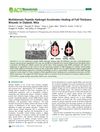
March 2018 in “ACS Biomaterials Science & Engineering” This study found that MDP hydrogel significantly accelerated wound healing and improved tissue formation in diabetic mice compared to a standard clinical hydrogel and control buffer.
2 citations
,
January 2014 This study reported that ultrafine gelatin nanoparticles produced by a modified desolvation technique offer advantages for dermal drug delivery, including smaller particle size, higher drug loading, and faster release compared to traditional gelatin nanoparticles.
110 citations
,
January 2014 in “Journal of Controlled Release” Phospholipid-coated nanoparticles penetrate hair follicles better than others, especially in pig ears.
November 2001 in “Oncology Times” The committee unanimously voted against recommending approval of the injectable cisplatin/epinephrine gel IntraDose for certain head and neck cancer patients, citing insufficient clinical benefit and concerns about toxicity in this study.
 8 citations
,
September 2004 in “Contact dermatitis”
8 citations
,
September 2004 in “Contact dermatitis” Avoiding dyed wigs and clothing improved severe allergic reactions in a woman treated with diphencyprone.
26 citations
,
July 2023 in “International Journal of Nanomedicine” The researchers suggest that combining microneedle technology with nanocarriers could enhance drug delivery systems for treating central neurological diseases due to nanoparticles' ability to prolong blood circulation time and improve brain targeting.
 August 2018 in “Journal of Investigative Dermatology”
 This case report describes the first known instance of dermatomyositis-related panniculitis in the neck and mediastinal region, effectively treated with corticosteroids, dapsone, and colchicine.
 October 2025 in “Advanced Healthcare Materials”
 In a study on wound healing, researchers described injectable POEGMA‐DA hydrogels as a promising non-toxic alternative to traditional wound closure methods, showing effective tissue adhesion and enhanced regeneration of skin structures in a mouse model without significant inflammation.
3 citations
,
April 2024 in “JAAD Case Reports” This article reviews DPCP's use as a topical immunotherapy for alopecia areata and discusses its suggested mechanism, but reports no clinical results.
11 citations
,
September 2010 in “PubMed” In this study, the researchers compared the pharmacokinetics and tissue distribution of dihydroartemisinin in nanostructured lipid carriers versus in solution, finding longer mean residence times and variable organ accumulation with the nanostructured lipid carriers.
December 2025 in “International Journal of Pharmaceutics” PLGA-based microneedles show promise for painless, long-term drug delivery but need design and safety improvements.
 February 2025 in “Journal of Investigative Dermatology”
 DMG-Na may help reduce hair loss and improve hair growth, but more research is needed.
October 2025 in “Journal of Investigative Dermatology” Hair follicle dermal stem cells help control hair growth timing by regulating signals at the hair germ–dermal papilla interface.
 January 2017 in “Nasza Dermatologia Online”
 This study found that both new and old formulas of DCP for treating alopecia areata resulted in similar hair regrowth, but tolerance was significantly better with DCP in isopropanol.
31 citations
,
April 2020 in “Pharmaceutics” This study found that dexamethasone nanocrystals significantly increased drug penetration into skin compared to a traditional cream formulation, suggesting potential benefits for treating inflammatory skin conditions.
1 citations
,
May 2022 in “Journal of Drugs in Dermatology” This case report describes a patient with lichen planopilaris who experienced remarkable hair regrowth at a previously scarred area after treatment with low-dose naltrexone and platelet-rich plasma, following minimal response to other therapies.
 60 citations
,
January 2023 in “Biomaterials Science”
60 citations
,
January 2023 in “Biomaterials Science” This study reviews recent advancements in microneedles made from PLGA, highlighting their use in delivering vaccines, drugs, and proteins through the skin with minimal invasiveness, and discusses the challenges and future potential of these delivery systems.
 April 2026 in “bioRxiv (Cold Spring Harbor Laboratory)”
 This study introduced hydrogel microneedles loaded with palladium nanoparticles, which utilize the inherent cytotoxicity of polyethyleneimine to enhance the effectiveness of doxorubicin in treating melanoma, achieving a tumor inhibition rate of up to 98% in a murine model.
1 citations
,
April 2025 in “Journal of Applied Polymer Science” This study found that microneedles based on polyphosphazene with green tea polyphenols significantly enhanced wound healing in a diabetic rat model.
 March 1998 in “Journal of dermatological science”
 Diphencyprone initially increases mouse hair growth, then slows it, possibly due to changes in specific protein levels.
August 2026 in “Journal of Cosmetic Dermatology” This study found that Plinest injections improved skin hydration and elasticity in the face, neck, and décolleté and were well-tolerated, with high patient satisfaction over a 4-month follow-up.
This abstract details known indications, categories, and potential reactions for various drugs, including anorexiants, estrogens, NSAID analgesics, cardiac glycosides, and migraine preventives, without reporting new clinical results.
June 2026 in “ACS Nano Medicine” This study designed fibronectin nanogel microneedles, reporting their potential to enhance tissue repair by improving collagen organization, reducing inflammation, and promoting angiogenesis in both photoaged and diabetic wound models.