4 citations
,
June 2023 in “Pharmaceutical Biology” This study found that the Qing Cuo Formula significantly reduced serum androgen and inflammatory cytokine levels in hamsters with damp-heat acne and identified potential molecular mechanisms and active compounds involved.
29 citations
,
March 2023 in “The Journal of Dermatology” In this study, 16% of patients on dupilumab for atopic dermatitis experienced mild cutaneous adverse events, most commonly facial redness and psoriasis, leading to discontinuation in about 3% of cases.
 9 citations
,
April 2016 in “Australasian journal of dermatology”
9 citations
,
April 2016 in “Australasian journal of dermatology” This study suggests that adding imiquimod to diphenylcyclopropenone treatment significantly improves outcomes for alopecia areata patients who initially do not respond to diphenylcyclopropenone alone.
September 2023 in “Journal of the American Academy of Dermatology” 3 citations
,
August 2024 in “British Journal of Dermatology” This study observed sustained hair regrowth in some patients with alopecia areata and improvement in vitiligo symptoms, indicating a potential role for dupilumab in treating these conditions, particularly when associated with atopic dermatitis.
 March 1998 in “Journal of dermatological science”
 Diphencyprone initially increases mouse hair growth, then slows it, possibly due to changes in specific protein levels.
2 citations
,
October 2023 in “JDDG Journal der Deutschen Dermatologischen Gesellschaft” This case report found that dupilumab treatment in a 5-year-old with prurigo nodularis considerably reduced her itch severity and nearly cleared the skin lesions after six months.
19 citations
,
December 2021 in “Dermatologic Therapy” Dupilumab can cause psoriasis in some patients.
 47 citations
,
March 2018 in “Journal of Pharmaceutical and Biomedical Analysis”
47 citations
,
March 2018 in “Journal of Pharmaceutical and Biomedical Analysis” This study identified 43 compounds in Platycladi Cacumen, including flavonoids, and found significant chemical variation in flavonoid content across different regions and processed products.
 September 2025 in “Journal of Health Sciences”
 In this study, researchers developed an antioxidant hair tonic using Dipteryx odorata (cumaru) extract, aimed at treating scalp psoriasis, which could potentially improve quality of life for patients due to its natural anti-inflammatory and antioxidant properties.
19 citations
,
January 2019 in “JAAD case reports” This study reports a case where a biologic medication used for atopic dermatitis unexpectedly also treated concurrent alopecia areata.
July 2025 in “Ultrasound in Medicine & Biology” This study found that nanobubble-encapsulated diclofenac with ultrasound-targeted microbubble destruction (DNBs-UTMD) can enhance the anti-tumor efficacy of Doxil® by regulating the tumor immune microenvironment, improving drug uptake, and increasing T cell responses while reducing immune-suppressive cells in the process.
8 citations
,
January 2024 in “Microorganisms” This study found that administering dupilumab to patients with moderate-to-severe atopic dermatitis over 12 weeks altered both fungal and bacterial skin microbiomes, increasing microbial diversity and decreasing colonization by Malassezia and Staphylococcus aureus at lesion sites.
20 citations
,
December 1995 in “Veterinary Dermatology” This study identified a marked reduction in melanin in the hair of Yorkshire Terriers with Colour Dilution Alopecia and proposed a new pathogenetic mechanism based on these observations.
 11 citations
,
August 2017 in “Journal of Chromatographic Science”
11 citations
,
August 2017 in “Journal of Chromatographic Science” This study established a rapid and accurate ultra-performance liquid chromatographic method for chemical fingerprinting and analyzing Platycladi cacumen, effectively distinguishing batches based on geographical and climatic conditions.
 September 2025 in “Clinical Cosmetic and Investigational Dermatology”
 In this randomized, placebo-controlled study, Kūlaris supplementation significantly improved quality of life for participants with mild-to-severe acne over 12 weeks, though no significant changes in general skin health measures were observed compared to placebo.
January 2012 in “Nei Mongol Journal of Traditional Chinese Medicine” In this study, Zusanli acupoint injections of metoclopramide significantly improved dyspeptic symptoms in patients with functional dyspepsia more than oral domperidone, with no adverse reactions in either group.
 3 citations
,
December 2021 in “Dermatology reports”
3 citations
,
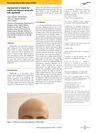
December 2021 in “Dermatology reports” This study presents a reported case where dupilumab treatment for atopic dermatitis led to improvement in alopecia universalis.
 4 citations
,
January 2019 in “Einstein (São Paulo)”
4 citations
,
January 2019 in “Einstein (São Paulo)” In this case report, a patient with severe atopic dermatitis experienced significant improvement with dupilumab after other treatments, including immunosuppressive agents, failed to control the disease.
 April 2018 in “Journal of Investigative Dermatology”
 In this study, researchers identified CENPV as a new CYLD interacting partner that localizes to primary cilia and regulates acetylated tubulin levels, offering insights into the pathogenesis of skin appendage tumors.
11 citations
,
September 2010 in “PubMed” In this study, the researchers compared the pharmacokinetics and tissue distribution of dihydroartemisinin in nanostructured lipid carriers versus in solution, finding longer mean residence times and variable organ accumulation with the nanostructured lipid carriers.
January 2026 in “Dermatologic Therapy” In this retrospective study, dupilumab treatment in young children with alopecia areata and atopic features was linked to full hair regrowth without serious adverse events, though findings from this small cohort should be interpreted cautiously.
36 citations
,
May 2005 in “BMC dermatology” This study found that topical diphenylcyclopropenone was effective in treating severe alopecia areata but had a high relapse rate and was often accompanied by side effects like eczema and lymphadenopathy.
 8 citations
,
November 2022 in “Cureus”
8 citations
,
November 2022 in “Cureus” In this study, patients with mild to moderate scalp seborrheic dermatitis experienced greater improvements in severity scores and quality of life with Lulican™ shampoo compared to Ketoconazole over four weeks, with similar safety profiles but better tolerability and cosmetic acceptability for LulicanTM.
This study found that Fructus Ligustri Lucidi water extract significantly increased proliferation in human hair dermal papilla cells, potentially promoting hair growth by activating ERK and Akt pathways.
3 citations
,
July 2023 in “International Journal of Trichology” This study found that treatment with diphenylcyclopropenone led to more than 75% hair regrowth in 33.3% of patients with alopecia totalis or alopecia universalis, despite notable side effects.
 27 citations
,
December 2015 in “Clinical and Experimental Dermatology”
27 citations
,
December 2015 in “Clinical and Experimental Dermatology” This study found that hair regrowth occurred in 72.2% of alopecia areata patients treated with diphencyprone, with disease extent at baseline and duration affecting outcomes.
 January 2025 in “International Journal of Pharmaceutical Research and Applications”
 In this research, topical gels using natural mucilages from okra and hibiscus were successfully formulated to deliver diclofenac diethylamine, with hibiscus mucilage at 10% showing the best performance as a gelling agent based on various physicochemical tests.
5 citations
,
July 2024 in “Pediatric Dermatology” This study reports that dupilumab significantly reduced alopecia areata severity in pediatric patients with atopic dermatitis, indicating potential as an effective treatment option, though further research on long-term safety and optimal use is needed.
 20 citations
,
July 2024 in “Archives of Dermatological Research”
20 citations
,
July 2024 in “Archives of Dermatological Research” This study observed that dupilumab led to significant hair regrowth and was well-tolerated in children with both alopecia areata and atopic dermatitis, showing promise as a safe treatment option for pediatric patients with associated atopy.