 14 citations
,
December 2010 in “Seminars in Oncology”
14 citations
,
December 2010 in “Seminars in Oncology” This review discusses the diagnostic challenges of androgen and estrogen-secreting adrenal tumors and highlights that the presence of metastases is the most reliable indicator of malignancy; it reports no new clinical findings.
September 2021 in “CRC Press eBooks” This review discusses the diagnostic features of androgenetic alopecia through trichoscopy and reports no clinical results; it emphasizes hair shaft variability and yellow dots as key indicators.
 19 citations
,
January 2012 in “Dermato-endocrinology”
19 citations
,
January 2012 in “Dermato-endocrinology” This study suggests that moderate elevated prolactin levels are unlikely to cause significant hair loss in women, but still warrant further diagnostic investigation to rule out a prolactin-producing pituitary tumor.
 5 citations
,
October 2014 in “Gynecological Endocrinology”
5 citations
,
October 2014 in “Gynecological Endocrinology” This case study describes a 15-year-old girl with a Sertoli–Leydig cell tumor who showed high androgen levels and steroidogenic responses similar to patients with polycystic ovary syndrome before surgery.
 April 2017 in “Journal of Investigative Dermatology”
 In this study, deep phenotyping of 68 patients with XPD gene defects successfully separated individuals by clinical diagnosis and survival status, potentially improving diagnosis and prognosis for xeroderma pigmentosum and trichothiodystrophy.
 44 citations
,
September 2012 in “Archives of Dermatology”
44 citations
,
September 2012 in “Archives of Dermatology” This study observed that hair breakage may indicate early central centrifugal cicatricial alopecia in African American women, suggesting that it should be considered in their differential diagnosis.
August 2026 in “Cosmoderma” This review identifies sebaceous gland disorders as key indicators of hormonal imbalances, detailing how various hormones affect sebaceous function, and emphasizes a multidisciplinary approach to improve diagnosis and management by integrating endocrine, metabolic, and dermatologic insights.
 April 2016 in “JAMA Dermatology”
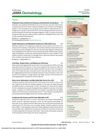
 Acne is not a key diagnostic feature for PCOS, postadolescent men with acne may have insulin resistance, melanoma patients often have few moles, tumor size in CSCC indicates higher risk of serious outcomes, and hidradenitis suppurativa is linked to higher risk of heart problems and death.

This article discusses localized repigmentation of hair, suggesting it may be an indicator of underlying melanoma, and emphasizes the need for careful diagnostic evaluation.
 January 2019 in “Medicine Science | International Medical Journal”
 This study found that specific skin lesions are common indicators of pediatric rheumatologic diseases, potentially aiding dermatologists and rheumatologists in diagnosis when biopsies are challenging.
 April 2016 in “Journal of The American Academy of Dermatology”
 This case report highlights that new nonscarring alopecia after transplantation may indicate chronic graft-vs-host disease, with dermatologists playing a key role in diagnosis and treatment.
5 citations
,
July 2014 in “Journal of X-Ray Science and Technology” This study suggests that hair analysis could serve as a diagnostic tool for detecting calcium channel activity, which influences hair calcium levels and may indicate calcium deficiency or related disease states.
 4 citations
,
November 2009 in “Medical Clinics of North America”
4 citations
,
November 2009 in “Medical Clinics of North America” This article discusses how changes in hair and nails may indicate systemic diseases, but it provides no new results; the authors emphasize their usefulness in clinical diagnosis.
2 citations
,
December 2024 in “Clinical Endocrinology” This study suggests that persistent symptoms in patients with controlled functioning adenomas may indicate a coexisting PCOS diagnosis, highlighting the need for precise differentiation and timely management of these conditions.
 1 citations
,
January 2017 in “Current Dermatology Reports”
1 citations
,
January 2017 in “Current Dermatology Reports” This review discusses how hair and nail manifestations can indicate systemic diseases, emphasizing the importance of these appendageal clues in physical diagnosis, but reports no new findings.
April 2024 in “Russian Journal of Preventive Medicine” This review discusses how skin changes like acanthosis nigricans and psoriasis can indicate metabolic syndrome components such as insulin resistance and dyslipidemia, suggesting a potential role for early diagnosis and treatment in reducing cardiovascular risks associated with the syndrome.
72 citations
,
October 1992 in “Archives of Dermatology” This study describes five patients whose cystic fibrosis was initially indicated by a rash associated with protein-energy malnutrition, highlighting the importance of early symptom recognition for timely diagnosis and treatment.
2 citations
,
January 2025 in “Medicine” This study in Saudi female patients with hyperprolactinemia found that pituitary imaging is often indicated due to a high prevalence of pituitary anomalies, with prolactin levels showing moderate accuracy in predicting adenomas and a suggested cutoff level of >38.71 ng/mL for diagnosis.
 2 citations
,
April 2015 in “Dermatology practical & conceptual”
2 citations
,
April 2015 in “Dermatology practical & conceptual” This case report suggests that regular use of antifungal shampoo might obscure clinical indicators of Trichophyton tonsurans tinea capitis in healthy adults, necessitating detailed diagnostic approaches like histopathology and dermoscopy.
This study found that skin lesions in systemic lupus erythematosus patients are significant for diagnosis and prognosis, with malar rash and diffuse hair loss being common indicators of disease activity.
100 citations
,
October 1986 in “Clinical Endocrinology” This study found that alopecia in hereditary resistance to 1,25(OH)2D may indicate a more severe form of the condition, associated with earlier diagnosis and different responses to calciferol therapy.
 August 2020 in “Acta medica Iranica”
 In this study, researchers found that facial papules may be early indicators of frontal fibrosing alopecia and lichen planopilaris, highlighting the importance of early recognition for diagnosis, especially in premenopausal women.
 53 citations
,
March 2010 in “British Journal of Dermatology”
53 citations
,
March 2010 in “British Journal of Dermatology” This study found that androgenetic alopecia is the leading cause of hair loss in adolescents and may indicate endocrine disorders, emphasizing the need for accurate diagnosis.
 3 citations
,
November 2019 in “The American Journal of Dermatopathology”
3 citations
,
November 2019 in “The American Journal of Dermatopathology” This study found that multiple eccrine duct dilation is highly specific for diagnosing cicatricial alopecia and may indicate scarring processes, aiding in accurate differential diagnosis from noncicatricial alopecias.
 February 2024 in “Rheumatology & autoimmunity”
 This case report documents a rare instance where homonymous hemianopia was the first manifestation of systemic lupus erythematosus in a 42-year-old woman, suggesting its potential inclusion as an initial diagnostic indicator in SLE.
 April 2025 in “Medical Journal of Babylon”
 This study found that male patients with alopecia areata had significantly higher levels of copeptin and cortisol compared to healthy controls, suggesting these biomarkers could play a role in the condition's pathophysiology and may serve as diagnostic indicators.
 December 2022 in “International Journal of Women's Dermatology”
 This study reported that using the Sinclair Shedding Scale and intralesional corticosteroid injections may help diagnose and manage alopecia areata incognita in women experiencing excessive hair shedding without clear diagnostic indicators.
 January 2026 in “Forum Dermatologicum”
 This review analyzed scientific literature and found that dermatological symptoms, such as hirsutism and acne, frequently appear as early indicators of PCOS, reflecting hormonal imbalances and aiding diagnosis of the disorder.
 March 2019 in “Journal of medical science and clinical research”
 This study found that cutaneous manifestations, including specific skin lesions and oral ulceration, are common early indicators of SLE and may aid in its diagnosis and management.
September 2023 in “JEADV Clinical Practice” This study identified key dermoscopic features in folliculotropic mycosis fungoides patients, showing that dilation of follicular openings and spiky follicular keratosis are specific indicators of follicular involvement, potentially aiding in diagnosis, classification, and treatment decisions.