May 2023 in “The Journal of Sexual Medicine” In this study, researchers reported significant improvement in sexual function and related symptoms for four patients using off-label flibanserin, suggesting potential broader applications beyond premenopausal women with hypoactive sexual desire disorder.
2 citations
,
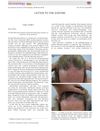
January 2021 in “Journal of The American Academy of Dermatology” This pilot study found that examining changes in scalp scales after scraping may effectively distinguish seborrheic dermatitis associated with androgenetic alopecia from fibrosing alopecia in a pattern distribution.
 2 citations
,
September 2007 in “International Journal of Impotence Research”
2 citations
,
September 2007 in “International Journal of Impotence Research” This case study reports that low-dose testosterone therapy improved libido and sexual functions in a 36-year-old fragile X carrier female with hypoactive sexual desire disorder when monitored regularly for lab parameters.
 26 citations
,
June 2018 in “Australasian Journal of Dermatology”
26 citations
,
June 2018 in “Australasian Journal of Dermatology” Stopping sunscreen use on the forehead led to hair regrowth in a woman with frontal fibrosing alopecia.
 6 citations
,
January 2018 in “Elsevier eBooks”
6 citations
,
January 2018 in “Elsevier eBooks” This review outlines the current regulatory framework for cosmetics under the FD&C Act, highlighting that they are less strictly regulated than drugs, but notes potential future changes due to proposed legislations requiring stronger safety measures.
 April 2016 in “Journal of Investigative Dermatology”
 This study found a perfect correlation between laser Doppler velocimetry measurements of scalp blood perfusion after minoxidil application and sulfotransferase enzyme activity in hair follicles, indicating a potential non-invasive test to predict minoxidil response in female pattern hair loss.
 January 2026 in “Frontiers in Medicine”
 This article questions whether frontal fibrosing alopecia and fibrosing androgeneic patterned hair loss are overlapping conditions or stages of the same process, calling for further research to clarify their underlying factors.
 January 2026 in “BIO Web of Conferences”
 This study suggests that fibroblast growth factors exhibit significant expression differences in rodent and primate skin, potentially related to their evolutionary paths and environmental adaptations.
 13 citations
,
June 2007 in “Journal of Dermatological Science”
13 citations
,
June 2007 in “Journal of Dermatological Science” This study identified several genes regulated by dihydrotestosterone in an SV40T-transformed human dermal papilla cell line, which may play a role in androgen-mediated hair growth regulation.
 2 citations
,
July 2022 in “Journal of the American Academy of Dermatology”
2 citations
,
July 2022 in “Journal of the American Academy of Dermatology” In this study, researchers aimed to evaluate the safety and tolerability of low-dose oral minoxidil in adolescents, as existing data on its use in this population are limited and there are no specific pediatric guidelines for prescribing it. Results are not reported.
 December 2024 in “PubMed”
 This study evaluates the compatibility of six active pharmaceutical ingredients, including finasteride and spironolactone, with TrichoFoam™, a foam vehicle used in personalized treatments for alopecia, though it does not report specific results.
Linalool in personal care products may worsen frontal fibrosing alopecia by damaging hair follicle stem cells and triggering harmful immune responses.
 January 2022 in “Journal of Cosmetic Dermatology”
 This study found that combining basic fibroblast growth factor with minoxidil improved hair treatment efficiency and patient satisfaction compared to minoxidil alone for early-stage androgenetic alopecia in men.
 53 citations
,
August 2019 in “Journal of The American Academy of Dermatology”
53 citations
,
August 2019 in “Journal of The American Academy of Dermatology” This study observed that low-dose oral minoxidil and topical minoxidil 5% solution both improved hair density in women with female-pattern hair loss, but oral minoxidil may offer advantages in reducing hair shedding.
 21 citations
,
December 2016 in “European journal of pharmaceutics and biopharmaceutics”
21 citations
,
December 2016 in “European journal of pharmaceutics and biopharmaceutics” This study found that nano-sized lipid particles improved the skin accumulation and retention of dexamethasone compared to a base cream, suggesting potential benefits for inflammatory skin disease treatment.
 37 citations
,
April 2017 in “npj Regenerative Medicine”
37 citations
,
April 2017 in “npj Regenerative Medicine” This study found that platelet-derived growth factor signaling is crucial for maintaining the hair follicle dermal stem cell pool and supporting their regenerative capacity.
 18 citations
,
October 2002 in “Veterinary dermatology”
18 citations
,
October 2002 in “Veterinary dermatology” This study observed that follicular dysplasia in Weimar Pointers produces histopathological features and hair abnormalities similar to color dilution alopecia, though less severe.
 7 citations
,
January 2009 in “Biological & pharmaceutical bulletin”
7 citations
,
January 2009 in “Biological & pharmaceutical bulletin” This study found that applying ferrous ferric chloride skin lotions to newborn mice stimulated skin cell proliferation and differentiation, increased hair growth, and inhibited alopecia-related hair loss.
 1 citations
,
January 2019 in “Acta dermato-venereologica”
1 citations
,
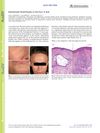
January 2019 in “Acta dermato-venereologica” The woman's skin and hair symptoms were confirmed as frontal fibrosing alopecia, and while facial papules are common in such cases, there's no effective local treatment, but systemic treatments can help.
November 2009 in “Hair transplant forum international” This piece presents no new research findings; it briefly mentions opinions on Female Pattern Hair Loss and the importance of increasing awareness.
41 citations
,
January 1992 in “Journal of medical genetics” This study described seven male patients and six female carriers of keratosis follicularis spinulosa decalvans, highlighting distinct dermatological and ophthalmic markers including follicular hyperkeratosis and corneal dystrophy.
 April 2017 in “The journal of investigative dermatology/Journal of investigative dermatology”
 This study reports that 71% of patients treated with the gamma-secretase inhibitor PF-03084014 for desmoid tumors experienced dermatologic side effects, such as follicular lesions and pruritic eruptions, which were managed with topical or systemic treatments.
 September 2024 in “Cermin Dunia Kedokteran”
 This article reviews Frambusia, a skin-contact-spread tropical infection, and stresses improving medical professionals' diagnostic and treatment skills to achieve the WHO's eradication target by 2030, without reporting new results.
February 2026 in “Expert Opinion on Pharmacotherapy” This study established consensus-based guidelines for using low-dose oral and topical minoxidil in managing pattern hair loss for patients undergoing hair transplant surgery, recommending specific dosages, monitoring procedures, and timing for initiation post-surgery.
477 citations
,
March 2004 in “Proceedings of the National Academy of Sciences” This study reports that the DMI3 gene, essential for nodule formation in legume-rhizobial symbiosis, encodes a calcium/calmodulin-dependent protein kinase, highlighting its role in multiple plant symbioses.
2 citations
,
January 2023 in “Skin Appendage Disorders” This study suggests a potential role for systematic scalp examinations in first-degree relatives of patients with pattern cicatricial alopecia.
41 citations
,
July 2016 in “Journal of Investigative Dermatology” This study identified molecular differences between dysplastic nevi and common melanocytic nevi, including altered keratinocyte differentiation, increased hair follicle-related molecule expression, and distinct immune microenvironment characteristics in dysplastic nevi.
 1 citations
,
June 2013 in “Science-business Exchange”
1 citations
,
June 2013 in “Science-business Exchange” In this study, researchers at the University of Pennsylvania found that increasing FGF9 levels in wounded mouse skin can lead to the growth of hair follicles.
 8 citations
,
August 2011 in “Journal of Medicinal Food”
8 citations
,
August 2011 in “Journal of Medicinal Food” In this study, D-004 did not affect androgen-dependent development in rats exposed in utero, while finasteride caused significant changes in male offspring's androgen-dependent tissues.
This study found that Compound Diandao Pulvis Drug Facial Mask improved some signs of acne in a rabbit ear model, but its effects were not significantly different from tretinoin cream.