 2 citations
,
December 2016 in “Turkderm”
2 citations
,
December 2016 in “Turkderm” This study found that dermatological infectious diseases, particularly cutaneous leishmaniasis, were the most common among Syrian refugees in the surveyed region, highlighting the need for improved preventive health services.
 17 citations
,
April 2006 in “Dermatologic Clinics”
17 citations
,
April 2006 in “Dermatologic Clinics” This review discusses common skin disorders in older women and their treatments, but it reports no new clinical results.
 4 citations
,
March 2002 in “Journal of the American Pharmaceutical Association”
4 citations
,
March 2002 in “Journal of the American Pharmaceutical Association” This review discusses various skin conditions affecting women throughout their lives and highlights the pharmacist's role in advising on management and treatment, but it reports no new clinical results.
1 citations
,
February 2022 in “Journal of the American Academy of Dermatology” This review discusses biotin supplementation for dermatological conditions and highlights the lack of strong evidence supporting its efficacy, as well as the potential for laboratory testing interference.
 August 2023 in “Iranian Journal of Clinical Infectious Diseases”
 This study observed a variety of skin conditions related to COVID-19 and its vaccines in a Brazilian setting, classifying them into five categories, including peri-infectious reactions and vaccine-related adverse effects, to aid physicians managing similar cases.
 April 2016 in “Journal of the American Academy of Dermatology”
 Dermoscopy helped correctly diagnose a skin condition that was previously misidentified as a different hair loss disease.
 September 2010 in “Institutional Repositories DataBase (IRDB)”
 Sorafenib can cause a temporary skin condition that goes away after stopping the drug.
 March 2025 in “Forum Dermatologicum”
 This review explores links between metabolic syndrome and skin diseases, reporting shared mechanisms like inflammation and hormonal imbalances that may influence conditions such as acne, rosacea, psoriasis, and alopecia, and emphasizes the importance of managing cardiovascular risks in affected patients.
2 citations
,
September 2014 in “International Journal of Dermatology” Sodium valproate can worsen psoriasis-like skin conditions.
 12 citations
,
June 2024 in “Archives of Dermatological Research”
12 citations
,
June 2024 in “Archives of Dermatological Research” This scoping review found a high prevalence of skin conditions among older people living at home, but available evidence on burden and effective care strategies is limited.
 November 2025 in “Undersea and Hyperbaric Medicine”
 This case report observed that a patient experienced worsening alopecia and scarring after medical ozone therapy, with subsequent improvement following surgical intervention and systemic hyperbaric oxygenation.
 January 2003 in “Springer eBooks”
 Children with diabetes often have skin problems, which can be better managed with good blood sugar control.
 3 citations
,
January 2010 in “Elsevier eBooks”
3 citations
,
January 2010 in “Elsevier eBooks” The document describes various skin conditions, their features, and treatments but lacks detailed study size information.
3 citations
,
March 2024 in “arXiv (Cornell University)” This study describes an AI-powered system for diagnosing dermatological conditions, achieving a weighted score of 0.87 in both contextual understanding and diagnostic accuracy, suggesting it could enhance tele-dermatology applications by supporting remote consultations and care access in underserved regions.
 3 citations
,
October 2021 in “Cureus”
3 citations
,
October 2021 in “Cureus” This review discusses yellow hair discoloration associated with smoking and systemic conditions, proposing smoking cessation or hair removal as management options, but provides no new clinical results.
 March 2022 in “The Journal of Family Practice”
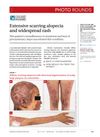
 Following treatment plans is crucial to prevent worsening skin and hair conditions.
 405 citations
,
May 2007 in “Journal of The American Academy of Dermatology”
405 citations
,
May 2007 in “Journal of The American Academy of Dermatology” This review discusses the profound impact of obesity on skin physiology and dermatologic conditions and reports no new experimental results, recommending awareness and treatment strategy development for obesity-associated dermatoses.
 57 citations
,
October 2021 in “Journal of ethnopharmacology”
57 citations
,
October 2021 in “Journal of ethnopharmacology” This review compiled by the authors emphasizes the traditional use of medicinal plants for dermatological disorders in India, highlighting the need for further scientific studies to validate their effectiveness and suggesting potential for drug development based on ethnodermatological practices.
 57 citations
,
June 2018 in “Nutrients”
57 citations
,
June 2018 in “Nutrients” This paper describes various skin conditions associated with celiac disease and suggests that these dermatological signs might aid in diagnosing the disease, potentially improving with a gluten-free diet.
 20 citations
,
July 2013 in “International Journal of Dermatology”
20 citations
,
July 2013 in “International Journal of Dermatology” This review addresses obesity-related dermatoses and highlights the potential increased risk of skin cancer associated with obesity; it presents no new clinical findings.
 September 2021 in “Selçuk Üniversitesi Tıp Fakültesi dergisi”
 This abstract discusses the dermatological symptoms associated with hepatitis C virus infections but reports no new research findings.
 17 citations
,
July 2017 in “International Journal of Behavioral Medicine”
17 citations
,
July 2017 in “International Journal of Behavioral Medicine” This study validated the Egyptian Arabic version of the Skindex-16 and found that skin conditions significantly impacted patients' quality of life, particularly in the emotional domain.
14 citations
,
May 2017 in “European journal of dermatology/EJD. European journal of dermatology” This review summarizes existing research on the potential use of stem cells for treating dermatological disorders, reporting no new clinical findings but highlighting ongoing trials and developments.
4 citations
,
March 2024 in “Journal of the American Academy of Dermatology” Spironolactone for skin issues rarely causes low blood pressure.
 2 citations
,
February 2022 in “Journal of The American Academy of Dermatology”
2 citations
,
February 2022 in “Journal of The American Academy of Dermatology” This study found that hormonal IUD implantation was associated with an increased risk of acne vulgaris but a decreased risk of hirsutism, alopecia, and rosacea compared to nonhormonal copper IUDs.
January 2026 in “Clinical Journal for Nurse Practitioners in Women s Health” In this article, it is explored how pregnancy-related physiologic changes can predispose women to dermatologic conditions affecting well-being, and it highlights the critical role of women’s health nurse practitioners in managing these conditions with attention to safety and efficacy in pregnant patients.
March 2024 in “International journal of molecular sciences” This review summarizes current literature associating mitochondrial dysfunction with dermatologic issues like skin aging, hair loss, and poor wound healing, noting potential benefits in targeting mitochondrial components for treatments.
 2 citations
,
July 2023 in “Life”
2 citations
,
July 2023 in “Life” This study reports that telogen effluvium, a reversible hair loss condition following COVID-19, is influenced by factors like stress and inflammation, but appropriate dermatological treatment can aid recovery, as highlighted by a clinical case example.
February 2026 in “Expert Review of Endocrinology & Metabolism” This review discusses the dermatologic manifestations and management of polycystic ovary syndrome, underscoring the need for mechanism-based, personalized treatments and integrated mental health support, but reports no new clinical results.
June 1986 in “Journal of the American Academy of Dermatology” Topical minoxidil showed promise for early male pattern baldness.