14 citations
,
January 2014 in “Indian Journal of Dermatology Venereology and Leprology” Frontal fibrosing alopecia can affect men's beards and leads to permanent hair loss.
52 citations
,
January 2021 in “Journal of Thoracic Oncology” Effective vaccines and treatments are crucial for long-term COVID-19 control.
17 citations
,
August 2023 in “Frontiers in Pharmacology” This review highlights the potential of Asteraceae plants as antidiabetic agents and their beneficial effects on conditions such as cardiovascular disease and liver cirrhosis, suggesting their use as food and nutraceuticals could help manage diabetes.
5 citations
,
August 2021 in “Journal of Ethnobiology and Ethnomedicine” This study found that the population of Smilax aristolochiifolia in the Poblano Totonacapan region of Mexico has decreased over the past 50 years, mainly due to land-use changes and herbicide use.
 January 2022 in “Sustainable development goals series”
 The document concludes that significant investment in agricultural innovation is necessary to achieve global food security and nutrition.
January 2024 in “Updates in clinical dermatology” Frontal fibrosing alopecia is a scarring hair loss condition mainly affecting postmenopausal women, with unclear causes.
 January 2022 in “Дерматологія та венерологія”
 This paper presents two cases of frontal fibrosing alopecia in postmenopausal women, noting challenges in monitoring due to the invasive nature of the diagnostic process.
10 citations
,
June 1956 in “OSTI OAI (U.S. Department of Energy Office of Scientific and Technical Information)” This article discusses the need for long-term studies on pathways for children and adolescents in gender services and reports no new findings; the authors call for data on psychological care.
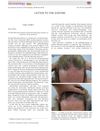 26 citations
,
June 2018 in “Australasian Journal of Dermatology”
26 citations
,
June 2018 in “Australasian Journal of Dermatology” Stopping sunscreen use on the forehead led to hair regrowth in a woman with frontal fibrosing alopecia.
 September 2022 in “Tropical grasslands-Forrajes tropicales”
 This study observed that smallholder cattle farmers in West Nusa Tenggara, Indonesia using leucaena as feed managed more cattle and focused more on fattening rather than breeding, but leucaena toxicity led to illnesses such as hair loss and, in a few cases, reproductive issues.
December 2016 in “Anales del sistema sanitario de Navarra” This case study reports successful treatment of frontal fibrosing alopecia with daily 2.5mg finasteride in a 77-year-old woman.
 1 citations
,
May 2024 in “Dermatology and Therapy”
1 citations
,
May 2024 in “Dermatology and Therapy” This review article examines the current understanding of frontal fibrosing alopecia, noting its prevalence in different demographics and the roles of genetic and environmental factors in its pathogenesis, while highlighting that treatment approaches remain varied and lack standardization.
 1 citations
,
April 2017 in “Journal of Investigative Dermatology”
1 citations
,
April 2017 in “Journal of Investigative Dermatology” In this study, D-OCT imaging revealed distinct structural and vascular changes in patients with frontal fibrosing alopecia, highlighting the technique's potential for diagnosing and monitoring the condition's activity.
1 citations
,
March 2012 in “Actas dermo-sifiliográficas/Actas dermo-sifiliográficas” Dermoscopy helps diagnose frontal fibrosing alopecia by identifying specific scalp features.
 December 2024 in “Brazilian Journal of Health Review”
 This article reviews the general, pathophysiological, diagnostic, and therapeutic aspects of alopecia frontal fibrosante, highlighting its irreversible nature and the importance of early diagnosis, but it reports no new clinical results.
January 1976 in “Revista de Estudios Agrosociales” This study suggests a potential causal link between frontal fibrosing alopecia and vitiligo, as observed in two cases where the conditions co-occurred on preexisting vitiligo of the forehead.
 2 citations
,
November 2022 in “Frontiers in Pharmacology”
2 citations
,
November 2022 in “Frontiers in Pharmacology” This study systematically documented the ethnobotanical and ethnomedicinal knowledge from traditional healers in Addis Ababa, identifying 81 medicinal plants, including the endangered Echinops kebericho, used primarily for treating skin and general diseases.
 4 citations
,
March 2019 in “Biodiversitas Journal of Biological Diversity”
4 citations
,
March 2019 in “Biodiversitas Journal of Biological Diversity” In this study of duku trees along the Batanghari River in Indonesia, researchers identified traits in mother trees that may help select for resistance to stem canker disease.
 33 citations
,
January 2010 in “Case reports in dermatology”
33 citations
,
January 2010 in “Case reports in dermatology” This article presents a case study of a 50-year-old woman with frontal fibrosing alopecia and discusses the role of dermoscopy in differentiating it from other types of alopecia, reporting no new clinical results.
July 2020 in “DOAJ (DOAJ: Directory of Open Access Journals)” This review suggests that excessive facial photoprotection could play a role in frontal fibrosing alopecia through a disturbance in immunological balance via the aryl hydrocarbon receptor-kynurenine pathway.
 October 2020 in “International Journal of Research in Dermatology”
 This review discusses the possible immune-mediated and environmental factors contributing to frontal fibrosing alopecia but reports no new clinical findings, emphasizing the need for standardized treatment evaluations.
 23 citations
,
April 2021 in “Journal of Clinical Medicine”
23 citations
,
April 2021 in “Journal of Clinical Medicine” This review compiles existing data on frontal fibrosing alopecia and highlights the promise of 5-alpha reductase inhibitors as a treatment option, while noting the need for clarity on its cause and progression.
 January 2024 in “Editora In Vivo eBooks”
 This case report documents a dog with dermatophytosis, caused by the fungus Microsporum canis, presenting symptoms like alopecia in the neck and ear, highlighting the condition's prevalence in tropical and temperate climates and its zoonotic nature.
 6 citations
,
June 2016 in “Experimental Dermatology”
6 citations
,
June 2016 in “Experimental Dermatology” This article reviews the pathogenesis of frontal fibrosing alopecia, highlighting the potential genetic and environmental contributions, particularly the use of sunscreens, and calls for further research into effective treatments.
 March 2023 in “Journal of clinical review & case reports”
 This study observed that in Mexico, Frontal Fibrosing Alopecia predominantly affects postmenopausal women, with an increased incidence in recent years, and highlights the challenge of early diagnosis to prevent irreversible hair loss.
3 citations
,
January 2010 Refined open donor harvesting techniques can reduce hair follicle damage in hair restoration surgery.
 7 citations
,
October 2015 in “Actas Dermo-Sifiliográficas”
7 citations
,
October 2015 in “Actas Dermo-Sifiliográficas” This article reviews the increasing incidence of frontal fibrosing alopecia since its first description in 1994 and reports no new results.
 21 citations
,
October 2017 in “Journal of the European Academy of Dermatology and Venereology”
21 citations
,
October 2017 in “Journal of the European Academy of Dermatology and Venereology” This study reports that variable environmental factors, including dietary habits, may contribute to the increasing incidence and diverse clinical presentations of frontal fibrosing alopecia.
November 2024 in “Dermatology and Therapy” In this review, cosmetic practices such as non-ablative lasers, autologous fat injections, and oral isotretinoin may help alleviate certain symptoms of frontal fibrosing alopecia, while treatments like deep chemical peels and ablative laser therapies are contraindicated due to potential scarring risks.
 August 2015 in “Dermatología Argentina”
 This study reviewed 18 postmenopausal women with frontal fibrosing alopecia, noting frontotemporal hairline recession and eyebrow loss, often treated with steroids, triamcinolone, and other medications.