3 citations
,
January 2020 in “Indian Journal of Dermatology” This study found that certain VDR gene polymorphisms are more prevalent in female pattern hair loss patients than in healthy controls, suggesting these polymorphisms may increase disease risk.
2 citations
,
July 2013 in “Journal of Life Sciences” In this case report, researchers described a two-year-old girl with Vitamin D dependent rickets Type II, noting elevated 1,25-dihydroxyvitamin D3 and alopecia, and observed limited treatment response likely due to poor compliance.
January 2026 in “Animals” This study researched the dun coat color in Mongolian horses, finding that variations in TBX3 expression in different skin areas are linked to Bider markings, suggesting TBX3's role in this specific pigment pattern, while further investigation is needed on its regulation.
2 citations
,
January 1989 This article discusses the history and understanding of Tay syndrome, recognizing it as a distinct condition related to ichthyotic erythroderma, mental retardation, and brittle hair but reports no new clinical results.
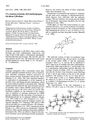 December 1998 in “Acta Crystallographica Section C-crystal Structure Communications”
 This study describes the molecular conformation and intermolecular interactions in the crystalline structure of the compound C24H31BrO4.
 September 2025 in “Cermin Dunia Kedokteran”
 This review highlights the importance of implementing dementia screening and cognitive evaluation in primary care to better prepare healthcare providers for managing cognitive impairment in the aging population.
 September 2024 in “Cutis”
 This study reached a consensus among experts on the most important diversity, equity, and inclusion topics for dermatology residency curricula, suggesting integration may enhance patient care for diverse populations.
January 1982 in “Clinical Cosmetic and Investigational Dermatology” This case report describes a 54-year-old woman with familial dyskeratotic comedones who experienced slight improvement in her skin lesions after three months of treatment with topical retinoids and urea cream.
124 citations
,
November 2000 in “The journal of investigative dermatology/Journal of investigative dermatology” This study found that human peptidylarginine deiminase type III is the predominant isoform in hair follicles and may modulate structural proteins during hair and hair follicle formation.
2 citations
,
January 2004 in “Linchuang pifuke zazhi” In a reported case, the use of ZD1839 (Iressa), an EGFR tyrosine kinase inhibitor, resulted in hair changes and acneiform eruptions as cutaneous side effects.
 7 citations
,
June 2015 in “The anatomical record”
7 citations
,
June 2015 in “The anatomical record” This study in Hexi cashmere goats found that secondary follicle activity increases with time, and Hoxc13 expression varies significantly across different growth stages, suggesting a role in follicle activity.
February 2019 in “Chin J Injury Repair and Wound Healing(Electronic Edition)” This study indicates that porcine acellular dermal matrix may aid hair follicle regeneration in mice by enhancing the expression of SDF-1 and the Wnt3a/β-catenin signaling pathway.
 12 citations
,
December 2020 in “Archives animal breeding/Archiv für Tierzucht”
12 citations
,
December 2020 in “Archives animal breeding/Archiv für Tierzucht” This study found that EDA and EDAR are expressed throughout cashmere goat fetal development and play a critical role in hair follicle formation by influencing gene expression in fibroblasts and epithelial cells.
 June 2023 in “British Journal of Dermatology”
 This pilot study found that night shift workers showed fewer signs of wrinkle formation compared to day workers, but there were no significant differences in DNA amplification or collagen percentage.
11 citations
,
December 2017 in “Orphanet Journal of Rare Diseases” This study found a previously unreported ST14 gene mutation in a patient with ichthyosis-hypotrichosis syndrome, highlighting novel skin and hair characteristics and emphasizing the critical role of the Asp482 amino acid in matriptase activation.
 1 citations
,
January 2020 in “Benha Journal of Applied Sciences”
1 citations
,
January 2020 in “Benha Journal of Applied Sciences” This study found that DEFB1 polymorphisms, specifically the rs1800972 CG and GG genotypes, may predict susceptibility to and severity of alopecia areata.
November 2024 in “Stem Cell Research & Therapy” A new method improves the isolation of hair follicle cells for better hair growth research.
July 2026 in “bioRxiv (Cold Spring Harbor Laboratory)” In this study, researchers observed that TCDD exposure in mice enhanced sebaceous gland differentiation and lipid production before causing seboatrophy, providing insights into the cellular events that may contribute to chloracne pathogenesis.
 March 2026 in “Zenodo (CERN European Organization for Nuclear Research)”
 In this publication, independent scholar Jeffi Chao Hui Wu presents a comprehensive civilization archiving system spanning fourteen domains, highlighting innovative AGI limitations and physiological case reversals, published in ten languages and integrated into global academic infrastructures.
 October 2023 in “Journal of the Endocrine Society”
 This case report describes a challenging diagnosis of Cushing’s syndrome using endocrine tests and imaging, which ultimately identified an adrenal etiology. Successful treatment involved a non-invasive desmopressin stimulation test and right adrenalectomy, leading to improvement in symptoms and health outcomes for the patient.
9 citations
,
March 2009 in “The journal of investigative dermatology/Journal of investigative dermatology” This study reports that the maintenance and morphogenesis of skin appendages rely on both the dose and duration of ectodysplasin signaling.
 January 2024 in “International Journal of Dermatology”
 This commentary piece identifies interleukin-13 as a potential therapeutic target for treating alopecia areata associated with atopic dermatitis, although specific study results or outcomes are not provided in the abstract.
 1 citations
,
September 2017 in “Journal of Investigative Dermatology”
1 citations
,
September 2017 in “Journal of Investigative Dermatology” The researchers reported that inhibiting 11β-HSD1 activity in human dermal papilla cells may reduce the negative effects of glucocorticoids on hair growth, suggesting potential treatment for stress-related hair loss.
This study found that in an ex vivo model simulating alopecia areata, the DHODH inhibitor farudodstat reduced T-cell proliferation and MHC protein expression in hair follicles, suggesting it may protect against immune privilege collapse without cytotoxic effects.
2 citations
,
May 2020 in “The journal of investigative dermatology/Journal of investigative dermatology” This study describes a family where a TP63 mutation was linked with prominent alopecia and mild ectodermal dysplasia features.
 January 2026 in “Cell and Tissue Biology”
 The researchers reported that administration of the antioxidant compound TS-13 in mice with chemotherapy-induced alopecia accelerated hair regrowth, although it did not fully prevent chemotherapy-related hair loss, suggesting TS-13 may aid in managing hair loss without negating the cancer treatment's effectiveness.
July 2025 in “Journal of Investigative Dermatology”  2 citations
,
February 2024 in “Journal of the European Academy of Dermatology and Venereology”
2 citations
,
February 2024 in “Journal of the European Academy of Dermatology and Venereology” This study resulted in a draft version of the Patient‐Reported Impact of Dermatological Diseases measure, PRIDD, which includes 27 items refined from patient consensus and is now undergoing psychometric testing.
1 citations
,
July 2025 in “Scientific Reports” This study found that CD133-positive dermal papilla cells significantly enhanced hair growth in mice compared to CD133-negative cells, suggesting their potential for improving human hair follicle engineering.
13 citations
,
February 2012 in “International Journal of Dermatology” This case report identifies a novel nonsense mutation in the CDH3 gene associated with hypotrichosis and juvenile macular dystrophy.