 14 citations
,
January 2018 in “Endocrine”
14 citations
,
January 2018 in “Endocrine” This report describes a three-generation family with Cantú syndrome linked to a novel ABCC9 gene variant, featuring acromegaloid appearance and hypertrichosis without growth hormone abnormalities, and suggests a potential association with pituitary adenomas.
 46 citations
,
January 2010 in “The journal of investigative dermatology/Journal of investigative dermatology”
46 citations
,
January 2010 in “The journal of investigative dermatology/Journal of investigative dermatology” This study found that Insig deficiency in the skin of mice causes cholesterol precursors to accumulate, leading to defective hair development and skin abnormalities, which were alleviated by simvastatin treatment.
 76 citations
,
May 2011 in “Cell death and differentiation”
76 citations
,
May 2011 in “Cell death and differentiation” This study found that the enzyme A20 helps regulate EDAR-induced NF-κB signaling in mice, preventing ectodermal abnormalities like disheveled hair and assuring proper skin and appendage development.
 September 2023 in “Frontiers in bioengineering and biotechnology”
 This review explores the role of JAG1 in disease treatment, highlighting the need for effective methods to deliver JAG1 in its bound form to activate NOTCH signaling for therapeutic applications in craniofacial bone loss and myocardial infarction.
 11 citations
,
January 2016 in “Bipolar Disorder”
11 citations
,
January 2016 in “Bipolar Disorder” This article reviews the uses, mechanisms, and side effects of valproate in treating bipolar disorder, noting its first-line status for several manic conditions but also highlighting serious risks such as fetal abnormalities.
 34 citations
,
March 2011 in “Plastic and Reconstructive Surgery”
34 citations
,
March 2011 in “Plastic and Reconstructive Surgery” This study found that custom alloplastic implants achieved a 95% success rate in reconstructing large cranial defects from warfare-related injuries, but frontal defects near airways and orbits showed higher infection and implant removal rates.
July 2025 in “Clinical Case Reports” In this case report, a 17-year-old male with a specific TRPS1 gene mutation presented with sparse, soft hair, short thumbs and toes, misaligned teeth, and distinctive bone abnormalities in the fingers and toes as observed through X-ray analysis.
49 citations
,
January 2006 in “Developmental Dynamics” This research observed that the skeletal abnormalities in Noggin null mice varied based on genetic background, and identified haploinsufficiency leading to joint fusions, similar to human conditions associated with NOGGIN deficiency.
6 citations
,
January 1997 in “Pediatric dermatology” This case report highlights a 21-year-old man with severe nodulocystic acne resistant to conventional treatments, who showed moderate improvement with isotretinoin, and discusses its potential link to congenital digital abnormalities and Apert syndrome.
 234 citations
,
April 2000 in “Gene”
234 citations
,
April 2000 in “Gene” This review discusses the expression patterns and biochemical roles of Msx and Dlx genes during development but does not present new research findings.
 17 citations
,
November 2012 in “Journal of Investigative Dermatology”
17 citations
,
November 2012 in “Journal of Investigative Dermatology” This paper reviews the genetic aspects of hair disorders and suggests that understanding these genes could advance treatment and diagnosis; it reports no new experimental findings.
 171 citations
,
October 1990 in “Alcoholism/Alcoholism, clinical and experimental research”
171 citations
,
October 1990 in “Alcoholism/Alcoholism, clinical and experimental research” The document concludes that the exact way alcohol causes harm to fetal development is unknown, but it significantly affects nutrient transport to the fetus and a safe level of alcohol during pregnancy is not determined.
 18 citations
,
February 2010 in “Odontology”
18 citations
,
February 2010 in “Odontology” This report describes Rabson-Mendenhall syndrome cases in two siblings and briefly reviews the literature, highlighting insulin receptor gene mutations as the underlying cause.
 7 citations
,
May 2019 in “European Journal of Human Genetics”
7 citations
,
May 2019 in “European Journal of Human Genetics” This study describes three new cases of MCOPS6 with BMP4 variants, noting expanded phenotypic variability but no clinically apparent microphthalmia in these individuals, which is commonly reported in the disorder.
 January 2024 in “The journal of investigative dermatology/Journal of investigative dermatology”
 In this study, researchers found that AP-2α and AP-2β are critical for maintaining epidermal homeostasis in adult skin, with their combined loss leading to severe skin and hair abnormalities and early skin inflammation due to impaired keratinocyte differentiation.
 April 2018 in “Journal of Investigative Dermatology”
 This study found distinct gene expression profiles in the parietal and occipital scalp of individuals with androgenetic alopecia, linked to developmental origins and susceptibility to hair loss, offering insights into genetic and epigenetic factors involved in AGA.
 January 2022 in “Acta dermatovenerologica Alpina, Pannonica et Adriatica (Tiskana izd.)”
 This article presents an overview of uncombable hair syndrome, emphasizing its clinical and molecular characteristics and noting systemic manifestations such as neuropsychiatric, ophthalmic, and cardiopulmonary issues.
 38 citations
,
November 2012 in “Expert Opinion on Drug Safety”
38 citations
,
November 2012 in “Expert Opinion on Drug Safety” This article reviews different acne treatments and emphasizes the importance of being aware of their potential side effects, but reports no new clinical results.
 32 citations
,
November 2016 in “Journal of Dental Research”
32 citations
,
November 2016 in “Journal of Dental Research” This review explores the role of Panx3 in skeletal formation and discusses its potential in developing new therapies for conditions like osteoarthritis, without presenting new clinical findings.
 10 citations
,
May 2018 in “Forensic Science International”
10 citations
,
May 2018 in “Forensic Science International” This study concluded that the process of mummification disfigures facial features, making identification challenging, but commercial shrunken heads retain more defining features compared to ceremonial ones.
 2 citations
,
January 2013 in “Elsevier eBooks”
2 citations
,
January 2013 in “Elsevier eBooks” The document explains the genetic causes and characteristics of inherited hair disorders.
 2 citations
,
February 2007 in “Plastic and Reconstructive Surgery”
2 citations
,
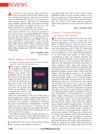
February 2007 in “Plastic and Reconstructive Surgery” This review discusses the second edition of "Plastic Surgery" edited by Stephen Mathes, emphasizing its comprehensive nature and influence on the field, but reports no new clinical results.

This study identified a genetic locus associated with rhabdomyosarcoma susceptibility in mice and found that specific differentiation markers are linked to the regression of basal cell carcinoma.
 March 2021 in “Research Square (Research Square)”
 This study found that patients with RASopathies demonstrated lower levels of serum IgA and CD8 T cells compared to controls, potentially indicating an increased risk of developing autoimmune disorders.
A new mutation in the TRPS1 gene caused Trichorhinophalangeal syndrome in a 17-year-old, highlighting the need for genetic testing.
10 citations
,
November 2018 in “The Italian Journal of Pediatrics/Italian journal of pediatrics” This case report identifies a mutation in the TRPS1 gene, leading to the diagnosis of trichorhinophalangeal syndrome type I in a young girl and her family, highlighting the importance of detailed clinical and family history for proper diagnosis.
2 citations
,
September 2016 in “Journal of Dermatological Science” Reduced TRPS1 leads to increased STAT3 and SOX9 in hair follicles, affecting hair growth.
9 citations
,
May 2014 in “BMC medical genetics” In this case report, the authors suggest that a novel enhancer element's translocation near the TRPS1 gene may contribute to the TRPS phenotype, expanding understanding of the syndrome's genetic basis.
 14 citations
,
March 2016 in “Mechanisms of Development”
14 citations
,
March 2016 in “Mechanisms of Development” This study found that BNC2 is critical for hair follicle regeneration and other developmental processes, as Bnc2−/− mice exhibit incomplete hair follicle development and developmental defects, and BNC1 cannot substitute for BNC2.
 3 citations
,
May 2022 in “The journal of investigative dermatology/Journal of investigative dermatology”
3 citations
,
May 2022 in “The journal of investigative dermatology/Journal of investigative dermatology” In this study, researchers found that skin pigmentation alterations in a mouse model of Carney complex may be caused by specific dermal fibroblasts promoting melanogenic signaling.