 55 citations
,
May 2019 in “Journal of Endocrinology”
55 citations
,
May 2019 in “Journal of Endocrinology” This review summarizes research on androgens' roles in female reproductive function, noting their impact on IVF outcomes and the development of PCOS, and highlights the need for mechanism-based therapies.
 August 2024 in “Qucosa (Saxon State and University Library Dresden)”
 In this study on mice, researchers observed that dermal white adipose tissue (dWAT) plays a key role in regulating skin inflammation and tissue repair; however, reduced expression of certain cytokines in obese mice may hinder these processes, indicating potential metabolic disruptions in dWAT during inflammation.
 October 2023 in “bioRxiv (Cold Spring Harbor Laboratory)”
 This study demonstrated that disrupting EGFR signaling in mice leads to immune sensitivity compromising the hair follicle's protective environment, but JAK1/2 inhibition can restore this immune privilege and stimulate hair growth, suggesting a potential therapy for scarring hair loss diseases like cicatricial alopecia.
 236 citations
,
July 2001 in “Trends in Molecular Medicine”
236 citations
,
July 2001 in “Trends in Molecular Medicine” This review discusses common hair loss conditions and explores how advancements in hair follicle biology might lead to more effective treatments but reports no new results.
 48 citations
,
May 2023 in “Nature Communications”
48 citations
,
May 2023 in “Nature Communications” In a study on muscle regeneration in mice, researchers found that platelet-secreted CXCL7 is crucial for recruiting neutrophils to injury sites, aiding early muscle repair and optimal regrowth, suggesting potential therapeutic uses for boosting muscle healing.
 August 2018 in “Journal of Investigative Dermatology”
 This study found that centrosomes, unlike cilia, are essential for proper epidermal and hair follicle development in mice, with these effects being dependent on the presence of p53.
 76 citations
,
June 2018 in “EMBO Reports”
76 citations
,
June 2018 in “EMBO Reports” This study demonstrates that YAP and TAZ are essential for initiating basal and squamous cell carcinomas in mice, and suggests targeting these pathways could be beneficial for treating skin cancers.
 127 citations
,
December 2005 in “Experimental Dermatology”
127 citations
,
December 2005 in “Experimental Dermatology” This study provides evidence that psychoemotional stress inhibits hair growth in mice by affecting the brain-hair follicle axis, with specific neuropeptides and treatments modulating this effect.
15 citations
,
March 2015 in “PloS one” This study demonstrated that an AR-EGFP transgene can restore AR function and fertility in Sertoli cell-specific AR knockout mice, highlighting its potential use in understanding androgen receptor functions.
 6 citations
,
February 2019 in “Scientific reports”
6 citations
,
February 2019 in “Scientific reports” This study demonstrated that allopregnanolone administration caused significant scratching in atopic dermatitis mice, and ethanol-induced scratching may be linked to increased brain allopregnanolone levels.
 4 citations
,
May 2025 in “npj Parkinson s Disease”
4 citations
,
May 2025 in “npj Parkinson s Disease” This study identified peripheral myeloid cells as the earliest dysregulated immune cells in PINK1 KO mice with Parkinson’s-like symptoms following intestinal infections, suggesting that PINK1 regulates gut immune functions linked to early Parkinson’s disease mechanisms.
 May 2024 in “Scientific reports”
 This study explored the role of Twist2 in fetal wound healing in embryonic mice, observing that its expression was vital for scarless regeneration and normal hair follicle formation; Twist2 knockdown led to visible scars and defective follicle formation.
 September 2021 in “Research Square (Research Square)”
 This study reports that despite rescuing neurulation and skin barrier defects, Grhl3 gene overexpression in mice leads to hearing impairment, hair loss, and other developmental abnormalities, highlighting low tolerance for Grhl3 dysregulation.
 76 citations
,
May 2011 in “Cell death and differentiation”
76 citations
,
May 2011 in “Cell death and differentiation” This study found that the enzyme A20 helps regulate EDAR-induced NF-κB signaling in mice, preventing ectodermal abnormalities like disheveled hair and assuring proper skin and appendage development.
 93 citations
,
April 2003 in “Proceedings of the National Academy of Sciences of the United States of America”
93 citations
,
April 2003 in “Proceedings of the National Academy of Sciences of the United States of America” This study identified an unexpected critical role for the FATP4 protein in skin and hair development in mice, linking it to a potential candidate gene for restrictive dermopathy in humans.
 May 2023 in “Journal of Investigative Dermatology”
 In this study, researchers found that topical application of the diabetes medication Sitagliptin in mice accelerates hair follicle regeneration and reduces fibrosis, suggesting it could be repurposed to treat hair loss conditions like alopecia.
 28 citations
,
March 2017 in “Endocrinology”
28 citations
,
March 2017 in “Endocrinology” In this study, the researchers found that vitamin D and calcium signaling in keratinocytes are essential for normal skin regeneration after wounding, with deficiencies significantly delaying wound closure and re-epithelialization in mice.
 137 citations
,
October 2009 in “The American journal of pathology”
137 citations
,
October 2009 in “The American journal of pathology” This study found that matriptase, a membrane serine protease, is crucial for maintaining multiple types of epithelial tissues in mice, with its absence leading to severe organ dysfunction and increased permeability.
 13 citations
,
January 2021 in “Scientific Reports”
13 citations
,
January 2021 in “Scientific Reports” This study found that Pannexin 3 plays a crucial role in skin development by regulating the transcription factor Epiprofin, affecting keratinocyte differentiation and hair follicle regeneration in mice.
 7 citations
,
January 2023 in “Frontiers in cell and developmental biology”
7 citations
,
January 2023 in “Frontiers in cell and developmental biology” This study found that Celsr1, not Celsr2, is the primary protein involved in establishing planar cell polarity and hair follicle polarization in the epidermis of mice.
May 2026 in “Science Advances” This research observed that translation initiation shifts from cap-dependent to IRES-mediated pathways varied across tissues and cell types under stress and differentiation conditions in mice, with low IRES/Cap ratios signaling high stemness and potential multipotency, mediated by the RNA processing protein PTBP1.
 March 2023 in “Clinical, cosmetic and investigational dermatology”
 This study suggests that IL-33 promotes hair follicle changes and T cell infiltration in psoriatic mice and humans, contributing to psoriatic alopecia.
 6 citations
,
April 2010 in “Journal of Dermatological Science”
6 citations
,
April 2010 in “Journal of Dermatological Science” This study observed that downregulation of laminin-511 plays an important role in hair regression during the catagen stage in mice.
 January 2023 in “Biomedicine & Pharmacotherapy”
 This study found that human embryonic stem cell-derived mesenchymal stem cells promote hair growth and enhance the transition from the telogen phase to the anagen phase in mice, especially under hypoxic conditions.
 June 2020 in “bioRxiv (Cold Spring Harbor Laboratory)”
 This study found that the HoxC gene cluster is crucial for the development of hair and nails in mice, with key regulation by two mammalian-specific enhancers.
 59 citations
,
April 2016 in “Cell Reports”
59 citations
,
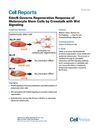
April 2016 in “Cell Reports” This study demonstrated that EdnrB signaling promotes melanocyte stem cell proliferation and differentiation, enhancing hair and epidermal melanocyte regeneration, especially under conditions of active Wnt signaling.
 96 citations
,
October 2000 in “The FASEB Journal”
96 citations
,
October 2000 in “The FASEB Journal” In this study, researchers found that p75 neurotrophin receptor signaling affects apoptosis during hair follicle regression in mice, and altering its activity might help manage disorders involving early catagen entry.
 June 2026 in “Frontiers in Oncology”
 In this study, researchers found that deficiencies in Gsdma1/2/3 significantly inhibited the initiation and progression of cutaneous squamous cell carcinoma (cSCC) in mice, suggesting GSDMA's role in promoting cSCC proliferation and its potential as a therapeutic target.
 8 citations
,
June 2024 in “APOPTOSIS”
8 citations
,
June 2024 in “APOPTOSIS” In this review, researchers discussed recent insights into caspases, enzymes initially associated with cell death and inflammation, revealing their broader roles in cell proliferation, migration, and differentiation, and highlighting the importance of caspase knock-out mice for understanding their implications in diseases.
12 citations
,
May 2021 in “The journal of investigative dermatology/Journal of investigative dermatology” This study found that disrupting Lm332 expression in mice changes keratinocyte genetic expression, alters cell shape, and disrupts epidermal homeostasis, despite some compensatory anchorage by hair follicle basal cells.