8 citations
,
April 2017 in “American Journal of Dermatopathology” In this study, nail matrix pathology in a patient with Cronkhite–Canada Syndrome revealed matrix hypergranulosis, suggesting that an inflammatory process may play a key role in the condition's pathogenesis.
28 citations
,
September 2016 in “Future oncology” In this study, a UK expert panel discussed strategies for managing common side effects of vismodegib, a hedgehog pathway inhibitor used for advanced basal cell carcinoma, concluding that adverse events like taste disturbances and muscle cramps can be effectively managed to optimize treatment duration.
February 2022 in “Institutional Repositories DataBase (IRDB)” This case study describes a unique instance of unilateral steroid-induced rosacea-like dermatitis likely due to long-term localized use of topical corticosteroids, emphasizing the need for careful application and thorough histopathological analysis.

In preclinical studies, topical CUR61414 reduced Hh signaling and shrank BCCs in mice, but this study found no clinical efficacy in human superficial or nodular BCCs.
1 citations
,
December 2024 in “Case Reports in Dermatology” In this case study, the researchers reported a rare incidence of bilateral hyperpigmented macules on a patient's lower legs, possibly due to cyclophosphamide, suggesting that this chemotherapy drug may directly stimulate hair follicles to cause skin discoloration.
The study reported that vismodegib showed significant effectiveness in treating basal cell carcinoma, particularly in patients with Gorlin-Goltz syndrome or locally advanced BCC, but also highlighted substantial side effects, requiring careful management to prevent treatment resistance and maintain remission.
 June 2026 in “bioRxiv (Cold Spring Harbor Laboratory)”
 This study evaluated petroleum jelly-based bioactive glass ointments with varying copper concentrations for wound healing in chronic wound models, finding that the 3 wt% copper formulation significantly improved healing by enhancing tissue regeneration, vascularization, and antibacterial protection compared to controls.

In this study, researchers developed a method using stencils to create controlled stiffness gradients in alginate hydrogels, revealing that stiffer regions within the gels promote deeper invasion by breast cancer cells, facilitating the study of mechanosensitive cellular behaviors.
10 citations
,
October 2023 in “Mycoses” This study reviewed 131 cases of White Piedra and found it predominantly affects young women, often asymptomatic, with the presence of hair nodules commonly linked to hair-related factors such as long hair and use of hair accessories.
 1 citations
,
April 2017 in “Journal of Investigative Dermatology”
1 citations
,
April 2017 in “Journal of Investigative Dermatology” This proof-of-concept study reported that a new, ultra-fast, one-step immunohistochemistry method improved the interpretation of Mohs surgery slides, particularly for poorly differentiated tumors.
 33 citations
,
September 2012 in “Australasian Journal of Dermatology”
33 citations
,
September 2012 in “Australasian Journal of Dermatology” This article reviews trichoscopic signs of chemotherapy-induced alopecia, including exclamation marks, but reports no new clinical results.
 13 citations
,
June 2010 in “Journal of The American Academy of Dermatology”
13 citations
,
June 2010 in “Journal of The American Academy of Dermatology” This study reports previously unreported nail features in Cronkhite-Canada syndrome, specifically recurrent onychomadesis of all 20 nails linked to systemic illness.
38 citations
,
June 2005 in “International Journal of Dermatology” This case report describes a 28-year-old man with widespread pigmented basal cell carcinomas and recurrent infections that were challenging to control, associated with nevus comedonicus and a rudimentary toe.
February 2025 in “Gastroenterology” Corticosteroids improved symptoms in a man with Cronkhite-Canada Syndrome.
 21 citations
,
January 2022 in “Pharmaceutics”
21 citations
,
January 2022 in “Pharmaceutics” This systematic review investigated colchicine as a potential treatment for various skin conditions, finding that most studies reported generally positive clinical outcomes when used alone or with other drugs, despite some variability in results.

In this case report, a 68-year-old Caucasian woman with Brunsting-Perry pemphigoid experienced scarring alopecia, which was effectively managed using intralesional betamethasone and topical mometasone furoate, suggesting this rare condition may be underdiagnosed in scarring alopecia cases.
 January 2022 in “Yonago Acta Medica”
 This case report describes a Japanese woman with unilateral steroid-induced rosacea-like dermatitis attributed to long-term topical corticosteroid use, highlighting the significance of appropriate steroid application and histopathological evaluation for facial erythematous nodules.
 1 citations
,
April 2018 in “The journal of investigative dermatology/Journal of investigative dermatology”
1 citations
,
April 2018 in “The journal of investigative dermatology/Journal of investigative dermatology” This study found that topical patidegib gel significantly shrank basal cell carcinomas in Gorlin syndrome patients without causing the systemic side effects common with oral hedgehog inhibitors.
8 citations
,
January 2024 in “Regenerative Biomaterials” This study found that a novel bioceramic/alginate hydrogel with photothermal properties and multiple ion release effectively reduces infection and inflammation, and enhances osseointegration in early-stage peri-implant lesions, potentially improving dental implant survival rates.
11 citations
,
January 2009 in “World Journal of Gastroenterology” This study reports the first documented case of Cronkhite-Canada syndrome in a patient with myelodysplastic syndrome, where corticosteroids dramatically improved the patient's condition.
6 citations
,
November 2018 in “Case reports in nephrology and dialysis” This case report detailed a 71-year-old male with Cronkhite-Canada syndrome and associated membranous nephropathy, who showed a significant improvement in skin and gastrointestinal symptoms, and remission of nephropathy, after treatment with rituximab, cyclosporine, and azathioprine.
9 citations
,
April 1985 in “Archives of Dermatology” This case report describes a 7-year-old boy with Netherton's syndrome, highlighting the identification of the tricorrhexis invaginata hair defect using a photographically illustrated scalp biopsy, which had not been visually documented before.
 October 2023 in “The American Journal of Gastroenterology”
 This case report describes chronic iron deficiency anemia in a patient with Cronkhite-Canada syndrome, highlighting the need for more data to guide treatment and cancer surveillance due to its rarity and mortality risk.
1 citations
,
July 2025 in “Journal of Investigative Dermatology”  2 citations
,
February 2009 in “Clinical and Experimental Dermatology”
2 citations
,
February 2009 in “Clinical and Experimental Dermatology” In this case study, a 51-year-old Japanese man was diagnosed with desmoplastic trichoepithelioma after histological examination of surgically excised facial plaques.
 14 citations
,
July 2012 in “Journal of the American Academy of Dermatology”
14 citations
,
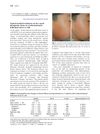
July 2012 in “Journal of the American Academy of Dermatology” This study found that topical tacalcitol improved roughness and scaling in erythromelanosis follicularis faciei et colli, although it was less effective for facial erythema.
6 citations
,
April 2012 in “PubMed” This case report describes a 33-year-old Indian male with Cronkhite-Canada syndrome who experienced complete symptom recovery within 5 months after starting a high protein diet, proton pump inhibitors, and zinc-vitamin supplements.
11 citations
,
March 2004 in “Journal of Comparative Pathology” Norfolk Terriers have a genetic skin defect causing scaling and blisters due to a keratin issue.
1 citations
,
September 2022 in “European Journal of Dermatology” This study identified a novel splice-site variant of the LAMB3 gene that may cause junctional epidermolysis bullosa, suggesting gene sequencing is essential for accurate diagnosis.
21 citations
,
August 1987 in “Archives of Dermatology” This communication reports previously unreported side effects, severe bullous dermatosis and onycholysis, in three patients undergoing high-dose methotrexate and leucovorin calcium therapy, impacting their chemotherapy schedules.