 May 2020 in “International Journal of Clinical Obstetrics and Gynaecology”
 This article reviews the medical history and symptoms related to hyperandrogenism in patients, but reports no new clinical findings.
 April 2020 in “Indian Journal of Forensic Medicine & Toxicology”
 This study found that laparoscopic ovarian drilling significantly improved hormone levels and menstrual irregularity, leading to increased ovulation and a pregnancy rate of 26% among women with PCOS-related infertility.
This article discusses various causes and prevention methods for male pattern baldness but reports no new research findings.
The document explains how certain drugs block hormones to treat cancers like breast and prostate cancer.

This study found that a significant portion of counterfeit drugs seized among bodybuilders did not match their labels, with many containing undeclared anabolic steroids or other unexpected active ingredients.
 October 2010 in “Reproductive Biomedicine Online”
 A new method can almost perfectly distinguish adenomyosis from similar conditions using blood tests.
 March 2009 in “Prenatal Diagnosis”
 This paper discusses the management of pregnancy in a carrier of the Donohue mutation and reports no new clinical findings.
 January 2009 in “Elsevier eBooks”
 This chapter reviews botanical treatments for polycystic ovary syndrome, discussing potential benefits but presenting no new clinical results; it emphasizes the use of botanicals for managing symptoms like anovulation, insulin resistance, and inflammation.
 January 2006 in “Fertility and Sterility”
 This book provides a comprehensive guide to managing polycystic ovary syndrome, detailing its symptoms, diagnosis, treatment options, and long-term health implications without presenting new clinical results.
 April 2016 in “The Journal of Sexual Medicine”
 PFS affects some women, steroids easily bought online, hypogonadism info unreliable, low testosterone linked to CVD.
 2 citations
,
May 2021 in “Clinical Pharmacology in Drug Development”
2 citations
,
May 2021 in “Clinical Pharmacology in Drug Development” This phase 1 study reported that after administering supratherapeutic doses of cortexolone 17α‐propionate, a topical antiandrogen intended for hair loss treatment, there was no effect on the QTc interval, indicating no measurable cardiac safety concerns in the concentration range tested.
 1 citations
,
March 2017 in “European Journal of Cancer Prevention”
1 citations
,
March 2017 in “European Journal of Cancer Prevention” This study found that self-reported use of finasteride or oral contraceptives did not reduce the incidence of renal cancer in participants of the PCLO trial.
 883 citations
,
August 2016 in “Nature Reviews Disease Primers”
883 citations
,
August 2016 in “Nature Reviews Disease Primers” This review discusses the current understanding of polycystic ovary syndrome, focusing on its epidemiology, pathophysiology, diagnosis, management, and future research directions, but reports no new clinical results.
 200 citations
,
October 2009 in “European journal of endocrinology”
200 citations
,
October 2009 in “European journal of endocrinology” This review discusses the multifaceted actions of metformin in polycystic ovary syndrome and reports no new clinical results; the authors emphasize metformin's potential benefits in both cardiometabolic and reproductive aspects of PCOS.
 77 citations
,
May 2012 in “Expert Opinion on Emerging Drugs”
77 citations
,
May 2012 in “Expert Opinion on Emerging Drugs” New treatments for male hypogonadism are effective and should be personalized.
 75 citations
,
November 2009 in “Gynecological Endocrinology”
75 citations
,
November 2009 in “Gynecological Endocrinology” This study found that both myo-inositol and metformin helped restore normal menstrual cycles in patients with PCOS, but myo-inositol appeared to be more effective in inducing pregnancy.
 67 citations
,
January 2007 in “Climacteric”
67 citations
,
January 2007 in “Climacteric” This article discusses the impact of estrogens on skin aging, highlighting the potential benefits and unresolved effectiveness of alternatives like phytoestrogens and selective estrogen receptor modulators; it reports no new clinical results.
 50 citations
,
August 2017 in “Diabetologia”
50 citations
,
August 2017 in “Diabetologia” This review discusses genetic factors that may influence the effectiveness of metformin in treating polycystic ovary syndrome and emphasizes the need for further research to establish clear benefits.
 4 citations
,
July 2017 in “Medicine”
4 citations
,
July 2017 in “Medicine” This article reviews the diagnosis and management of polycystic ovary syndrome, emphasizing lifestyle changes and treatment strategies, and reports no new clinical results.
 3 citations
,
January 2016 in “Elsevier eBooks”
3 citations
,
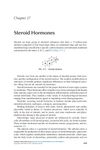
January 2016 in “Elsevier eBooks” This article discusses the various roles of steroids in vertebrate organ systems and notes several glucocorticoids that were among the Top 200 Drugs by sales in the 2010s, but it reports no new clinical findings.
 2 citations
,
March 2016 in “InnovAiT”
2 citations
,
March 2016 in “InnovAiT” This article discusses the signs, symptoms, and associated risks of polycystic ovary syndrome, without providing new clinical results; it emphasizes the link between being overweight and increased metabolic risks.
 2 citations
,
May 2010 in “Journal of Obstetrics and Gynaecology Canada”
2 citations
,
May 2010 in “Journal of Obstetrics and Gynaecology Canada” This review summarizes best practices for diagnosing and managing PCOS, emphasizing accurate biochemical assessments and individualized treatment approaches, but reports no new clinical results.
 1 citations
,
June 2017 in “International journal of reproduction, contraception, obstetrics and gynecology”
1 citations
,
June 2017 in “International journal of reproduction, contraception, obstetrics and gynecology” This study found that N-acetylcysteine was as effective as metformin in improving insulin resistance and metabolic syndrome parameters in women with polycystic ovary syndrome, with fewer side effects.
 1 citations
,
June 2012 in “Springer eBooks”
1 citations
,
June 2012 in “Springer eBooks” This article discusses the potential of acupuncture as a complementary or alternative therapy for PCOS, highlighting experimental evidence of its positive effects on reproductive and metabolic function, but reports no new clinical results.
 1 citations
,
January 2001 in “Drug and therapeutics bulletin”
1 citations
,
January 2001 in “Drug and therapeutics bulletin” This review discusses the management of polycystic ovary syndrome in women and reports no new clinical results.
 March 2025 in “Pakistan Journal of Scientific & Industrial Research Series A Physical Sciences”
 This abstract discusses the challenges of diagnosing and managing PCOS, highlighting that individualized management, lifestyle modifications, and medical treatments such as contraceptives and metformin are recommended to address hormonal imbalances and co-morbidities.
 June 2024 in “Clinical Endocrinology and Metabolism”
 This article examines when it is appropriate to prescribe estrogen for women with hormonal imbalances, utilizing decades of clinical practice, expert consultation, and a comprehensive literature review.
 August 2023 in “Clinical Endocrinology and Metabolism”
 This article provides evidence on when it is appropriate to prescribe hormone therapy for women by reviewing cases from the author's practice and international literature, emphasizing the importance of primary care in managing hormonal imbalances.
 March 2023 in “East African scholars journal of medical sciences”
 This review examines metformin use in PCOS treatment, noting that while non-randomized studies show improvements, randomized controlled trials suggest benefits are limited and highlight lifestyle changes as potentially more effective.
 January 2018 in “Deleted Journal”
 In this observational study of 110 women with PCOS, the researchers found that 52.7% experienced depression and anxiety, with Metformin being the most prescribed drug. Regular counseling and lifestyle management were noted to improve the overall disease prognosis.