 October 2025 in “Dermatology Practical & Conceptual”
 This source highlights the potential benefits of identifying risk factors and intervening early to mitigate acne scarring and improve quality of life. It also emphasizes the importance of recognizing acne severity predictors to guide preventive strategies and optimize patient outcomes.
 January 2025 in “International Journal of Dermatology Research”
 This prospective observational study investigated 200 patients with non-scarring alopecia, concluding that accurate classification combined with individualized treatment, including combination therapies, significantly improved outcomes over monotherapy with topical minoxidil.
10 citations
,
January 2017 in “Dermato-Endocrinology” This study found that the scarring folliculitis type of acne inversa in the Chinese population is associated with specific histopathological features and a higher prevalence of smoking and occupational exposure.
 September 2025 in “Ukrainian Journal of Dermatology Venerology Cosmetology”
 In this case study, a patient with pseudopelades of Brocq was treated with a peripheral vasodilator, B vitamins, and corticosteroid lotion, leading to halted hair loss and improved clinical symptoms over seven weeks.
July 2026 in “Journal of Dermatological Treatment” This study observed that excimer laser therapy led to subjective improvements in hair appearance for 60% of scarring alopecia patients and reduced symptoms like scalp pain, burning, and pruritus, indicating potential as an adjunctive treatment for inflammatory control and disease stabilization.
 April 2023 in “Journal of Investigative Dermatology”
 This study found that patients receiving PRP treatments for various types of alopecia and skin rejuvenation had a higher risk of adverse events and lower self-assessment scores when injections were administered at shallower depths, with significant correlations between patient and physician assessments across different indications.
 22 citations
,
January 2017 in “Skin appendage disorders”
22 citations
,
January 2017 in “Skin appendage disorders” This research analyzed 72 primary scarring alopecia cases in a Barcelona hospital, finding that the majority involved women, with a lymphocytic infiltrate and subacute onset in many cases, leading to stable disease, while neutrophilic cases had more acute episodes.
 1 citations
,
April 2017 in “Journal of Investigative Dermatology”
1 citations
,
April 2017 in “Journal of Investigative Dermatology” This study reports that tofacitinib, a JAK inhibitor, may stabilize hair loss in patients with classic lichen planopilaris and frontal fibrosing alopecia, though hair regrowth was not robust.
 September 2024 in “Journal of the American Academy of Dermatology”
 This study highlights the limited knowledge about using iron infusions to treat alopecia in patients intolerant to oral iron, suggesting a need for further research.
 December 2012 in “Drugs & Therapy Perspectives”
 Doctors use their experience to choose treatments for scarring hair loss because it's hard to diagnose and treat.
 January 2026 in “Archives of Current Medical Research”
 Among female patients experiencing hair loss, this study found telogen effluvium to be the most common type, significantly linked to low ferritin levels, while traction alopecia was more prevalent among those wearing headscarves.
 April 2026 in “International Journal of Research in Dermatology”
 This meta-analysis found that laser-based therapies showed promising clinical benefits in treating scarring alopecias, such as disease stabilization and symptom improvement, but highlighted the need for high-quality randomized controlled trials due to serious risk of bias and methodological limitations in existing studies.
 15 citations
,
December 2011 in “Journal of the European Academy of Dermatology and Venereology”
15 citations
,
December 2011 in “Journal of the European Academy of Dermatology and Venereology” In this study, severe diffuse hair loss in patients with systemic lupus erythematosus was associated with distinct clinical, dermoscopic, and histopathological features, which improved alongside treatment of the underlying condition.
 3 citations
,
January 2013 in “Journal of the European Academy of Dermatology and Venereology”
3 citations
,
January 2013 in “Journal of the European Academy of Dermatology and Venereology” This letter to the editor discusses a previous clinical and histopathological analysis of four cases of severe diffuse non-scarring hair loss in systemic lupus erythematosus, reporting no new study results.
1 citations
,
December 2012 in “Journal of dermatological science” This study introduces ficlatuzumab, an anti-HGF monoclonal antibody, in combination with gefitinib in a phase 2 trial to address EGFR TKI resistance in Asian NSCLC patients.
 October 2017 in “Iranian Journal of Dermatology”
 This study found that clinical examination is effective for diagnosing certain non-scarring hair loss types in women, although histopathologic studies are necessary for exact diagnoses, and laboratory tests did not correlate well with clinical findings.
 2 citations
,
June 2020 in “Dermatology and therapy”
2 citations
,
June 2020 in “Dermatology and therapy” In this case report, narrowband-UVB phototherapy successfully treated a rare instance of Graham Little-Piccardi-Lassueur syndrome, a variant of lichen planopilaris, as investigated through non-invasive imaging techniques.
 78 citations
,
April 1994 in “Archives of dermatology”
78 citations
,
April 1994 in “Archives of dermatology” This study suggests genetic and clinical heterogeneity in keratosis pilaris atrophicans, with variations in inheritance patterns, severity, and response to treatment among 21 individuals observed.
 44 citations
,
April 2012 in “American Journal of Clinical Dermatology”
44 citations
,
April 2012 in “American Journal of Clinical Dermatology” Scarring alopecias are complex hair loss disorders that require early treatment to prevent permanent hair loss.
32 citations
,
August 2016 in “Journal of the American Academy of Dermatology” This letter discusses congenital triangular alopecia (TTA), a non-scarring hair loss condition often seen in children, without reporting new clinical findings.
 23 citations
,
December 2015 in “Anais Brasileiros de Dermatologia”
23 citations
,
December 2015 in “Anais Brasileiros de Dermatologia” This study identified two distinct histological patterns in permanent alopecia following bone marrow transplantation, suggesting links to myeloablative chemotherapy and chronic graft-versus-host disease.
4 citations
,
March 2025 in “Pediatric Dermatology” This review examines the clinical presentation of alopecia areata in children and compares it to adult-onset cases, noting that data on pediatric cases is scarce and often varies, with reported onset typically between ages 6 and 12.
 April 2026 in “International Journal of Drug Delivery Technology”
 This review highlights the various causes and treatment options for alopecia, noting that while non-scarring types often see successful hair regrowth, scarring forms require early intervention to manage inflammatory destruction of hair follicles.
March 2026 in “Expert Opinion on Pharmacotherapy” This review highlights that JAK inhibitors have transformed severe alopecia areata treatment by disrupting disease signaling, emphasizing the need for strategies to address non-responders and manage treatment discontinuation.
November 2020 in “Research Square (Research Square)” This study found that 7.80% of Chinese patients with systemic lupus erythematosus experienced scarring alopecia, with certain disease characteristics and treatments influencing its prevalence.
 3 citations
,
January 2010 in “Journal of The European Academy of Dermatology and Venereology”
3 citations
,
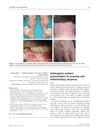
January 2010 in “Journal of The European Academy of Dermatology and Venereology” This article provides no abstract or new research findings on the androgenic pattern presentation of scarring and inflammatory alopecia.
 155 citations
,
September 2008 in “British journal of dermatology/British journal of dermatology, Supplement”
155 citations
,
September 2008 in “British journal of dermatology/British journal of dermatology, Supplement” This study observed that frontal fibrosing alopecia predominantly affects postmenopausal women, can be associated with lichen planus, and may lead to progressive hairline recession, though this progression is not consistent in all cases.
19 citations
,
July 2017 in “Clinical and experimental dermatology” This study provides one of the first descriptions of the demographic, clinical, and therapeutic characteristics of lichen planopilaris in Chilean adults, reporting that treatment usually reduced or halted disease progression.
16 citations
,
September 2024 in “Science Translational Medicine” This study provides a comprehensive framework for understanding, managing, and addressing skin fibrosis, highlighting common pathways and new therapeutic opportunities for various fibrosis-related disorders that currently lack effective treatments.
13 citations
,
July 2020 in “Anais brasileiros de dermatologia/Anais Brasileiros de Dermatologia” This article discusses the use of trichoscopy as a helpful tool for early diagnosis and monitoring of dissecting cellulitis, but it reports no new clinical results.