2 citations
,
July 2024 in “International Journal of Molecular Sciences” In this study, researchers found that knocking down the transcription factor Csdc2 inhibited the proliferation of dermal papilla cells in cashmere goats, and identified its regulatory relationship with the gene Robo2, providing insights into the genetic mechanisms influencing cashmere fiber growth.
22 citations
,
September 2003 in “Journal of Investigative Dermatology” This study analyzed patients with X-linked dominant chondrodysplasia punctata and identified novel mutations in the emopamil-binding protein gene, highlighting the need for genetic testing alongside biochemical analysis for accurate diagnosis.
August 2025 in “American Journal of Case Reports” In this case report, researchers describe a 13-year-old phenotypic female with 46,XY karyotype, previously misdiagnosed with androgen insensitivity syndrome, who was later identified to have 17-beta-hydroxysteroid dehydrogenase type 3 deficiency, underscoring the importance of genetic and hormonal tests for accurate diagnosis of sex development disorders.
 5 citations
,
October 2019 in “The journal of investigative dermatology/Journal of investigative dermatology”
5 citations
,
October 2019 in “The journal of investigative dermatology/Journal of investigative dermatology” This study identified a high-risk allele in the PLCD1 gene associated with hereditary trichilemmal cyst formation, proposing a monoallelic two-hit mechanism as the underlying genetic pathogenesis.
 9 citations
,
November 2012 in “Biomolecules & therapeutics”
9 citations
,
November 2012 in “Biomolecules & therapeutics” This study found that diphlorethohydroxycarmalol significantly increased prostaglandin $E_2$ synthesis in HaCaT human keratinocytes by upregulating COX-1 and COX-2 expression, suggesting potential benefits from elevated $PGE_2$ production.
8 citations
,
December 2016 in “Hormone Research in Paediatrics” This study reported a series of eight children with hereditary vitamin D-resistant rickets in Tunisia, identifying both common and novel mutations in the vitamin D receptor gene, and noting significant improvement with intravenous calcium treatment in most patients.
1 citations
,
October 2021 in “The journal of investigative dermatology/Journal of investigative dermatology” This study found that depleting HIF-P4H-2 in FoxD1-lineage cells in mice led to disrupted hair follicle development, resulting in truncal alopecia but normal cranial hair, suggesting its crucial role in hair homeostasis.
 74 citations
,
January 2006 in “The journal of investigative dermatology/Journal of investigative dermatology”
74 citations
,
January 2006 in “The journal of investigative dermatology/Journal of investigative dermatology” This study identified novel compound heterozygous mutations in the DSG4 gene in a Japanese patient with congenital hypotrichosis, suggesting overlap between localized autosomal recessive hypotrichosis and monilethrix.
 17 citations
,
August 2018 in “BMC Genomics”
17 citations
,
August 2018 in “BMC Genomics” The researchers found that HOXC13 regulates different keratin proteins in a mixed manner, with certain SNPs impeding this regulation, while also demonstrating negative-feedback by HOXC13 and positive regulation by LEF1 and melatonin on the HOXC13 promoter.
16 citations
,
November 2005 in “Journal of Clinical Pathology” This study found that CD1d is strongly expressed in human scalp skin and hair follicles, particularly in the anagen phase, suggesting a role in scalp immunology and potential implications for hair disorder treatment.
May 2025 in “BMC Genomics” This study found that circ 0020938 suppresses hair follicle stem cell proliferation by interacting with the miR-142-5p/DSG4 axis, which aids in the hair follicle cycle's proper progression.
22 citations
,
April 2010 in “Journal of Cellular Biochemistry” This study concluded that the hairless protein interacts with the vitamin D receptor to repress transcription crucial for hair cycling, employing multiple protein interfaces and modulating chromatin structure.
This study identified novel mutations associated with ectodermal dysplasias in Pakistani families, including a missense mutation in the KRTHB5 gene linked to pure hair-nail ectodermal dysplasias and mutations in the EDAR gene related to hypohidrotic ectodermal dysplasia.
 1 citations
,
November 2017 in “Expert opinion on orphan drugs”
1 citations
,
November 2017 in “Expert opinion on orphan drugs” This review discusses the genetic basis of ectodermal dysplasia, highlighting that identification of gene pathologies enhances diagnosis and supports prenatal DNA testing, but it reports no new clinical results.
 April 2018 in “Journal of Investigative Dermatology”
 This study found that the absence of Hes1 in hair follicles delays secondary hair germ activation and shortens the anagen phase, impacting HFSC self-renewal and long-term hair regeneration.
 January 2001 in “Biomedical Research”
 This study observed that PAD type III and trichohyalin are expressed earlier than their deiminated form during the first and second hair cycles in rat hair follicles, indicating a potential additional factor is involved in triggering deimination.
 April 2019 in “The journal of investigative dermatology/Journal of investigative dermatology”
 In this study, the researchers observed significant metabolic dysregulation in central centrifugal cicatricial alopecia, particularly involving lipid metabolism and the downregulation of AMPK-related genes.
 18 citations
,
February 2015 in “Acta Crystallographica Section D: Structural Biology”
18 citations
,
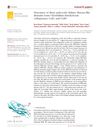
February 2015 in “Acta Crystallographica Section D: Structural Biology” This study reports that Ca 2+ binding alters the dynamics and surface properties of PKD-like domains in Clostridium histolyticum collagenases, enhancing their stability and potentially aiding in collagen-targeting vehicle development.
14 citations
,
December 1998 in “British Journal of Cancer” This study found that breast carcinomas ectopically express a truncated form of hHb1 mRNA, which is associated with epithelial cell transformation.
92 citations
,
April 2009 in “Journal of Investigative Dermatology” The Celsr1 gene is crucial for normal hair patterning in mice.
2 citations
,
April 2008 in “PubMed” This study identified the c.1204G to A (p.E402K) mutation in the hHB6 gene as a cause of monilethrix in a Chinese family, highlighting the gene's role in the condition.
188 citations
,
January 2022 in “PubMed” This review discusses recent advancements in congenital adrenal hyperplasia research, including improved diagnostic techniques, alternative treatments, and insights from long-term outcome data, but it reports no new clinical results.
1 citations
,
August 2016 This study investigated the cytotoxic effects of DHA derivatives on cancer cell lines and found that didocosahexaenoin was the most potent, inducing apoptosis and producing reactive oxygen species in PC3 prostate carcinoma cells.
 19 citations
,
May 2006 in “Clinical and Experimental Dermatology”
19 citations
,
May 2006 in “Clinical and Experimental Dermatology” This study identified a novel insertion mutation in the hairless gene that may contribute to the development of congenital atrichia with papular lesions in a Pakistani family.
114 citations
,
May 2001 in “Development” This study found that overexpressing the Hoxc13 gene in mice causes hair loss and a skin condition similar to ichthyosis, identifying several gene targets that may regulate hair growth.
January 2010 in “Chinese Journal of Dermatovenereology of Integrated Traditional and Western Medicine” This study found a novel nonsynonymous genetic variant in the hHb1 gene of a family with monilethrix, which differs from ten previously reported pathogenic mutations.
 April 2019 in “The journal of investigative dermatology/Journal of investigative dermatology”
 In this study, researchers found that CCCA in women of African descent is associated with molecular changes, including dysregulation of fatty acid metabolism and fibrosis pathways, suggesting potential targets for new treatments.
27 citations
,
May 2011 in “Journal of Investigative Dermatology” TCHHL1 is a protein important for hair growth, found in hair follicles.
 25 citations
,
April 2015 in “Journal of Investigative Dermatology”
25 citations
,
April 2015 in “Journal of Investigative Dermatology” This study found that Gsdma3 mutation in mice allows hair follicles to bypass a typical telogen phase and directly enter the anagen phase, suggesting Gsdma3's role in hair cycle transitions by regulating Wnt signaling.