28 citations
,
September 2014 in “Journal of Veterinary Internal Medicine” This study found that the novel drug VDC-1101 showed a 45% objective response rate in treating canine cutaneous T-cell lymphoma, offering a potential treatment option for this challenging disease.
 November 2022 in “The journal of investigative dermatology/Journal of investigative dermatology”
 This study found that conditional deletion of CD271 in mouse epidermis led to significant disorganization and increased thickness, suggesting CD271's crucial role in regulating skin differentiation and structure.
9 citations
,
February 2001 in “Journal of Dermatological Science” This study found that the expressions of CDK inhibitors p21waf1/cip1 and p27kip1 were higher during the anagen phase compared to telogen, suggesting a role in follicular epithelial cell differentiation.
 13 citations
,
April 2020 in “Experimental Cell Research”
13 citations
,
April 2020 in “Experimental Cell Research” This study found that knockdown of PCAT1 inhibited hair follicle regeneration in nude mice by disrupting the miR-329/Wnt10b axis and Wnt/β-catenin signaling, highlighting PCAT1's role in promoting follicle regrowth.

A 72-year-old man was diagnosed with a rare skin form of Rosai-Dorfman disease after years of misdiagnosis.
 4 citations
,
January 2021 in “Journal of Clinical Medical Research”
4 citations
,
January 2021 in “Journal of Clinical Medical Research” This review provides an in-depth analysis of the structure and function of c-kit activation, and its role in both normal physiological and pathological conditions, with no new research findings reported.
February 2020 in “Oncology Times” This article reviews antibody drug conjugates for cancer treatment, describing their mechanism, recent approvals, and ongoing research efforts, but reports no new clinical results.
March 2022 in “Clinical Cosmetic and Investigational Dermatology” This study identified altered mRNA and lncRNA profiles in NS scalp tissues, highlighting CDKN2AIP as a downregulated gene involved in a ceRNA network.
September 2019 in “The journal of investigative dermatology/Journal of investigative dermatology” This study found that the PPARγ modulator NAC-GED-0507-Levo may protect hair follicles from chemotherapy-induced damage, potentially offering a strategy to address irreversible hair loss in cancer patients.
 6 citations
,
September 2009 in “European journal of histochemistry”
6 citations
,
September 2009 in “European journal of histochemistry” This study found that CD90+ stem cells with fibroblast-like morphology are present in the lower part of the anagen hair follicle in dogs.
19 citations
,
July 1997 in “British Journal of Dermatology” This study successfully developed and characterized a monospecific monoclonal antibody, LHTric-1, that specifically localizes to the pre-cortical region of the hair follicle and can aid research on hair and nail formation.
 24 citations
,
July 2017 in “Structure”
24 citations
,
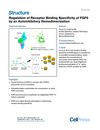
July 2017 in “Structure” In this study, researchers found that ligand homodimerization controls the receptor binding specificity of the FGF9 subfamily, preventing off-target activation of FGFR "b" isoforms.
 August 2015 in “International Journal of Genetics and Molecular Biology”
 This study found that specific Y-chromosome alleles may influence susceptibility to prostate cancer in Iraqi males, suggesting their potential use in screening for the disease.
1 citations
,
January 2012 In this study, the researchers cloned and analyzed the CRABP I gene in Inner Mongolian cashmere goats, finding its highest mRNA expression at 90 days in embryo skin compared to later stages.
73 citations
,
January 2002 in “Journal of Investigative Dermatology” In this study, researchers found that connexin 43-negative cells in the basal layer of the epidermis could serve as markers for keratinocyte stem cells, aiding their identification and separation.
3 citations
,
January 2025 in “Journal of Natural Products” In this study, researchers isolated new compounds from the plant *Calanthe cardioglossa* and found that five of these compounds, particularly calancardin B, significantly reduced TNF-α levels in immune cells relevant to multiple sclerosis, suggesting potential for immunomodulatory effects.
25 citations
,
April 1985 in “Journal of Investigative Dermatology” 5 citations
,
September 2021 in “Journal of Molecular Histology” In this study, the researchers identified LHX2 as a specific marker for hair follicle placodes, differentiating them from eccrine sweat gland placodes through double immunofluorescence staining.
114 citations
,
September 1985 in “Journal of Investigative Dermatology”  April 2016 in “The journal of investigative dermatology/Journal of investigative dermatology”
 In this study, Mpzl3-/- mice developed severe seborrhea-like dermatitis with skin inflammation, indicating MPZL3's role in the skin condition's development, independent of adaptive immunity.
April 2019 in “Journal of Investigative Dermatology” This study found that blocking LFA-1 signaling completely prevented the development of alopecia areata in C3H/HeJ mice, suggesting that LFA-1 plays a crucial role in the disease's pathogenesis and could be a target for new therapies.
29 citations
,
April 2000 in “Journal of histochemistry and cytochemistry/The journal of histochemistry and cytochemistry” This study found that ICAM-1 expression in murine skin is developmentally regulated and crucial for skin and hair follicle remodeling beyond its recognized role in immune responses.
57 citations
,
January 1987 in “Journal of Biological Chemistry” This study identified and sequenced several keratin cDNA clones showing distinct expression patterns in mouse epithelia, with in situ hybridization highlighting differences in keratin distribution between normal and hyperproliferative tissues.
April 2016 in “Journal of Investigative Dermatology” CD73 may regulate hair growth and could be targeted for hair growth treatments.
26 citations
,
March 1995 in “Differentiation” This study isolated and sequenced the complete gene rKAP4L1, which encodes a cysteine-rich hair keratin-associated protein in rabbit hair follicles.
This study found that RXR and RAR proteins were detectable in normal human skin, suggesting they may play a role in epidermal cell differentiation and hair and gland physiology.
July 2024 in “Journal of Investigative Dermatology” Expanding regulatory T cells may help treat alopecia areata by reducing harmful immune cells.
 6 citations
,
May 1997 in “Journal of Dermatological Science”
6 citations
,
May 1997 in “Journal of Dermatological Science” This study found that a gene from hamster flank organs is indirectly regulated by androgens, despite lacking direct androgen responsive elements, indicating involvement of androgen-dependent transcription factors.
January 2019 in “International Journal of Immunology Research” This study found no significant difference in serum CCL27 levels between patients with alopecia areata and healthy controls, regardless of gender or age.
 September 2024 in “Journal of the American Academy of Dermatology”
 PRO-C22 can help diagnose and monitor the severity of hidradenitis suppurativa.