 31 citations
,
October 2018 in “Frontiers in Cell and Developmental Biology”
31 citations
,
October 2018 in “Frontiers in Cell and Developmental Biology” The conclusion is that CD90 is not a specific marker for fibroblast subtypes and better methods are needed to identify them.
 January 2025 in “Iraqi Journal of Science”
 This study found that variations in the genes PDCD4, miR-21, and miR-449b may significantly influence breast cancer progression, with higher PDCD4 serum levels linked to increased breastfeeding.
 August 2012 in “Nature Cell Biology”
 In this study, researchers found that β-catenin directly promotes TERT expression in stem and cancer cells by interacting with the Tert promoter, illustrating a mechanistic link between tumorigenesis and pluripotency.
 63 citations
,
May 2011 in “Clinical cancer research”
63 citations
,
May 2011 in “Clinical cancer research” In this study, topical CUR61414 was effective in inhibiting basal cell carcinomas in mice, but no clinical activity was observed in human trials.
 153 citations
,
January 2001 in “Science”
153 citations
,
January 2001 in “Science” In a neonatal rat model, this study found that topical CDK2 inhibitors reduced chemotherapy-induced hair loss in 33 to 50% of the animals, suggesting a potential strategy for preventing alopecia in cancer patients.
 April 2023 in “Cancer research”
 This study suggests that KRTAP2-3 may serve as a novel biomarker to identify cells in the polyaneuploid cancer cell state, which is linked to therapy resistance and poor prognosis in prostate cancer.
July 2024 in “Journal of Investigative Dermatology” This study suggests that macrophages, especially CD206+ subsets, play a key role in hair growth induced by squaric acid dibutyl ester, a therapy used for alopecia areata.
July 2017 in “Cancer Research” This study identified a radio-resistant population of Krt15+ stem cells in the mouse small intestine that can initiate tumors, suggesting potential targets for colon cancer therapy.
February 2026 in “ACS Applied Materials & Interfaces” This study developed a novel treatment method using carbon dots from Cinnamomum burmannii leaves, which improved hair regeneration and thickness in an AGA mouse model by promoting cell proliferation, angiogenesis, and reducing inflammation through multiple signaling pathways.
4 citations
,
November 2020 in “Acta Dermato Venereologica” In this study, patients with specific skin and scalp conditions, including eczematous lesions, showed significant improvement after two weeks of oral tofacitinib treatment, as evidenced by changes in the trunk lesions.
 January 2025 in “Recent Patents on Anti-Cancer Drug Discovery”
 In this study, neoadjuvant treatment with durvalumab combined with albumin-bound paclitaxel and carboplatin in patients with driver gene-negative stage III NSCLC showed a 65% objective response rate and was associated with high pathological response rates and improved immune function, with most adverse events being mild.
April 2023 in “Journal of Investigative Dermatology” CD206+ macrophages are crucial for hair growth in alopecia areata treatment.
In this study, conditional inactivation of the Mad2l1 SAC gene in mice led to aggressive and lethal acute lymphoblastic leukemia and hepatocellular carcinoma, demonstrating a link between chromosomal instability and cancer development.
65 citations
,
March 2004 in “Journal of Clinical Investigation” In this study, overexpression of ornithine decarboxylase accelerated basal cell carcinoma in Ptch1+/– mice under UVB exposure, while its inhibition reduced tumor induction, suggesting potential chemoprevention strategies in humans.
 3 citations
,
July 2019 in “Supportive Care in Cancer”
3 citations
,
July 2019 in “Supportive Care in Cancer” The lotion CG428 did not show effectiveness in treating permanent hair loss in breast cancer survivors.
159 citations
,
October 1986 in “The Histochemical Journal” July 2026 in “Journal of Investigative Dermatology” July 2024 in “Journal of Investigative Dermatology” CRISPR/Cas9 and prime editing can potentially fix skin disorder genes safely and effectively.
July 2022 in “Journal of Investigative Dermatology”  25 citations
,
August 2007 in “Molecular Therapy”
25 citations
,
August 2007 in “Molecular Therapy” This study found that using ectopic expression of CD24 is a promising approach for selecting genetically modified human epidermal stem cells for safe cutaneous gene therapy in cancer-prone conditions.
 April 2023 in “The journal of investigative dermatology/Journal of investigative dermatology”
 This study found that an E-cadherin mutant preserved normal cadherin levels and prevented inflammation and lethality in mouse skin lacking p120, highlighting p120's role in regulating cadherin-mediated cell adhesion and inflammation.
26 citations
,
January 1992 in “Carcinogenesis” This study suggests that chronic treatment with TPA in mouse skin selectively expands a keratinocyte subpopulation hyperinducible for ODC, which may be a key target for neoplastic transformation.
41 citations
,
April 2019 in “PLOS genetics” This study found that CD34- melanocyte stem cells regenerated pigmentation more efficiently, while CD34+ cells showed potential for neuron myelination, suggesting different therapeutic applications for each population.
6 citations
,
January 2010 in “Journal of Biochemical and Molecular Toxicology” This study found that the ID2 gene was highly expressed in bulge-derived keratinocytes when exposed to contact sensitizers and may serve as a marker to distinguish sensitizers from irritants during in vitro testing.
 5 citations
,
January 2021 in “iScience”
5 citations
,
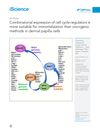
January 2021 in “iScience” Using a combination of specific cell cycle regulators is better for safely keeping hair root cells alive indefinitely compared to cancer-related methods.
 November 2022 in “Journal of Investigative Dermatology”
 This study found that "early" transit amplifying cells, marked by CD271, are the first keratinocyte stem cell progenitors with distinct features, playing a significant role in early epidermal differentiation and regeneration.
8 citations
,
August 2025 in “Journal of Translational Medicine” This comprehensive review suggests that CD44 signaling plays a significant role in post-natal skin wound healing and scar formation, with potential for therapeutic approaches targeting CD44 to shift from fibrotic scarring towards regenerative healing, including wound regeneration and hair neogenesis.
 December 2022 in “Research Square (Research Square)”
 In this study, the researchers developed a quantum algorithm, QuantAnts machines, which identified complexes of CD9, CD34, and CD74 as potential targets for certain cancers involving the RAS pathway.
April 2023 in “Journal of Investigative Dermatology” This study suggests that monitoring CD8+ TEMRA cells in patients with rapidly progressive alopecia areata treated with intravenous corticosteroids could help predict therapeutic outcomes.
4 citations
,
August 2020 in “bioRxiv (Cold Spring Harbor Laboratory)” This study developed the iCOUNT tool, which provides insights into stem cell behavior by tracking cell division events and molecular consequences in human and mouse neural stem/progenitor cells.