
In this study, researchers analyzed over 5,000 T cells per sample using scRNA+TCR-seq technology and found that dual TCR Tregs are present in high proportions across various mouse tissues, showing unique TCR pairing patterns, V(D)J usage, and mRNA expression compared to single TCR Tregs.
4 citations
,
January 2009 in “PubMed” In this study, researchers identified an autosomal dominant mutation (E402K) in exon 7 of the KRT86 gene as a cause of Monilethrix in a large family from Turkey.
45 citations
,
March 1997 in “Journal of Investigative Dermatology” TCDD changes skin gene expression and may harm skin health.
 39 citations
,
May 2004 in “Clinics in Dermatology”
39 citations
,
May 2004 in “Clinics in Dermatology” This article reviews treatment options for cutaneous T-cell lymphoma, including skin-directed therapies and aggressive treatments for advanced cases, but reports no new clinical results.
6 citations
,
April 2012 in “PubMed” This case report describes a 33-year-old Indian male with Cronkhite-Canada syndrome who experienced complete symptom recovery within 5 months after starting a high protein diet, proton pump inhibitors, and zinc-vitamin supplements.
 7 citations
,
May 2010 in “Journal of Cutaneous Pathology”
7 citations
,
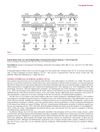
May 2010 in “Journal of Cutaneous Pathology” This study identified a novel locus for hereditary hypotrichosis simplex on chromosome 13q12.12~12.3 in a four-generation Chinese family.
 June 2007 in “Journal of Investigative Dermatology”
 Title change to "Central Centrifugal Cicatricial Alopecia (CCCA)"; common in African American women; hair-grooming methods may contribute; no effective therapy found; trials needed.
 9 citations
,
February 2005 in “The journal of investigative dermatology/Journal of investigative dermatology”
9 citations
,
February 2005 in “The journal of investigative dermatology/Journal of investigative dermatology” This review discusses the complexity and genetic organization of human keratin gene clusters and addresses the ongoing need for an updated unified naming system; it reports no new clinical results.
 August 2012 in “Nature Cell Biology”
 This study provides direct evidence that the Wnt-β-catenin pathway promotes TERT expression in stem and cancer cells, linking tumorigenesis with pluripotency.
18 citations
,
January 2015 in “Experimental Dermatology” This study reports new monilethrix cases in Venezuela, the Netherlands, Belgium, and France, expanding the known mutational spectrum of the disorder with novel mutations in KRT81, KRT83, and KRT86 genes.
6 citations
,
July 1994 in “Journal of Dermatological Science” This study found that introducing the recombinant rat OTC gene into SPF-ASH mice restored normal hair growth and metabolic function, improving symptoms associated with OTC deficiency.
9 citations
,
September 2013 in “Journal of Applied Animal Research” This study identified eight alleles of the caprine KAP13-3 gene in cashmere goats, which could influence gene expression and cashmere fiber characteristics.
July 2021 in “British Journal of Dermatology” This report describes a boy with ectodermal dysplasias who was genetically diagnosed due to newly discovered TSPEAR gene variants, which have now been associated with this condition.
226 citations
,
May 2004 in “Journal of Biological Chemistry” This study identified collagen XXII as a novel extracellular matrix protein specifically present at tissue junctions, where it functions as a cell adhesion ligand for skin epithelial cells and fibroblasts.
143 citations
,
May 2002 in “PubMed” This study found that the retinoid LGD1069 suppressed mammary tumorigenesis in a mouse model without observable toxicity, while TTNPB showed modest effects but was associated with significant toxicity.
January 2026 in “International Journal of Molecular Sciences” This study found that eyebrow follicles, as opposed to buccal swabs or nails, are the most reliable tissue for post-HSCT germline genetic testing due to lower donor DNA contamination.
7 citations
,
March 2004 in “Journal of the American Academy of Dermatology” Tiger tail banding and hair abnormalities are reliable indicators for diagnosing trichothiodystrophy.
40 citations
,
July 2023 in “Clinical Pharmacology & Therapeutics” This review discusses the progress and challenges of targeted protein degradation therapies, highlighting the increasing number of degraders in cancer clinical trials and the limited diversity in targeted proteins, primarily focusing on those employing CRL4CRBN as the E3 ligase.
18 citations
,
September 2003 in “International Journal of Cancer” This study found that Epstein-Barr virus infection upregulated a truncated variant of human basic hair keratin 1 (hHb1-ΔN) in gastric carcinoma cell lines, suggesting a possible link to carcinoma differentiation.
 3 citations
,
November 2015 in “Endocrinology, Diabetes & Metabolism Case Reports”
3 citations
,
November 2015 in “Endocrinology, Diabetes & Metabolism Case Reports” This case study reports a rare instance of RC11 associated with precocious puberty, severe hyperandrogenism, insulin resistance, and type 2 diabetes, suggesting a possible link to 11q-syndrome.
18 citations
,
July 2006 in “British Journal of Dermatology” This study reported no Cx30 expression in normal interfollicular human epidermis and minimal expression in some skin structures, with faint detection in porokeratosis of Mibelli patient skin.
 November 1998 in “Journal of The European Academy of Dermatology and Venereology”
 A man's skin cancer improved and some of his hair grew back after treatment with a special light therapy and a medication.
47 citations
,
September 2012 in “Human molecular genetics online/Human molecular genetics” This study suggests that the interaction between folliculin and plakophilin-4 (p0071) may play a role in folliculin's tumor suppressor function by regulating RhoA signaling, impacting cell migration and junction formation.
 March 2023 in “JAAD case reports”
 This article reviews the genetic foundations of keratins in maintaining epithelial tissue integrity and links specific keratin variants to diverse ichthyosis forms, without presenting new clinical findings.
 August 2020 in “Pakistan Journal of Zoology”
 This study identified a novel genetic mutation, c.429delC in the hairless gene, associated with atrichia with papular lesions in two Pakistani families.
 5 citations
,
May 2013 in “The American Journal of Dermatopathology”
5 citations
,
May 2013 in “The American Journal of Dermatopathology” This article discusses the classification and characteristics of infundibular squamous cell carcinoma and highlights the ongoing debate about its differentiation from other carcinoma types, reporting no new clinical results.
11 citations
,
July 2010 in “European Journal of Dermatology” In this study, researchers confirmed linkage of a form of hair-nail ectodermal dysplasia to chromosome 12 in a Pakistani family, suggesting a possible non-coding mutation in KRTHB5 or a mutation in an unknown gene.
April 2020 in “The journal of investigative dermatology/Journal of investigative dermatology” This source reports that a study by Liu et al. analyzed genetic factors influencing adalimumab response in hidradenitis suppurativa, finding a specific genetic variant (SNP rs59532114) associated with an inadequate response to the treatment due to increased abscess and inflammatory nodule counts.
79 citations
,
March 2005 in “Journal of Medical Genetics” This study identified a novel heterozygous missense mutation in the hHb3 gene associated with monilethrix, highlighting its role in this hair disorder.
October 1984 in “Immunology Today”