 December 2015 in “Dermatologic Surgery”
 Double trichophytic closure effectively repairs thin scalp scars, reducing financial burden.
 12 citations
,
January 1978 in “The Laryngoscope”
12 citations
,
January 1978 in “The Laryngoscope” This article describes the successful use of parieto‐occipital flap operations for hereditary or traumatic baldness but reports no new clinical results.
January 2025 in “NATIONAL BOARD OF EXAMINATIONS JOURNAL OF MEDICAL SCIENCES” This case series reports the specific dermoscopic features observed in two patients with syphilitic alopecia, highlighting alopecic patches with empty hair follicles and other distinguishing characteristics that may aid in differentiating it from other hair disorders.
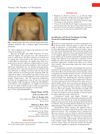 May 2015 in “Plastic and Reconstructive Surgery”
 This article introduces a novel, inexpensive hair preparation technique using glove-finger sheaths to secure and protect hair during calvarial surgery, reducing procedure time and hair damage without the need for full scalp shaving.
 46 citations
,
April 2009 in “Journal of Dermatological Case Reports”
46 citations
,
April 2009 in “Journal of Dermatological Case Reports” This study established standard trichoscopy norms for adult white females, providing benchmarks for hair thickness, percentage of thin hairs, and pilosebaceous units with single hair across different scalp areas.
25 citations
,
November 2010 in “Journal of Molecular Structure” This preliminary study suggests that Raman micro-spectroscopy can help differentiate basal cell carcinoma from hair follicles in skin tissue sections, although some misclassification of hair follicles as carcinoma was observed.
 2 citations
,
July 2013 in “InTech eBooks”
2 citations
,
July 2013 in “InTech eBooks” This article reviews the differences between scarring and non-scarring alopecias and describes diagnostic methods but reports no new clinical findings.
 2 citations
,
June 2020 in “Dermatology and therapy”
2 citations
,
June 2020 in “Dermatology and therapy” In this case report, narrowband-UVB phototherapy successfully treated a rare instance of Graham Little-Piccardi-Lassueur syndrome, a variant of lichen planopilaris, as investigated through non-invasive imaging techniques.
 June 2023 in “Italian journal of dermatology and venereology”
 In this retrospective study, researchers from the University of Bologna observed that trichoscopy can aid in diagnosing allergic scalp contact dermatitis, with key findings including common trichoscopic patterns of erythema, white scales, arborizing vessels, and simple red loops in 12 patients diagnosed with the condition.
 May 2021 in “Pakistan Journal of Medical and Health Sciences”
 This review discusses how trichoscopy is becoming a preferred non-invasive diagnostic tool over trichograms for evaluating hair disorders, although it reports no clinical results.
 18 citations
,
May 2013 in “Journal of The American Academy of Dermatology”
18 citations
,
May 2013 in “Journal of The American Academy of Dermatology” This study concludes that elastic tissue staining is the most reliable method for identifying scarring patterns in alopecia biopsy specimens, and polarized microscopy may provide specific insights for nonscarring alopecia.
9 citations
,
November 2006 in “Journal of Microscopy” This study using an apertureless scanning near-field optical microscope found that dye restricted to hair's periphery remains mainly on the surface and in the endocuticle.
27 citations
,
January 2016 in “Indian Dermatology Online Journal” This article discusses the advantages and different techniques of dermoscopy for skin lesion visualization and reviewing no new clinical results; it emphasizes the integration of polarized light and the importance of training.
7 citations
,
January 2003 in “Journal of cosmetic and laser therapy” This study concluded that the Spa Touch system effectively retards hair regrowth, functioning like a "light razor" for quick and cost-effective epilation.
 6 citations
,
January 2015 in “Dermatology”
6 citations
,
January 2015 in “Dermatology” This review covers trichoscopy's role in diagnosing scalp disorders, emphasizing its potential to improve clinical accuracy, but it reports no new clinical results.
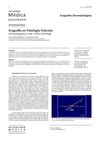 November 2014 in “ACTUALIDAD MEDICA”
 This article discusses the potential of using ultrasonography to assess hair and follicular pathology non-invasively and reports no new clinical results.
 162 citations
,
August 2005 in “The journal of investigative dermatology/Journal of investigative dermatology”
162 citations
,
August 2005 in “The journal of investigative dermatology/Journal of investigative dermatology” This study introduces a novel non-invasive method called "differential stripping" to quantify the penetration of topically applied substances into hair follicles.
 2 citations
,
January 2020
2 citations
,
January 2020 The document describes a method for preparing hair for microscopy by embedding it in plastic, cutting it, and storing it cold before imaging.
 June 2002 in “Seminars in Cutaneous Medicine and Surgery”
 Using a microscope during hair transplants cuts damage to follicles in half and could improve hair growth.
3 citations
,
January 2018 in “BIO-PROTOCOL” This protocol describes a method for cultivating stem cells on a fibrin carrier for potential transplantation to the eye, but it reports no new clinical findings.
 71 citations
,
March 1995 in “Journal of The American Academy of Dermatology”
71 citations
,
March 1995 in “Journal of The American Academy of Dermatology” This study concluded that combining vertical and transverse sections of scalp biopsy specimens improves diagnostic yield for certain hair disorders without increasing costs.
6 citations
,
April 2001 in “The Anatomical Record” This study introduces a method for determining the orientation of collagen fibers in skin by analyzing the anisotropic shape of hair pores, which may aid in skin grafting procedures.

This review discusses recent advances in noninvasive hair imaging technologies, such as global photography, trichoscopy, reflectance confocal microscopy, and optical coherence tomography, highlighting their potential to improve hair diagnostics and treatment monitoring, while also outlining their clinical applications and limitations.
8 citations
,
September 2011 in “Scanning” This study found that multiphoton microscopy effectively visualizes the microstructure of in vivo mouse skin, offering a clear view of various skin layers and components like corneocytes and collagen fibers.
5 citations
,
October 2020 in “Bioengineering & translational medicine” This study demonstrates the use of microscopy-guided laser ablation to create a highly structured 3D hydrogel-based organotypic skin model with folliculoid structures, potentially useful for studying hair follicle development or bioactive substance screening.
49 citations
,
September 2004 in “Journal of the European Academy of Dermatology and Venereology” This study found that careful light microscopy using fluid-mounted hair improves detection of the pili annulati phenotype, which varies widely in expression and affects hair fragility.
 10 citations
,
January 2012 in “Journal of biomedical optics”
10 citations
,
January 2012 in “Journal of biomedical optics” This study used ultrahigh-resolution optical coherence tomography to observe hair shaft structures, finding melanin granules absent only in white hair, which may explain color differences between black and white hair.
January 2024 in “Muller Journal of Medical Sciences and Research” This study found that trichoscopy was 73.77% concordant with histopathology in diagnosing patchy alopecia, highlighting its usefulness as a diagnostic tool for conditions like alopecia areata, lichen planus pigmentosus, and discoid lupus erythematosus.
 March 2023 in “Journal of Cosmetic Dermatology”
 This study suggests that capillarectasia, or dilation of scalp capillaries, may help distinguish COVID-19-associated telogen effluvium from classic acute telogen effluvium.
8 citations
,
March 2023 in “BMC Research Notes” This pilot study explored a new method using laser-capture microdissection and 16S rRNA gene sequencing to analyze the human scalp hair follicle microbiome more accurately, revealing region-specific variations in microbial diversity and abundance.