23 citations
,
January 1996 in “Software Engineering and Knowledge Engineering” This study hypothesizes a possible association between certain endocrine abnormalities and 11q-syndrome, emphasizing the importance of early diagnosis and management to improve patient quality of life.
18 citations
,
March 2016 in “Journal of Investigative Dermatology” This study found that calbindin-D9k knockout mice on a maternal vitamin D-deficient and low-calcium diet developed transient alopecia, but a high-vitamin D and calcium diet in mothers reduced this effect.
211 citations
,
March 2011 in “Journal of Lipid Research” This study reports a novel LC/MS method that separates and analyzes all known ceramide subclasses in human stratum corneum, identifying a new subclass, CER [EOdS], with minimal sample preparation.
18 citations
,
October 2020 in “Journal of Pharmacology and Experimental Therapeutics” In isolated rat lymph vessels, this study found that ATP-sensitive potassium channel openers impair lymph contractions and reduce lymph flow, potentially contributing to peripheral edema.
3 citations
,
March 2024 in “arXiv (Cornell University)” This study describes an AI-powered system for diagnosing dermatological conditions, achieving a weighted score of 0.87 in both contextual understanding and diagnostic accuracy, suggesting it could enhance tele-dermatology applications by supporting remote consultations and care access in underserved regions.
 26 citations
,
April 2011 in “Skin Research and Technology”
26 citations
,
April 2011 in “Skin Research and Technology” This study found that in vivo confocal scanning laser microscopy accurately quantifies neogenic hair follicles in mice, producing results similar to histology while avoiding fixation artifacts.
5 citations
,
January 2017 in “Chalmers Publication Library (Chalmers University of Technology)” In this study, cubosome and hexosome carriers with antimicrobial peptides showed varied efficacy, with cubosomes protecting peptides from degradation and enhancing bactericidal effects in some cases, while hexosomes lacked antimicrobial activity.
166 citations
,
April 2019 in “International Journal of Molecular Sciences” The researchers reported that they predicted associations between certain components of MSC-conditioned medium and its ability to stimulate cell migration in vitro, identifying factors affecting its biological activity.
45 citations
,
January 2021 in “Drug Delivery” In this study, researchers developed a biomimetic anti-inflammatory nanosystem (MM-CEP/NLCs) that significantly reduced the severity of acute lung injury in vivo by targeting and accumulating in lung inflammation sites, showcasing its potential for treating inflammation.
 298 citations
,
January 2014 in “BioMed Research International”
298 citations
,
January 2014 in “BioMed Research International” This review discusses various methods for obtaining stem cell-derived conditioned media and its applications in disease treatment, finding generally positive results but highlighting the need for standardized production methods.
 May 2023 in “Frontiers in Endocrinology”
 This study found that tildacerfont treatment in males with congenital adrenal hyperplasia reduced androgen levels and improved markers of testicular function, suggesting potential benefits for male reproductive health.
 118 citations
,
July 2005 in “Journal of Ethnopharmacology”
118 citations
,
July 2005 in “Journal of Ethnopharmacology” In this study, the aqueous extract of Eclipta alba and its hydrolyzed fraction showed nootropic activity and reduced stress-induced alterations in rats.
 January 2025 in “International Journal of Pharmacology”
 This study observed significant clinical effects, such as hair loss and testicular changes, in common quail treated with the steroids IVF-C Inj and Diane-35, especially highlighting cyproterone acetate's impact on vital organs like the liver.
 January 2019 in “Applied Organometallic Chemistry”
 The compound (NH4)2Mn0.17Cu0.83Cl4.2H₂O has a specific structure, shows weak magnetism at low temperatures, and undergoes phase changes at high temperatures.
16 citations
,
August 2000 in “British Journal of Dermatology” In this case report, lichen myxedematosus associated with hepatocellular carcinoma showed progressive improvement in skin lesions without further treatment following tumor resection.
 1 citations
,
June 2021 in “Case reports in gastrointestinal medicine”
1 citations
,
June 2021 in “Case reports in gastrointestinal medicine” In this case study, a man's hair and nail symptoms, following dental treatments, resolved with mesalazine therapy after investigating suspected clindamycin allergy and diagnosing mucosal changes.
July 2024 in “Journal of Investigative Dermatology” A new test helps find drugs to treat head and neck cancer by targeting c-Rel.
26 citations
,
July 2007 in “Wound Repair and Regeneration” This study found that MRL/MpJ mice heal burn wounds with scar formation, experiencing delayed wound closure and impaired myofibroblast development, which contrasts with quicker contraction in BALB/c mice.
6 citations
,
December 2015 in “Medicine” This review discusses Cronkhite-Canada syndrome, highlighting a relatively mild case and suggesting that it may be a more benign and possibly reversible condition with treatment, but reports no new clinical results.
![Activity of 17β-(N-Alkyl/Arylformamido) and 17β-[(N-Alkyl/Aryl) Alkyl/Arylamido]-4-Methyl-4-Aza-5α-Androstan-3-Ones as 5α-Reductase Inhibitors in the Hamster Flank Organ and Ear](/images/assets/861159f1-7bd4-420c-a16b-4829458efe68/small/15592.jpg) 10 citations
,
August 1998 in “Journal of Investigative Dermatology”
10 citations
,
August 1998 in “Journal of Investigative Dermatology” This study observed that the compound EM-402 reduced 5α-reductase activity and sebaceous gland size in the flank organs and ears of hamsters, indicating potent localized anti-androgenic effects without systemic action.
September 2008 in “Acta Ophthalmologica” This study found that murine vibrissa hair follicle stem cells can differentiate into corneal epithelial-like cells in vitro when cultured with limbus-specific microenvironmental factors.
 April 2018 in “Journal of Investigative Dermatology”
 In a clinical phase I/IIa study, subcutaneous injections of the peptide FOL-005 increased hair growth by 8% and were safe for treating alopecia.
 1 citations
,
August 2025 in “Journal of Neonatal Surgery”
1 citations
,
August 2025 in “Journal of Neonatal Surgery” This study evaluated a new nanogel formulation containing Ciclopirox Olamine for treating cutaneous candidiasis, finding that the optimized version offered improved skin penetration, sustained drug release, and effective antifungal action against Candida albicans compared to conventional treatment.
53 citations
,
October 2003 in “Genetics” This study identified a mutation hotspot in the caracul (Ca) locus of mice, implicating the mK6irs1/Krt2-6g gene in hair formation and potentially human hair and skin diseases.
6 citations
,
February 2024 in “JAAD International” ChatGPT is preferred for creating dermatology patient handouts, but all models can be useful with oversight.
January 2009 in “Epsilon: Revista de la Sociedad Andaluza de Educación Matemática "Thales"” This report describes a Cronkhite-Canada syndrome patient with severe sepsis and disseminated intravascular coagulation successfully treated using combined therapies, including recombinant human soluble thrombomodulin.
 April 2018 in “Journal of Investigative Dermatology”
 This study suggests that for dermatomyositis patients with minimal skin disease activity, further improvement in cutaneous symptoms may not translate into better quality of life, highlighting a need to revise trial endpoints.
 June 2026 in “Zenodo (CERN European Organization for Nuclear Research)”
 This study evaluated a conditioner made from herbal ingredients like liquorice and flaxseed extracts, finding it potentially effective and safe for enhancing hair smoothness and moisture while offering an eco-friendly alternative to synthetic options.
January 2004 in “Drug Development and Industrial Pharmacy” This study explored the solubility and crystal structure of GI197111X, a 5-alpha reductase inhibitor for androgenetic alopecia, finding its solubility in Capmul MCM suitable for a soft gel dosage form.
 7 citations
,
June 2010 in “Journal of The American Academy of Dermatology”
7 citations
,
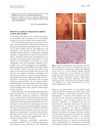
June 2010 in “Journal of The American Academy of Dermatology” This paper reports a single case of lichenoid cutaneous sarcoidosis that was unresponsive to standard treatments but showed marked improvement with the administration of oral tranilast.