18 citations
,
December 2005 in “Journal of Medicinal Chemistry” In this study, novel substituted benzoyl benzoic acids and phenylacetic acids were potent and selective inhibitors of human steroid 5alpha-reductase type 2, with one compound showing promising bioavailability in rats for potential clinical evaluation.
 85 citations
,
April 2007 in “Dermatologic Clinics”
85 citations
,
April 2007 in “Dermatologic Clinics” This article reviews drug-induced hair changes, highlighting that while many drugs are occasionally linked to hair loss, this connection has been conclusively established for only a few, and such hair loss is typically reversible.
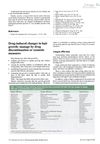 August 1994 in “Drugs & Therapy Perspectives”
 Some drugs can cause hair loss or growth, but hair usually returns to normal after stopping the drug.
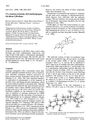 December 1998 in “Acta Crystallographica Section C-crystal Structure Communications”
 This study describes the molecular conformation and intermolecular interactions in the crystalline structure of the compound C24H31BrO4.
1 citations
,
December 2011 in “Arzneimittelforschung” This study found that the compound 9,11-dehydrocortexolone 17alpha-butyrate (CB-03-04) showed strong local antiandrogenic activity in animal models, suggesting potential for treating prostate conditions.
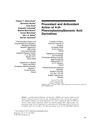 2 citations
,
February 2004 in “Biopolymers”
2 citations
,
February 2004 in “Biopolymers” This study found that 4-(4-Phenoxybenzoyl)benzoic acid derivatives may act as antioxidants by scavenging certain reactive oxygen species but exhibit prooxidant behavior under specific conditions.
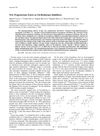 22 citations
,
January 2001 in “Chemical & Pharmaceutical Bulletin”
22 citations
,
January 2001 in “Chemical & Pharmaceutical Bulletin” This study found that two new progesterone derivatives showed higher antiandrogenic effects and 5α-reductase inhibition than finasteride in hamsters, particularly reducing seminal vesicle weight and flank organ size.
![Synthesis and 5α-Reductase Inhibitory Activity of 8-Substituted Benzo[ƒ]Quinolinones Derived from Palladium Mediated Coupling Reactions](/images/assets/2aedba8c-b0ac-4fa3-9ac7-9f375a016bba/small/15581.jpg) 14 citations
,
February 1998 in “Bioorganic & Medicinal Chemistry Letters”
14 citations
,
February 1998 in “Bioorganic & Medicinal Chemistry Letters” This study explored how modifying the 8-substituent of 8-bromobenzoquinolinone affects its selectivity in inhibiting both 5 alpha-reductase isozymes in the scalp.
January 2002 in “Chinese Journal of Pharmaceuticals” This study reports the preparation of a key intermediate for finasteride and epristeride with a 69% overall yield from pregnenolone acetate.
2 citations
,
September 1992 in “Steroids” The researchers reported that compounds 11 to 13 derived from Westphalen-type steroids showed strong antiandrogenic activity in vivo, though their effects could not be attributed to 5α-reductase inhibition or androgen receptor binding.
 147 citations
,
January 2003 in “American journal of clinical dermatology”
147 citations
,
January 2003 in “American journal of clinical dermatology” This review discusses various forms of ichthyosis, including genetic and acquired types, detailing their characteristics, causes, and potential management strategies, but reports no new clinical results.
 147 citations
,
April 1994 in “Drug Safety”
147 citations
,
April 1994 in “Drug Safety” Some drugs can cause hair loss or increase hair growth, but these effects are usually reversible when the drug is stopped.
 64 citations
,
January 2002 in “American Journal of Clinical Dermatology”
64 citations
,
January 2002 in “American Journal of Clinical Dermatology” This review examines the adverse skin reactions associated with antipsychotic medications and reports no new clinical findings, but suggests discussing management strategies to improve patient compliance.
 40 citations
,
August 2006 in “Current Drug Safety”
40 citations
,
August 2006 in “Current Drug Safety” This article reviews how various drugs may cause hair loss, stimulate growth, or alter hair characteristics, but reports no new clinical results; drug-induced hair loss is typically reversible.
 37 citations
,
January 1997 in “Clinics in Dermatology”
37 citations
,
January 1997 in “Clinics in Dermatology” This study found that women with androgenetic alopecia and alopecia areata had significantly lower serum ferritin levels compared to women without hair loss.
 10 citations
,
May 1995 in “Journal of General Internal Medicine”
10 citations
,
May 1995 in “Journal of General Internal Medicine” Most women with excessive hair growth have PCOS; treatment varies and focuses on preventing new hair, with electrolysis as the only permanent removal method.
 6 citations
,
January 2019 in “International Journal of Medicine in Developing Countries”
6 citations
,
January 2019 in “International Journal of Medicine in Developing Countries” This study found that premature greying of hair was reported in 42.5% of young adults from King Faisal University, with higher prevalence among females, and noted associations with various health and lifestyle factors.
 5 citations
,
July 2003 in “Pediatric Critical Care Medicine”
5 citations
,
July 2003 in “Pediatric Critical Care Medicine” This study observed that hair loss, which resolved on its own within six months, was reported by some patients after extracorporeal membrane oxygenation, suggesting it as a potential side effect.
 3 citations
,
January 2012 in “Elsevier eBooks”
3 citations
,
January 2012 in “Elsevier eBooks” The document says that there are treatments for hair and nail diseases.
 February 2026 in “International Journal of Clinical Pharmacy”
 This commentary described developing a framework to evaluate how pharmacists in community pharmacy care clinics impact emergency department visits, focusing on conditions they can manage, adverse medication events, and necessary referrals.
 January 2019 in “Springer eBooks”
 This review discusses drugs and mechanisms possibly responsible for chemical- and drug-induced hair loss but presents no new research findings.
 August 1994 in “Drugs & Therapy Perspectives”
 Psoriasis treatments range from topical creams to systemic medications with serious side effects, and while treatments can manage symptoms, there is no cure.
January 2006 in “Benzina: Revista d'excepcions culturals” This study observed that new trienone compounds consistently showed higher 5alpha-reductase inhibitory activity compared to corresponding dienones across various biological models.
 20 citations
,
June 1995 in “Tetrahedron Letters”
20 citations
,
June 1995 in “Tetrahedron Letters” This study reported that newly synthesized phenanthridin-3-one derivatives effectively inhibit human steroid 5-α-reductase.
 February 1999 in “Analytical Sciences”
 A new antiandrogen compound was made and its detailed three-dimensional shape was described.
23 citations
,
October 2008 in “Journal of medicinal chemistry” This study suggests that PF-0998425 is an effective androgen receptor antagonist for sebum control and androgenetic alopecia with rapid metabolism reducing the risk of systemic side effects.
 January 2006 in “Carl von Ossiezky University of Oldenburg”
 This study observed that unpigmented keratinocytes saturate quickly with foreign substance uptake compared to pigmented melanocytes, where melanin significantly enhances binding.
 August 2002 in “Analytical Sciences”
 The document concludes that a compound with potential for treating prostate cancer and hair loss was successfully made and its detailed structure was confirmed.
 11 citations
,
August 2007 in “Bioorganic & Medicinal Chemistry Letters”
11 citations
,
August 2007 in “Bioorganic & Medicinal Chemistry Letters” This study found that among the tested analogs, compound 4e was the most effective in inhibiting wax esters in vivo in the Golden Syrian hamster ear model.
 September 2020 in “Current Enzyme Inhibition”
 In this study, researchers found that steroidal 17β-carboxamides 1-4 significantly inhibited 5α-reductase enzyme activity and reduced prostate weight more effectively than finasteride in a hamster model, without toxic side effects, suggesting potential for treating benign prostatic hyperplasia.