 6 citations
,
July 2015 in “European Journal of Dermatology”
6 citations
,
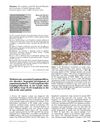
July 2015 in “European Journal of Dermatology” Stopping methotrexate might reverse lymphoma-like conditions in some patients.
August 2026 in “Revista Medicina Cutánea Ibero-Latino-Americana” This review concludes that methotrexate remains an effective and safe first-line treatment for various inflammatory and immune-mediated skin conditions in children, despite the rise of biologic therapies.
This article lists the clinically important interactions and skin reactions of several drugs and substances, including THA, FK506, tamoxifen, tamsulosin, tartrazine, tea tree oil, temazepam, and temozolomide, but provides no new clinical results.
 January 2025 in “Dermatologic Surgery”
 This meta-analysis and systematic review found that botulinum toxin injections significantly increased hair count in patients with androgenetic alopecia compared to controls, indicating promising efficacy and good safety.

In this study, bicalutamide at low doses was not linked to significant liver enzyme changes compared to other androgen-blocking treatments in transfeminine adolescents and young adults, suggesting its safety with careful monitoring for this population over one year.
34 citations
,
April 1982 in “BMJ”  6 citations
,
March 2009 in “Journal of the European Academy of Dermatology and Venereology”
6 citations
,
March 2009 in “Journal of the European Academy of Dermatology and Venereology” This study found no increased frequency of the TNF2 allele in Mexican patients with adverse cutaneous drug reactions mediated by delayed hypersensitivity, suggesting its lower relevance compared to findings in Caucasian populations.
 5 citations
,
May 2022 in “Molecules”
5 citations
,
May 2022 in “Molecules” This article reviews the literature on the off-label use of botulinum toxin for dermatological conditions, highlighting its potential effectiveness in treating rosacea, anal fissures, Raynaud phenomenon, hypertrophic scars, keloids, and hidradenitis suppurativa.
 November 2022 in “Journal of Investigative Dermatology”
 Among men with androgenetic alopecia, this study found that taking 5 mg of KX-826 twice daily significantly increased hair count compared to a placebo, with the treatment being well-tolerated and no serious adverse effects reported.
 May 2012 in “CRC Press eBooks”
 Some patients on anti-TNF drugs experience a type of hair loss called TAIAPA.
 August 2023 in “Dermatologic Surgery”
 This systematic review suggests that botulinum toxin may be effective for treating certain scalp conditions, but the current evidence varies widely in quality and often derives from small observational studies.
 80 citations
,
August 1991 in “The journal of allergy and clinical immunology/Journal of allergy and clinical immunology/The journal of allergy and clinical immunology”
80 citations
,
August 1991 in “The journal of allergy and clinical immunology/Journal of allergy and clinical immunology/The journal of allergy and clinical immunology” This study found that low-dose methotrexate significantly reduced the steroid requirement in subjects with corticosteroid-requiring asthma without altering their clinical status or causing significant complications.
 37 citations
,
January 2015 in “Evidence-based Complementary and Alternative Medicine”
37 citations
,
January 2015 in “Evidence-based Complementary and Alternative Medicine” This study found that Bokusoku extract and its compound pentagalloyl glucose inhibited testosterone metabolism and sebum synthesis, suggesting potential therapeutic use for androgen-related acne.
This study identified ISX9 as a novel agonist of the Wnt/β‐catenin pathway, which promoted hair regrowth in mice and may offer a therapeutic approach for alopecia.
January 2017 in “DOAJ (DOAJ: Directory of Open Access Journals)” In this study, botulinum toxin type A did not improve clinical features in patients with recalcitrant alopecia totalis or alopecia universalis over a four-month period.
 March 2005 in “Journal of the American Academy of Dermatology”
 Bexarotene 1% topical gel helped some patients with alopecia areata regrow hair.
 February 2026 in “Oncology Reviews”
 This review highlights the promising clinical outcomes of sacituzumab tirumotecan (sac-TMT), an antibody-drug conjugate for breast cancer that targets TROP2, demonstrating improved response rates and progression-free survival, with manageable safety concerns including primarily mild-to-moderate nausea and alopecia.
1 citations
,
March 2022 in “JAAD case reports” This case report describes a rare occurrence of injection site reactions in a 77-year-old woman with eosinophilic fasciitis using subcutaneous methotrexate, marking the first documented instance in this patient population.
May 2025 in “Acta Dermato Venereologica” The Paxbp1 gene is crucial for healthy hair follicles.
21 citations
,
September 2013 in “Current medicinal chemistry” This study found that co-drugs synthesized from hydroquinone and tranexamic acid improved skin targeting and deposition, with reduced irritation and enhanced efficacy for treating hyperpigmentation.
 May 2026 in “Journal of the Egyptian Womenʼs Dermatologic Society”
 In this prospective study, 15 patients with patchy alopecia areata treated with intralesional methotrexate every two weeks showed a significant improvement in hair regrowth and reduction in lesion severity, with changes linked to decreased tissue levels of TNF-α.
 1 citations
,
April 2012 in “Informa Healthcare eBooks”
1 citations
,
April 2012 in “Informa Healthcare eBooks” Some medications for inflammation can cause a condition with scalp rashes and hair loss, often linked to Crohn's disease, and may require treatment changes to prevent permanent hair loss.
 July 2023 in “Journal of Microbiology and Biotechnology”
 This study found that oral administration of Terminalia bellirica enhanced hair growth in testosterone-suppressed conditions in both human cell and mouse models, outperforming finasteride, a current commercial hair loss treatment.
11 citations
,
February 2023 in “British Journal of Pharmacology” This study found that ISX9 may activate the Wnt/β-catenin signaling pathway and holds potential as a therapeutic agent for treating alopecia.
33 citations
,
May 2017 in “Journal of Clinical Oncology” This phase I study reported that ETC-159, targeting Wnt signalling, showed tolerable safety profiles at doses that inhibit its pathway, though bone turnover markers increased, warranting early and regular monitoring. No tumor responses were observed, but two patients achieved stable disease for several cycles.
 14 citations
,
January 2017 in “Annals of Dermatology”
14 citations
,
January 2017 in “Annals of Dermatology” In this retrospective study, low-dose methotrexate was observed to be effective and well-tolerated in treating recalcitrant alopecia areata multiplex, achieving complete or near-complete hair regrowth in about 90% of patients despite some experiencing elevated liver enzymes and gastrointestinal discomfort.
3 citations
,
February 2023 in “BMJ Case Reports” This case report describes a woman with trichotillomania who experienced marked improvement and hair regrowth after off-label onabotulinumtoxinA treatment.
This review examines current literature on botulinum toxin type A for androgenetic alopecia, reporting an association with increased hair growth and improved hair density, though further research is needed.
3 citations
,
August 2025 in “Stem Cell Research & Therapy” This review examines adipose-derived stem cells as a promising therapy for alopecia but reports no new clinical results, discussing their potential mechanisms and the challenges faced in treatment development.
5 citations
,
July 1996 in “Journal of Cutaneous Medicine and Surgery” This study explains that while trichothiodystrophy and xeroderma pigmentosum share genetic defects, TTD patients primarily exhibit issues in transcription initiation, not the increased skin cancer risk seen in XP.