 January 2024 in “Inflammation and regeneration”
 This study identified Th22 cells as key effectors in hair regeneration driven by thymosin beta 15, suggesting they could be potential targets for hair regrowth therapies.
3 citations
,
November 2021 in “Protein and Peptide Letters” This review discusses the structural and functional aspects of β-thymosin in invertebrates and reports no new experimental findings.
 6 citations
,
July 1990 in “The Journal of Pediatrics”
6 citations
,
July 1990 in “The Journal of Pediatrics” A boy with toxic shock syndrome had severe heart rhythm problems but recovered with treatment.
4 citations
,
April 2018 in “Journal of vacuum science and technology. B, Nanotechnology & microelectronics” This study demonstrated the potential of a methodology combining ToF-SIMS and AFM to effectively analyze human hair structure and identify cosmetic residues, which can aid the cosmetic industry in product development.
2 citations
,
January 2009 in “Human cell culture”  12 citations
,
August 2021 in “Biomedical Photonics”
12 citations
,
August 2021 in “Biomedical Photonics” This study found that patients who received photobiomodulation therapy after septoplasty experienced lower pain levels and improved heart rate variability compared to those who underwent standard postoperative management alone.
December 2025 in “Drug Design Development and Therapy” This retrospective study reported that in HER-2-negative metastatic breast cancer patients, anlotinib combined with taxane/capecitabine showed superior disease control rate, progression-free survival, and overall survival compared to bevacizumab plus chemotherapy, with both treatments having tolerable safety profiles.
June 2026 in “ACS Applied Polymer Materials” This study reports a method for fabricating biofunctional polymer fibers by using DNA-programmable cell-free protein synthesis integrated through solution blow spinning, enabling in situ protein production and potential applications in respirators, sampling swabs, and other advanced materials.
 10 citations
,
August 2021 in “EMBO Reports”
10 citations
,
August 2021 in “EMBO Reports” This study found that the anti-apoptotic Bcl-2 protein plays a crucial role in maintaining hair follicle stem cell function and influences tissue regeneration and tumor formation in mice.
August 2019 in “Anais Brasileiros de Dermatologia” This article reviews the case of a patient diagnosed with basal cell nevus syndrome and reports no new research findings.
 3 citations
,
March 2020 in “International Journal of Molecular Sciences”
3 citations
,
March 2020 in “International Journal of Molecular Sciences” This study found that overexpressing the gene Thymosin β4 (Tβ4) can promote the growth and development of secondary hair follicle dermal papilla cells in cashmere goats, suggesting its potential as a target for increasing cashmere production.
2 citations
,
August 2024 in “Molecular Genetics & Genomic Medicine” In this case study, an 8-day-old neonate with holocarboxylase synthetase deficiency showed dramatic improvement in lactic acidosis and overall clinical condition following biotin mega-dose therapy, highlighting the importance of early genetic testing and timely treatment in such metabolic disorders.
 17 citations
,
December 2009 in “Journal of Pediatric Orthopaedics”
17 citations
,
December 2009 in “Journal of Pediatric Orthopaedics” This report describes two cases of toe tourniquet syndrome in infants, highlighting the importance for pediatric orthopedic practitioners to diagnose and manage it promptly, suggesting a specific incision method to release hair strangulation if removal is challenging.
 2 citations
,
June 2023 in “Journal of cell science”
2 citations
,
June 2023 in “Journal of cell science” In this study, researchers found that specific mutations in iRhom2 in mice lead to skin and hair abnormalities which depend on the presence of the protein ADAM17, suggesting a complex role for iRhom2 in tissue development and potential implications for treating tylosis with oesophageal cancer.
11 citations
,
January 1983 in “Educational leadership” This study found that NFIB and STAT5 work together to regulate mammary-specific genetic programs in mice, with their combined absence hindering functional alveoli formation.
November 2024 in “Journal of Investigative Dermatology” Aptamers can improve wound healing and promote hair growth.
4 citations
,
May 1998 in “PubMed” This study found that the Bsk phenotype in mice did not result from a recombination event between specific keratin genes, leaving the gene linked to this mutation unidentified.
March 2026 in “Bioengineering & Translational Medicine” This study reported that a modified version of Thymosin beta 4, called PEG-rTβ4, demonstrated potential as a treatment for acute myocardial infarction by improving cardiac function and reducing cell death via specific biochemical pathways, suggesting its promise in drug development efforts.
 January 2012 in “heiDOK (Heidelberg University)”
 In this study, researchers observed that dormant TRP-2+ melanoma cells in bone marrow can interact with CD8+ T cells in tumor-bearing ret transgenic mice, potentially influencing immune responses.
This study identified a high proportion of dual TCR Treg cells in both lymphoid and non-lymphoid tissues of mice, revealing their tissue specificity, TCR repertoire characteristics, and functional phenotypes.
20 citations
,
January 2014 in “International Journal of Oral and Maxillofacial Surgery” This study found that using superficial temporal fascia as an interposition barrier is effective in reducing the incidence of Frey syndrome following superficial parotidectomy, compared to no barrier.
A new mutation in the TRPS1 gene caused Trichorhinophalangeal syndrome in a 17-year-old, highlighting the need for genetic testing.
 6 citations
,
October 2012 in “Journal of Heredity”
6 citations
,
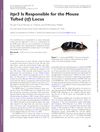
October 2012 in “Journal of Heredity” This study identified the Itpr3 gene as responsible for the tufted hair loss phenotype in the BTBR mouse strain.
January 2000 in “Cambio 16” This study observed that overexpression of Bcl-2 in certain transgenic mice accelerates catagen progression and increases hair follicle apoptosis and alopecia, while Bcl-2 deficient mice show delayed hair growth and pigmentation changes.
This study found that basal cell carcinoma exhibits patterns of hair follicle differentiation but is stuck in telogen arrest, which can be rescued by adding noggin and TGF-β2 in vitro.
January 2024 in “Indian Journal of Psychiatry” This study found that a two-staged screening method for identifying youth at high risk for psychosis in Telangana showed high concordant validity and good predictive validity for transition to psychosis.
13 citations
,
November 1985 in “International Journal of Dermatology” This study examined patients with trichostasis spinulosa and identified distinct differences in the distribution and microscopic appearances of lesions compared to keratosis pilaris and eruptive vellus hair cysts.
18 citations
,
December 2010 in “Transplantation Proceedings” This study reported that black hairy tongue can occur after allogeneic stem cell transplantation and may indicate cutaneous graft-versus-host disease, highlighting the need for histopathologic evaluation.
3 citations
,
October 1994 in “Journal of Dermatological Science” This study developed a novel monoclonal antibody, TYHF-1, which specifically reacts with hair keratins but not with epidermal keratins or various other tissue cells.
This study identified UBC22 as a novel E2 enzyme responsible for Lys11-linked ubiquitination in Arabidopsis, revealing its crucial roles in seed setting, female gametophyte development, and pathogen resistance.