September 2022 in “European Journal of Dermatology” This study identified a novel pathogenic splice-site variant of the LAMB3 gene in patients with junctional epidermolysis bullosa, highlighting the importance of gene sequencing for diagnosis.
15 citations
,
May 2022 in “Journal of Investigative Dermatology” This study found that endothelial TLR2 is crucial for effective angiogenesis and timely wound healing, whereas TLR2 in hair follicle stem cells is not essential for skin regeneration.
 32 citations
,
December 2000 in “Phytomedicine”
32 citations
,
December 2000 in “Phytomedicine” In this study, 1% procyanidin B-2 tonic significantly increased the number of total and terminal hairs on the scalp of male participants compared to a placebo after 6 months of use.
193 citations
,
June 2007 in “The Plant Journal” This study found that the GhDET2 gene plays a crucial role in cotton fiber initiation and elongation, suggesting that modifying brassinosteroid biosynthesis may enhance fiber quality or yield.
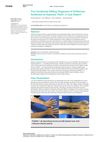
This study presents a rare instance of Netherton syndrome diagnosed incidentally in siblings of consanguineous parents, initially misdiagnosed as other skin conditions, emphasizing the need for careful evaluation in chronic skin cases to prevent misdiagnosis.
 January 2020 in “SCIENCE, ENGINEERING AND TECHNOLOGY: GLOBAL TRENDS, PROBLEMS AND SOLUTIONS”
 This conference proceedings compilation from Prague covers global trends, problems, and solutions in science, engineering, and technology, but reports no new clinical results.
 January 2016 in “Hair transplant forum international”
 This article is an abstract header with author credentials and reports no study findings.
![Discovery of 7-Methoxy-6-[4-(4-Methyl-1,3-Thiazol-2-yl)-1H-Imidazol-5-yl]-1,3-Benzothiazole (TASP0382088): A Potent and Selective Transforming Growth Factor-β Type I Receptor Inhibitor as a Topical Drug for Alopecia](/images/assets/9620bd26-3366-4f2a-bcac-f511697bbc41/small/35997.jpg) 6 citations
,
January 2013 in “Chemical & pharmaceutical bulletin/Chemical and pharmaceutical bulletin”
6 citations
,
January 2013 in “Chemical & pharmaceutical bulletin/Chemical and pharmaceutical bulletin” In this study, TASP0382088 showed potent selective inhibition of the ALK5 receptor, significantly reducing Smad2 phosphorylation in mouse skin following topical application.
43 citations
,
September 2001 in “Annals of Neurology” This study found that somatic mosaic mutations in the doublecortin gene may cause subcortical band heterotopia in male patients, and molecular analysis using hair roots is a useful detection method.
 55 citations
,
June 2014 in “Nature Communications”
55 citations
,
June 2014 in “Nature Communications” This study found that overexpression of the transcription factor Tcf3 accelerates keratinocyte migration and skin wound healing in mice, highlighting its potential as a therapeutic target for wound repair.
December 2021 in “Figshare” This study found that BBS7 is important for Sonic hedgehog signaling activity, which may be crucial for maintaining periodontal ligament homeostasis in occlusal hypofunction.
5 citations
,
March 2025 in “Tissue Engineering and Regenerative Medicine”  July 2019 in “Faculty Opinions – Post-Publication Peer Review of the Biomedical Literature”
 Activin A speeds up ear hair cell differentiation, while Follistatin slows it down.
 20 citations
,
May 2013 in “International Journal of Molecular Medicine”
20 citations
,
May 2013 in “International Journal of Molecular Medicine” This study identified a novel missense MAFB variant in a family with some unaffected members, suggesting incomplete penetrance and the potential influence of modifier genes, epigenetic mechanisms, or environmental factors on MCTO phenotype.
 April 2023 in “Journal of Investigative Dermatology”
 This study found that human TMEM2 does not function as a hyaluronidase but is involved in regulating hyaluronan metabolism.
February 2021 in “PubMed” This case report presents a 2-year-old girl with type B loose anagen syndrome diagnosed through a painless hair pull test, avoiding unnecessary further tests or referrals.
19 citations
,
December 2006 in “Journal of Structural Biology” Type I and Type II keratin chains can form heterodimers despite sequence differences.
11 citations
,
May 2008 in “British journal of dermatology/British journal of dermatology, Supplement” This case report describes a 32-year-old man who developed SCC of the common bile duct a year after receiving treatment for a malignant proliferating trichilemmal tumour on the scalp.
June 2025 in “Molecular Therapy — Nucleic Acids” In this study, researchers identified a specific DNA aptamer, Ap.OR2AT4.17, that effectively prolonged hair growth and increased hair shaft elongation in organ-cultured human hair follicles by targeting the olfactory receptor OR2AT4. This finding suggests the aptamer's potential as a novel therapy for hair loss disorders.
 1 citations
,
February 2018 in “British Journal of Dermatology”
1 citations
,
February 2018 in “British Journal of Dermatology” The CWARTS tool is a promising method for assessing warts and could improve treatment and research.
 24 citations
,
January 2019 in “Theranostics”
24 citations
,
January 2019 in “Theranostics” This study found that loss of the Pten gene in Lgr5+ hair follicle stem cells promoted squamous cell carcinoma formation through the Akt/β-catenin signaling pathway.
9 citations
,
May 2014 in “BMC medical genetics” In this case report, the authors suggest that a novel enhancer element's translocation near the TRPS1 gene may contribute to the TRPS phenotype, expanding understanding of the syndrome's genetic basis.
13 citations
,
June 2012 in “European journal of medical genetics” In this study, researchers observed monochorionic diamniotic twins with discordant clinical phenotypes, where one had high-grade trisomy 12p mosaicism in certain tissues, while the other showed confined mosaicism likely due to twin-to-twin transfusion.
 56 citations
,
April 2015 in “American journal of medical genetics. Part A”
56 citations
,
April 2015 in “American journal of medical genetics. Part A” This study reports on eight previously unpublished cases of Bohring-Opitz syndrome with ASXL1 mutations, suggesting the importance of screening for Wilms tumors in these patients.
July 2025 in “Clinical Medicine” In this institution-based randomized trial, oral betamethasone mini-pulse therapy for alopecia areata showed a faster therapeutic response compared to oral tofacitinib, as measured by trichoscopic changes and achievement of 50% hair regrowth.
2 citations
,
October 2016 in “OPAL (Open@LaTrobe) (La Trobe University)” This study reports that the Swedish newborn screening program for phenylketonuria, galactosaemia, and biotinidase deficiency is effective, with high sensitivity and specificity, and lower false positive rates compared to other countries, while genetic variants impact detection and incidence patterns in Sweden.

This study found that at Week 52, baricitinib resulted in significant hair regrowth for many patients with severe alopecia areata, with 41.6% on the higher dose achieving substantial improvement in scalp hair loss, though some may need longer treatment for optimal benefit.
 9 citations
,
January 2017 in “Virchows Archiv”
9 citations
,
January 2017 in “Virchows Archiv” This study documented distinct expression patterns of stem cell markers LGR5 and LGR6 in various human skin tumors, highlighting differences in their potential roles and contributions to tumor development.
9 citations
,
January 2007 in “Journal of dermatological treatment” This study found that applying 2.5% testosterone gel increased facial terminal hairs in young males with beta-thalassemia major and was well tolerated.
January 2026 in “SSRN Electronic Journal”