 August 2016 in “Journal of Investigative Dermatology”
 This case report identifies a novel LIPH gene mutation linked to autosomal recessive woolly hair/hypotrichosis in a Japanese boy, expanding the spectrum of known mutations associated with this condition.
 July 2023 in “Developmental medicine and child neurology/Developmental medicine & child neurology”
 This study found that patients with Bachmann-Bupp syndrome treated with DFMO showed improvements in hair growth, muscle tone, and development.
 19 citations
,
May 2006 in “Clinical and Experimental Dermatology”
19 citations
,
May 2006 in “Clinical and Experimental Dermatology” This study identified a novel insertion mutation in the hairless gene that may contribute to the development of congenital atrichia with papular lesions in a Pakistani family.
 10 citations
,
April 2020 in “Clinics in Dermatology”
10 citations
,
April 2020 in “Clinics in Dermatology” This case report describes a girl in China with biotinidase deficiency confirmed by genetic mutations, whose skin and hair symptoms improved with biotin therapy.
5 citations
,
January 2015 in “Case reports in medicine” In this case report, a novel missense mutation c.1360G>C (p.Ala454Pro) in the MBTPS2 gene was identified in a boy with typical IFAP syndrome and severe atopic features, although no phenotype/genotype correlation was established.
20 citations
,
March 2021 in “Cancers” This study found that rare germline pathogenic variants in BRCA2, BRCA1, and ATM are associated with increased risk of aggressive prostate cancer.
July 2024 in “Journal of Investigative Dermatology” This study found that systemic treatment with DS77754007, a KLK5 inhibitor, improved skin symptoms in a mouse model of Netherton Syndrome more effectively than certain antibody treatments, suggesting KLK5 inhibition as a promising therapeutic approach for this condition.
1 citations
,
May 2022 in “International journal of molecular sciences” This study found that in Hutchinson–Gilford progeria syndrome, iPSCs committed to the keratinocyte lineage faster than normal cells, with LEF1 expression reduced and a partial rescue of the phenotype achieved through adenine base editing.
79 citations
,
January 2002 in “Nucleic Acids Research” This study found that BMP-2 activates Dlx3 gene transcription in murine keratinocytes by binding with Smad1/Smad4, suggesting a mechanism for BMP signaling's role in skin and hair follicle regulation.
28 citations
,
December 1997 in “Journal of Biological Chemistry” This study found that the hHa1-t protein variant, caused by a genetic polymorphism in the hHa1 gene, forms functional keratin filaments despite lacking a complete nonhelical tail domain, explaining the absence of a pathological hair phenotype.
188 citations
,
June 1998 in “Molecular cell” This study found that mimicking the XPD point mutation in mice resulted in trichothiodystrophy-like symptoms, supporting the role of basal transcription and DNA repair defects in the disease.
50 citations
,
December 2005 in “European Journal of Immunology” This study found that a specific mutation in the mouse RXRalpha gene significantly impacts immune responses and causes hair loss and skin cysts.
42 citations
,
September 2012 in “PLoS ONE” In this study, bezafibrate treatment improved certain aging-like features in a mouse model with mitochondrial dysfunction, but did not enhance muscle function or lifespan.
 April 2023 in “The journal of investigative dermatology/Journal of investigative dermatology”
 This study found that HPV8-induced actinic keratoses may mechanistically involve Lrig1+ hair follicle keratinocyte stem cells, with the E6 gene promoting downstream STAT3 activity in a mouse model.
35 citations
,
April 1998 in “PubMed” This study found that activating the erbB-2 oncogene in transgenic mice led to severe skin abnormalities and fatal defects, indicating erbB-2's significant role in skin and hair follicle development.
 1 citations
,
December 2015 in “Balkan Journal of Medical Genetics”
1 citations
,
December 2015 in “Balkan Journal of Medical Genetics” This study found no significant difference in the prevalence of CYP21A2 mutations between couples with unexplained fertility problems and healthy controls, but identified an association between the c.290-13A/C>G mutation and clinical issues like hormone deviations and polycystic ovary syndrome.
 30 citations
,
July 2019 in “Endocrinology”
30 citations
,
July 2019 in “Endocrinology” This review discusses how the HSD3B1(1245C) genotype may impact androgen physiology and the progression of castration-resistant prostate cancer, and does not report new experimental results.
99 citations
,
February 2000 in “PubMed” This study found that overexpression of PKCepsilon in transgenic mice reduced papilloma development but accelerated carcinoma formation in a skin tumor promotion model.
73 citations
,
December 2015 in “Nature Genetics” This study found that the Dun camouflage color in horses is due to TBX3 expression, which causes uneven pigment deposition, whereas non-dun coat colors result from regulatory mutations affecting TBX3 expression.
This study found that GNAQQ209L expression in mouse melanocytes led to reduced survival in the interfollicular epidermis due to paracrine signaling, while GNAQQ209L boosted survival in a different microenvironment.
 10 citations
,
September 2015 in “PLoS ONE”
10 citations
,
September 2015 in “PLoS ONE” This case report documents a female toddler with novel compound heterozygous mutations in the VDR gene causing hereditary 1,25-dihydroxyvitamin D-resistant rickets, expanding the known mutation spectrum for this disease.
 3 citations
,
January 2008 in “Endocrine journal”
3 citations
,
January 2008 in “Endocrine journal” In this case report, the authors describe a partial androgen insensitivity syndrome patient with a novel AR gene mutation, highlighting challenges in gender assignment decisions for infants with partial AIS.
 11 citations
,
September 2011 in “British Journal of Dermatology”
11 citations
,
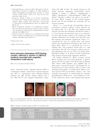
September 2011 in “British Journal of Dermatology” New ABCA12 gene mutations were linked to a skin condition with scaling and hair loss, and a treatment helped with hair loss in a related case.
 July 2023 in “New phytologist”
 This research identified a genetic mutation in Brachypodium distachyon that initially allows root hair initiation but fails to elongate them, while also affecting root growth and nitrate sensitivity; the mutation is linked to a previously uncharacterized cyclin-dependent kinase-like gene.
7 citations
,
August 2017 in “European journal of endocrinology” This study suggests that mutations in exon 10 of the POC1A gene may be linked to a distinct clinical condition characterized by extreme insulin resistance and short stature, differing from SOFT syndrome.
 April 2018 in “Journal of Investigative Dermatology”
 This study found that ERBB2 mutations and amplifications are likely key drivers of extramammary Paget disease, suggesting potential for targeted therapies and cancer immunotherapy due to the moderately high mutational load observed.
January 2005 in “Enlighten: Publications (The University of Glasgow)” In this transgenic mouse study, preliminary findings suggest that overt melanocyte hyperplasia may require prior keratinocyte hyperplasia, indicating a potential role for keratinocyte mutation in early melanoma development.
 February 2019 in “bioRxiv (Cold Spring Harbor Laboratory)”
 This study found that Prss53-mutated rabbits exhibited curved hair and skeletal dyskinesia, suggesting a link between Prss53 loss and these traits, potentially involving disrupted calcium metabolism.
March 2021 in “AACE clinical case reports” This case study reports a rare combination of primary hyperparathyroidism with Klinefelter syndrome in a 44-year-old male, highlighting an unusual KS mosaicism with a mild phenotype.
 64 citations
,
August 2014 in “The journal of allergy and clinical immunology/Journal of allergy and clinical immunology/The journal of allergy and clinical immunology”
64 citations
,
August 2014 in “The journal of allergy and clinical immunology/Journal of allergy and clinical immunology/The journal of allergy and clinical immunology” This study found that biallelic mutations in the TTC7A gene affect lymphocyte and gut epithelial cell function, thereby contributing to the development of inflammatory bowel disease in patients.