 March 2025 in “GSC Biological and Pharmaceutical Sciences”
 In this review, the authors examined the potential benefits of using wood tar in dermatology and cosmetics in Sub-Saharan Africa, based on its historical application in skin care and its worldwide usage.
This study reports that a polyherbal hair mask made from ingredients like strawberry, amla, and fenugreek demonstrates effectiveness as a non-toxic alternative to chemical hair products, promoting hair growth and scalp nourishment while offering ease of use and stability.
 January 2025 in “International Journal of Herbal Medicine”
 This review highlights that while dandruff affects over 50% of humans and cannot be fully eradicated, it can be controlled through chemical treatments that may cause side effects or herbal remedies such as Neem and Tea tree oil, which have longstanding use in hair care.
 January 2025 in “International Journal of Veterinary Science”
 In this animal study, hibiscus leaf simplicia ointment was found to protect red blood cell levels and promote better hair growth in UV-exposed rats, though it did not maintain normal skin histology; the ointment showed no significant acute dermal toxicity.
 January 2025 in “International Journal of Pharmacognosy and Pharmaceutical Research”
 This study found that hydroalcoholic extracts of Bacopa monnieri demonstrated significant antimitotic activity in an Allium cepa model, suggesting potential comparable effects to the standard drug methotrexate.
 December 2024 in “Ankara Universitesi Eczacilik Fakultesi Dergisi”
 This review highlights Nigella sativa L. (black cumin) as a plant with numerous health benefits, noting its rich nutritional profile and reported therapeutic effects such as antioxidant and anti-inflammatory activities, identified through various in vitro, in vivo, and clinical research studies.
 August 2024 in “Bionatura journal :”
 This study found that the hydromethanolic extract of Carthamus caeruleus L. rhizome demonstrated significantly higher antioxidant and cytotoxic activities compared to the chloroformic extract, particularly against NCI-H460 lung carcinoma cells, suggesting its potential use as a traditional treatment for burns.
 July 2024 in “International Journal of Pharmaceutical Sciences and Medicine”
 This review highlights that Nyctanthes arbor-tristis contains numerous phytochemicals and has traditional uses for various conditions. It also reports pharmacological activities, suggesting potential benefits for diabetes, cancer, inflammation, and more.
 July 2024 in “International Journal of Advanced Research in Science Communication and Technology”
 This study explored the antibacterial and wound-healing effects of an 80% methanol extract from Hibiscus micranthus leaves, finding it effective against several bacterial strains and beneficial for wound healing in rats.
 June 2024 in “International Journal of Advanced Research in Science Communication and Technology”
 This study highlights the growing issue of hair loss around the world and explores the potential of using certain herbs, such as Ficus religiosa and coriander seeds, as natural treatments to promote hair growth and manage hair loss, particularly in India, with minimal side effects.
 March 2024 in “International Journal of Drug Delivery Technology”
 This study reviews the potential of electrospun nanofiber mats as innovative drug delivery systems for wound healing, emphasizing their ability to enhance drug release, improve cell adhesion, and promote tissue regeneration by incorporating antibiotics, growth hormones, or stem cells.
 March 2024 in “Revista Agraria Academica”
 This review reported that the dwarf palm (Chamaerops humilis) is traditionally used in North Africa for treating diabetes and gastrointestinal diseases, and identified a need for more research on its pharmacological and ethnobotanical properties, particularly in relation to its potential cancer-fighting uses.

This study evaluated various herbal blends of powdered leaves, including Henna and Indigo, for their coloring and sensitivity reactions, finding Henna and Indigo to be effective natural colorants for achieving a reddish-brown hair color with better retention than marketed herbal hair dyes.
 December 2023 in “International Journal For Multidisciplinary Research”
 This source reviews the application of various natural substances, particularly plant extracts from the Ayurvedic system, in promoting hair growth, addressing common issues like pigmentation, dandruff, and hair loss.
 September 2023 in “Journal of pharmacognosy and phytochemistry”
 This review highlights the medicinal potential and pharmacological activities of the plant Plumbago zeylanica, while emphasizing the critical need for mass propagation methods to address its over-exploitation and support the development of novel herbal medicines.
 September 2023 in “Clinical, cosmetic and investigational dermatology”
 This case series reports successful treatment of refractory folliculitis decalvans using surgical excision with second-intention healing and guarded high-tension suturing, resulting in long-term remission without recurrence over a 10–24 month follow-up period.
 May 2023 in “Journal of pharmacognosy and phytochemistry”
 This study conducted a comprehensive pharmacognostic and phytochemical analysis of Sphagneticola calendulacea stem, identifying tannin-filled cells, various secondary metabolites, and significant physicochemical characteristics, which could aid in authenticating the plant for therapeutic use.
 January 2023 in “Journal of pharmacognosy and phytochemistry”
 This discussion concluded that many herbal home remedies are effective for treating alopecia and other hair conditions without causing adverse reactions, as opposed to allopathic medicines that often have undesirable side effects.
 January 2023 in “Indian Journal of Unani Medicine”
 This report suggests that a Unani formulation, jawarish Falafali, effectively reduced symptoms and TSH levels in a 35-year-old woman with hypothyroidism over two months, while T3 and T4 levels remained normal.
 May 2022 in “Journal of pharmacognosy and phytochemistry”
 This study carried out a detailed pharmacognostic and phytochemical analysis of Sphagneticola calendulacea leaves, which may help authenticate this plant used in treating inflammation and alopecia.
 November 2021 in “Journal of pharmaceutical research international”
 This review examines the benefits and preparation methods of herbal versus chemical depilatories, highlighting the potential safety and efficacy advantages of herbal ingredients but provides no new experimental findings.
 June 2021 in “Journal of emerging technologies and innovative research”
 This article reviews the potential hair-protective effects of Onion and Aloe vera against damage from hair dyes but reports no new experimental results.
 April 2019 in “International research journal of pharmacy”
 This study found that a 50% ethanolic extract of Adiantum capillus had significant analgesic and anti-inflammatory effects in animals, particularly at the highest tested dose of 300 mg/kg.
 August 2017 in “Indian journal of history of science”
 This review discusses the Strīvilāsa, an Ayurvedic manuscript on female health and cosmetic procedures, but reports no clinical results; the authors emphasize its potential significance for Ayurvedic obstetrics and gynecology research.
 January 2017 in “Journal of traditional medicine & clinical naturopathy”
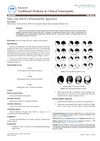
 This paper discusses using homoeopathic treatments combined with trichology techniques to diagnose and treat various types of hair loss, including those linked to conditions like anemia and stress, but does not report specific results.
 November 2016 in “Universiti Putra Malaysia Institutional Repository (Universiti Putra Malaysia)”
 This study found that Dendrobium sabin flower extracts, especially the methanolic one, demonstrated strong antioxidant and anti-aging properties without significant toxicity, suggesting its potential in treating photo-induced skin aging.
 434 citations
,
October 2003 in “PTR. Phytotherapy research/Phytotherapy research”
434 citations
,
October 2003 in “PTR. Phytotherapy research/Phytotherapy research” This review discusses the use of natural products in cosmetic preparations for skin and hair care, but reports no new research results.
 185 citations
,
August 2020 in “Mayo Clinic Proceedings”
185 citations
,
August 2020 in “Mayo Clinic Proceedings” This review discusses biological sex differences in COVID-19 outcomes and reports no new clinical results; it identifies a need for studies to clarify how sex influences disease progression.
 22 citations
,
August 2017 in “Stem cells and cloning”
22 citations
,
August 2017 in “Stem cells and cloning” This review analyzes therapies used for androgenic alopecia, highlighting potential advances from stem cell technologies and regenerative medicine, and reports no new clinical results.
 8 citations
,
February 2022 in “Journal of Clinical Medicine Research”
8 citations
,
February 2022 in “Journal of Clinical Medicine Research” This review discusses the development of the MATH+ treatment protocol for COVID-19 patients, detailing its scientific and clinical rationale, but reports no new experimental findings.