 10 citations
,
September 2020 in “Biopolymers”
10 citations
,
September 2020 in “Biopolymers” This study found that bleached hair showed optimal protein structural integrity and tensile strength at pH 5, with significant changes in cross-linking, water content, and diameter at more alkaline or acidic levels.
 June 2017 in “University of the Arts London Research Online (University of the Arts London)”
 This study compared the effects of three compounds on structural and sensory benefits for bleached hair when applied with or after bleaching, observing that their application may mitigate bleaching-induced damage.
2 citations
,
June 2018 in “Cosmetics” This study found that using an aqueous solution of AMPD in hair bleach reduced both hair damage and odor compared to ammonium hydroxide.
May 2026 in “International Journal of Cosmetic Science” This study found that UV radiation exposure during a simulated Brazilian summer caused more significant mechanical damage to natural hair than bleaching, although both caused comparable structural alterations, with double bleaching leading to the most severe protein degradation.
7 citations
,
January 1995 This study found that using a high-viscosity, high-amine-content silicone fluid as a pretreatment can protect hair from bleaching and dyeing damage without affecting these processes.
15 citations
,
June 2019 in “JEADV. Journal of the European Academy of Dermatology and Venereology/Journal of the European Academy of Dermatology and Venereology” This study found that bleaching, dyeing, and UVA/Vis radiation caused significant cuticle damage and protein loss in both Caucasian and Afro-ethnic hair, highlighting the aggressive nature of these treatments.
 20 citations
,
January 2003 in “Journal of oleo science”
20 citations
,
January 2003 in “Journal of oleo science” This study found that both everyday physical and environmental stresses, as well as chemical treatments, contributed to hair damage, with cuticle layers being more noticeably affected.
23 citations
,
May 2010 in “Surface and interface analysis” This study found that chemical treatments such as hair bleach and UV radiation significantly reduced the amount of 18-methyleicosanoic acid on the outer surface of human hair.
5 citations
,
October 2007 in “PubMed” This study discusses the effects of incorporating various amino acids in hair care products, noting improvements in hair surface properties and color retention when integrated with conditioners.
 10 citations
,
January 2012 in “Journal of Biological Macromolecules”
10 citations
,
January 2012 in “Journal of Biological Macromolecules” This study found that keratin film from human hair samples responded to damage from UV, bleaching, perming, and thermal treatments, making it a useful model for evaluating hair damage in product development.
 May 2026 in “Brazilian Journal of Hair Health”
 This study found that bleaching significantly damages hair structure and increases combing difficulty, while dyeing with emulsifiers can partially reduce damage and improve combability, yet both processes cause notable protein loss.
 February 2021 in “Journal of the Korean Society of Cosmetology”
 This study found that applying castor oil to damaged hair increased tensile strength and decreased absorbance, indicating improvements in hair texture.
July 2023 in “European Journal of Medical and Health Research” In this study, bond-protecting additives combined with low-volume oxidants were shown to reduce hair damage in fine hair by up to 62% compared to standard bleach methods, offering a safer bleaching approach for colorists working with this hair type.
December 2025 in “Biopolymers” This study found that chemically treated hair, particularly when subjected to both acid straightening and bleaching, experiences more significant structural damage when exposed to heat, highlighting key changes in both the internal and surface components of hair fibers.
 63 citations
,
August 1996 in “Forensic Science International”
63 citations
,
August 1996 in “Forensic Science International” In this study, bleaching and perming were found to significantly reduce opiate concentrations in both spiked and naturally opiate-positive human hair samples.
 3 citations
,
January 2007 in “Journal of health science”
3 citations
,
January 2007 in “Journal of health science” This study found that an enzymatic method effectively identified chemical treatments like perming and dyeing by detecting higher degradation in treated hair compared to untreated hair.
This study observed that treating human hair with NaOH led to partially removed cuticles, resulting in better fiber cohesion and mechanical properties similar to wool, unlike bleach or formic acid treatments, which weakened the fibers.
This study found that, compared to oxidative treatments, reductive perm-waving more severely impacts the intermediate filaments in European human hair, while both treatments alter denaturation kinetics in a first-order manner.
 July 2007 in “Clinical Risk”
 A woman got severe scalp burns from a salon's improper hair bleaching treatment.
 20 citations
,
June 2012 in “British Journal of Dermatology”
20 citations
,
June 2012 in “British Journal of Dermatology” This study discusses the proteomic profile associated with hair damage but does not report new experimental findings.
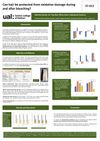 September 2018 in “University of the Arts London Research Online (University of the Arts London)”
 This study assessed three materials—L-arginine, hydrolysed keratin, and cystine-silanol copolymer—ex vivo for their potential to reduce undesirable effects of hair bleaching, such as damage to hair proteins.
 25 citations
,
December 2011 in “Surface and interface analysis”
25 citations
,
December 2011 in “Surface and interface analysis” This study reports that hair damage from bleaching is associated with the oxidative cleavage of fatty acid thioester bonds, detectable by measuring the decrease in mass spectrometry peak at m / z 76.
 10 citations
,
May 2020 in “Journal of proteome research”
10 citations
,
May 2020 in “Journal of proteome research” This study found that hair proteome profiling and genetically variant peptide identification in hairs remained effective after an explosive blast, indicating potential for forensic human identification despite damage.
 January 2017 in “Nihon Keshouhin Gijutsushakaishi/Journal of S C C./Nihon Keshouhin Gijutsushakai kaishi”
 This study found that hair damage from sunlight and chemical processes like perms and bleaching varies in internal microstructure changes, suggesting that protective techniques should be tailored to the type of chemical treatment used.
 30 citations
,
November 2013 in “PLOS ONE”
30 citations
,
November 2013 in “PLOS ONE” This study found that androgen/androgen receptor signaling accelerates premature senescence in dermal papilla cells, highlighting a potential target for treating androgenetic alopecia.
 2 citations
,
November 2018 in “International Journal of Cosmetic Science”
2 citations
,
November 2018 in “International Journal of Cosmetic Science” This study proposes a simple fluorescence method to evaluate hair damage and protection, suggesting that emissive properties of hair can aid in substantiating cosmetic claims.
 January 2012 in “Else Kröner-Fresenius Symposia”
 This symposium reported that DNA damage accumulation in aging stem cells affects genome integrity, highlighting novel mechanisms like Bmi1's role in DNA repair and the involvement of BATF in lymphoid differentiation.
 January 2011 in “Journal of Society of Cosmetic Chemists of Japan”
 This study found that a conditioner containing 18-MEA and SPDA can improve hair's smoothness and reduce flyaways, enhancing hair manageability.
 March 2023 in “Asian journal of beauty & cosmetology”
 This study found that applying a keratin solution improved tensile strength, reduced absorbance, and increased gloss in damaged hair compared to untreated hair.
 40 citations
,
February 2002 in “International Journal of Dermatology”
40 citations
,
February 2002 in “International Journal of Dermatology” In this study, hair damaged by permanent dye showed signs of recovery over time, with near complete restoration to its original state after eight weeks.