 20 citations
,
May 2018 in “The Journal of Urology”
20 citations
,
May 2018 in “The Journal of Urology” This study concluded that 5α-reductase inhibitors were associated with improved survival in men with bladder cancer, while α-blockers showed no effect.
 3 citations
,
March 2018 in “European Urology Supplements”
3 citations
,
March 2018 in “European Urology Supplements” This study found that Finnish men using 5-alpha-reductase inhibitors before or after bladder cancer diagnosis had improved disease-specific survival compared to non-users, suggesting potential benefits of the treatment.
 3 citations
,
July 2014 in “Indian Journal of Surgery”
3 citations
,
July 2014 in “Indian Journal of Surgery” Sex hormones might influence bladder cancer development, and aromatase inhibitors could increase risk in postmenopausal women.
 1 citations
,
May 2023 in “Jurnal Kedokteran Diponegoro”
1 citations
,
May 2023 in “Jurnal Kedokteran Diponegoro” This study examined the most common chemotherapy side effects among patients with prostate, bladder, and testicular cancer, noting hair loss, fatigue, and decreased appetite as frequent symptoms.
May 2013 in “Zhonghua miniao waike zazhi” This study found that hair follicle stem cells show good biocompatibility with a heterogeneous bladder acellular matrix in vitro and in vivo, supporting potential use in bladder repair.
 1 citations
,
February 2021 in “Journal of Cosmetic Dermatology”
1 citations
,
February 2021 in “Journal of Cosmetic Dermatology” In this study, mathematical analysis suggested that a 30°-sapphire blade caused the least tissue injury during hair restoration, while a rectangular blade caused the most.
 1 citations
,
January 2009 in “CRC Press eBooks”
1 citations
,
January 2009 in “CRC Press eBooks” This chapter discusses the increasing prevalence of overactive bladder in aging men, examining potential causes and treatment options, without reporting new clinical results.
5 citations
,
April 2020 in “Journal of Mind and Medical Sciences” This review discusses underactive bladder, highlighting its poorly understood nature, diagnostic challenges, and limited treatment effectiveness, and reports no new clinical results.
 1 citations
,
February 2012 in “The American Journal of Cosmetic Surgery”
1 citations
,
February 2012 in “The American Journal of Cosmetic Surgery” This case series provides anecdotal evidence that urinary bladder extracellular matrix may improve hair regrowth in donor scars and enhance hair follicle graft outcomes in hair restoration surgery.
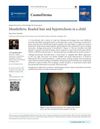 January 2026 in “Cosmoderma”
 In this clinical case study, a 9-year-old girl was diagnosed with monilethrix, a hereditary hair shaft disorder characterized by weak, beaded hair, with management focusing on minimizing hair trauma.
 November 2013 in “Journal of clinical & experimental dermatology research”
 This narrative review discusses the potential of urinary bladder matrix as a bio-scaffold in hair restoration but provides no new clinical results or trials; it highlights regenerative technology and suggests further exploration.
24 citations
,
January 2001 in “International Journal of Cancer” This study from Los Angeles supports the idea that using permanent hair dye may increase bladder cancer risk in US women, especially those with a slow NAT2 acetylation phenotype.
 13 citations
,
May 2018 in “Urologic Oncology: Seminars and Original Investigations”
13 citations
,
May 2018 in “Urologic Oncology: Seminars and Original Investigations” In this study, researchers found no significant difference in bladder cancer incidence between men treated with finasteride and those given a placebo, suggesting that reduced dihydrotestosterone levels may not impact bladder cancer risk.
10 citations
,
February 2003 in “The Journal of Urology” This study found that bladder outlet obstruction's common complication, detrusor overactivity, tends to persist with medical therapy or watchful waiting but significantly decreases with surgical treatment, especially prostatectomy.
 7 citations
,
May 2011 in “Hair transplant forum international”
7 citations
,
May 2011 in “Hair transplant forum international” This report presents no new clinical results; it discusses the application of ACell MatriStem™, a porcine urinary bladder-derived extracellular matrix, in wound healing.

This case report describes retinal occlusion and medial canthal swelling in a 64-year-old female following the injection of acellular porcine urinary bladder matrix for hair restoration, a previously unreported side effect.
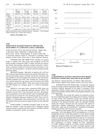 April 2013 in “The Journal of Urology”
 Researchers created a simple tool to predict bladder blockage from prostate enlargement using urine flow rate and prostate volume.
 July 1976 in “Archives of Dermatology”
 This article explores whether juxta-clavicular beaded and cutis punctata linearis colli are the same condition, finding both similarities and differences, but reports no new definitive findings.
 17 citations
,
February 2001 in “Urologia Internationalis”
17 citations
,
February 2001 in “Urologia Internationalis” This study found that patients with bladder outlet obstruction and moderately enlarged prostates are likely to successfully discontinue the a-blocker doxazosin after 9 months of combination therapy with finasteride.
14 citations
,
May 2022 in “International Journal of Molecular Sciences” This study found that platelet-rich plasma therapy reduced inflammation and improved bladder function in a rat model of ketamine-induced ulcerative cystitis.
11 citations
,
November 2022 in “Frontiers in Oncology” This study conducted a bibliometric analysis of non-muscle invasive bladder cancer research, finding increased publications over two decades, with leading contributions from the United States and European institutions.
4 citations
,
December 2023 in “Medicine” This study found that the genes MYLK and CALD1 were expressed at lower levels in bladder cancer and osteosarcoma tissues compared to normal tissues, and their expression levels appeared to correlate with poorer survival outcomes, suggesting they may be important in disease progression and prognosis.
January 2011 in “Chinese Journal of General Practice” This study found that tailored treatments based on urodynamic testing improved urinary bladder dysfunction in Parkinson's disease patients, thereby enhancing their quality of life and protecting kidney function.
 November 1998 in “Hair transplant forum international”
 This article discusses recent advancements in hair restoration techniques, focusing on optimizing efficiency for megasession procedures, and reports no new experimental results.
4 citations
,
October 2022 in “Current Urology” Platelet-rich plasma shows promise in reducing pain for bladder pain syndrome.
 4 citations
,
December 2019 in “Minerva Urology and Nephrology”
4 citations
,
December 2019 in “Minerva Urology and Nephrology” This study found that patients with non-muscle invasive bladder cancer who were treated with 5-alpha reductase inhibitors had lower recurrence rates and higher recurrence-free survival rates compared to untreated patients.
1 citations
,
April 2023 in “Heliyon” In this study, a 68-year-old man with muscle-invasive bladder cancer and renal insufficiency achieved a partial radiological response to neoadjuvant therapy with gemcitabine and Disitamab Vedotin, without significant adverse events, highlighting a potential alternative for cisplatin-ineligible patients.
September 2022 in “Zenodo (CERN European Organization for Nuclear Research)” This article discusses Fluxactive Complete, a natural supplement for prostate health, and reports no new clinical results.
January 2022 in “SSRN Electronic Journal” In this case study, a neoadjuvant therapy combining gemcitabine and Disitamab Vedotin proved effective and safe for a muscle-invasive bladder cancer patient with severe renal insufficiency, who could not tolerate platinum-based treatments. The study suggests this regimen may be a viable alternative, pending further research.
January 2013 in “Journal of Chengdu Medical College” In this study, Tolterodine Tartrate significantly improved symptoms of overactive bladder and showed fewer adverse reactions compared to the control group treatment.