2 citations
,
January 1972 In this study, plucked rat hair showed greater accumulation of injected radioisotopes than shaved hair, which may have implications for measuring exposure and understanding follicle tissue processes.
44 citations
,
November 2007 in “Journal of toxicology and environmental health. Part B, Critical reviews” This review explores how copper and zinc concentrations in hair may serve as bioindicators and discusses their potential associations with health disorders, but it reports no new clinical findings.
8 citations
,
October 2013 in “Chemistry Central Journal” This study found that microbial transformation of dihydrotestosterone with two types of fungi produced eight metabolites, among which metabolites 5–7 were significant inhibitors of butyrylcholinesterase, suggesting potential in Alzheimer's disease management.
 51 citations
,
February 2010 in “Analytical and Bioanalytical Chemistry”
51 citations
,
February 2010 in “Analytical and Bioanalytical Chemistry” Researchers developed a method to detect hormone-blocking drugs in wastewater and found them in Beijing's sewage, suggesting they can survive sewage treatment.
 54 citations
,
October 2002 in “Journal of controlled release”
54 citations
,
October 2002 in “Journal of controlled release” This study found that increasing a drug's lipophilicity and adding ethanol to the donor phase can enhance its delivery to the hair follicle, although the precise transport mechanism remains unclear.
1 citations
,
January 2013 in “International Journal of Physical and Social Sciences” This study found a negative correlation between lead and calcium levels in the scalp hair and finger nails of exposed and unexposed males, with variations suggesting these tissues can reflect metabolic changes over time.
90 citations
,
July 2014 in “Conservation Physiology” This study found that hair cortisol concentration in free-ranging brown bears is influenced by handling methods, body condition, and potentially both short- and long-term stressors.
82 citations
,
January 1997 in “Forensic science international” This article presents a biochemical model to explain how drug molecules are incorporated into hair, highlighting factors such as drug melanin affinity and the role of physico-chemical properties.
 8 citations
,
January 2006 in “Pakistan Veterinary Journal”
8 citations
,
January 2006 in “Pakistan Veterinary Journal” This study demonstrates that bacteria contribute to hair follicle neogenesis after skin wounding through IL-1R1 signaling in keratinocytes.
30 citations
,
July 1984 in “Journal of Animal Science” In this study, sows fed a diet with added biotin weaned more pigs per litter overall, though other reproductive and health metrics showed no improvement.
8 citations
,
September 1975 in “Journal of Animal Science” This study found that moose hair can effectively monitor previous mineral states for most elements, except zinc, and mineral uptake differs between male and female moose.
November 2025 in “Molecules” This review examines recent advancements in green and emerging microextraction techniques, such as SPME and DLLME, for more sustainable hormone detection in biological samples, emphasizing environmentally friendly solvents and bioanalytical applications.
15 citations
,
July 2009 in “Biomedical Chromatography” This study developed and validated a sensitive liquid chromatography–mass spectrometry method to measure aristolochic acid‐I in rat plasma, successfully applying it to pharmacokinetic research.
February 1994 in “Neuroscience letters” This review provides an overview of biotin's role in metabolism and the consequences of deficiency but reports no new clinical findings; it highlights that intestinal bacteria usually meet biotin needs.
17 citations
,
January 1993 in “Dermatology” This report describes two cases of chronic arsenicism, one involving criminal poisoning by a sibling and the other associated with prolonged use of Fowler's solution.
 1 citations
,
August 2018 in “International Journal of Research -GRANTHAALAYAH”
1 citations
,
August 2018 in “International Journal of Research -GRANTHAALAYAH” This review discusses the history and development of techniques for detecting bioelectromagnetic emissions in living tissue and reports no new experimental results; potential medical applications are explored.
15 citations
,
July 1998 in “PubMed” This study found that fentanyl accumulates differently in mouse hair after systemic administration compared to external loading, suggesting ionizable functionalities of hair influence drug retention from organic solutions.
1 citations
,
September 1993 in “Archives of Disease in Childhood” This article discusses the importance of considering biotinidase deficiency in differential diagnosis for patients with certain neurological and dermatological symptoms, as timely treatment with biotin is crucial to prevent severe consequences.
 5 citations
,
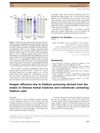
June 2015 in “Journal of dermatology”
5 citations
,
June 2015 in “Journal of dermatology” This letter to the editor describes a case of anagen effluvium due to thallium poisoning from Chinese herbal medicine and rodenticide but reports no new research findings.
 310 citations
,
November 2011 in “Environment International”
310 citations
,
November 2011 in “Environment International” This study suggests that increased use of anticancer drugs from 2004 to 2008 has led to higher environmental release, necessitating expanded monitoring and research on their ecotoxicological impacts.
 April 2017 in “The journal of investigative dermatology/Journal of investigative dermatology”
 This study found that Quantitative Mass Spectrometry Imaging offers precise localization and quantification of active compounds in skin tissues, demonstrating benefits over traditional LC-MS in drug penetration studies.
 May 2026 in “Sudovo-medična ekspertiza”
 This study documented three cases of acute thallium poisoning—one involving accidental overdose and two linked to intentional homicide—characterized by neurological and systemic symptoms, and in severe instances, death, underscoring thallium compounds' significant toxicity.
 January 2024 in “LA Referencia (Red Federada de Repositorios Institucionales de Publicaciones Científicas)”
 This study found that Carbon Quantum Dots effectively detected and quantified Co²⁺ ions and methylcobalamin in tap water with high sensitivity and recovery rates between 95% and 105%.
July 2026 in “bioRxiv (Cold Spring Harbor Laboratory)” In this study, researchers observed that TCDD exposure in mice enhanced sebaceous gland differentiation and lipid production before causing seboatrophy, providing insights into the cellular events that may contribute to chloracne pathogenesis.
1 citations
,
March 2019 in “Hygiene and Sanitation” This study observed that exposure to heavy metal salts affected skin and hair morphology in mice, with lead acetate decreasing keratinocyte proliferation and zinc sulfate and sodium dichromate increasing it.
This case study reports that prolonged high-dose vitamin A intake led to multiple adverse health effects in a young man, which mostly resolved after stopping the supplement, although liver changes persisted.
 October 2025 in “Turkish Journal of Biochemistry”
 This study found that patients with tropical chronic pancreatitis exhibited significantly reduced plasma amino acid levels and antioxidant capacity, with folate deficiency identified as a key factor in hyperhomocysteinemia.
5 citations
,
May 2025 in “Chemical and Biological Technologies in Agriculture” This study found that purified humic acids from oxidized coal enhance plant growth by modulating oxidative stress and influencing photobiological processes, with improved root growth and enzyme activity linked to antioxidant and pro-oxidant properties.
66 citations
,
January 1987 in “Journal of Investigative Dermatology” This study found that enzyme activity critical to cancer induction by polycyclic aromatic hydrocarbons in human hair follicles increased after using a crude coal tar-containing shampoo for four days and was substantially inhibited by imidazole compounds.
 September 2018 in “Epsilon Archive for Student Projects (University of Southampton)”
 This study found that treatment with Bacillus amyloliquefaciens UCMB5113 significantly increased root hair growth in half of the tested Arabidopsis thaliana accessions.