3 citations
,
October 2021 in “Turkish Journal Of Neurology” This study identifies novel genetic variants in the NOTCH3 and HTRA1 genes associated with CADASIL and CARASIL, highlighting their potential in supporting clinical diagnosis and informing treatment strategies.
17 citations
,
October 2023 in “Science Progress” This review discusses the biological properties and potential applications of PCL and barium titanate composites in biomedical fields and reports no new experimental findings; the authors highlight the need for further research.
 July 2013 in “Journal of clinical & experimental dermatology research”
 This study found that prototype right heart circulatory assist devices significantly improved hemodynamics and reduced pulmonary vascular resistances in piglet models of acute hemodynamic shock.
117 citations
,
August 1999 in “Nature Genetics” April 2018 in “The journal of investigative dermatology/Journal of investigative dermatology” This commentary discusses the crucial role of the alternative splicing factor Esrp1 in maintaining skin barrier function and its association with skin diseases like atopic dermatitis and psoriasis, but reports no new clinical results.
 April 2026 in “Zenodo (CERN European Organization for Nuclear Research)”
 In this study, Dodatek A operationalizes the Functional Androgen Axis framework by defining three system-level indices and an efficiency metric to describe androgen function, incorporating key methodological improvements and acknowledging significant limitations for future empirical validation.
11 citations
,
December 2017 in “Orphanet Journal of Rare Diseases” This study found a previously unreported ST14 gene mutation in a patient with ichthyosis-hypotrichosis syndrome, highlighting novel skin and hair characteristics and emphasizing the critical role of the Asp482 amino acid in matriptase activation.
July 2024 in “Journal of Investigative Dermatology” Pediatric patients with dystrophic epidermolysis bullosa face more hospital admissions, procedures, and complications than others.
18 citations
,
December 1992 in “Journal of Cutaneous Pathology” This study observed that lectin-binding patterns in skin appendage tumors reveal differences in sweat gland tumors compared to normal tissues, but pilosebaceous tumors maintained a similar lectin-binding pattern to their corresponding normal structures.
45 citations
,
October 2019 in “Clinical and Experimental Dermatology” Targeted therapies promoting differentiation could help treat basal cell carcinoma by exhausting cancer stem cells.
18 citations
,
January 2018 in “BMC dermatology” This paper describes a case of epidermolysis bullosa simplex with muscular dystrophy associated with a novel PLEC mutation and diffuse alopecia, highlighting a potential genetic link that remains uncertain.
 11 citations
,
March 2014 in “Journal of Investigative Dermatology”
11 citations
,
March 2014 in “Journal of Investigative Dermatology” In this study, basal cell carcinoma developed in Ptch-deficient mice only after chemical treatment, not skin wounding, suggesting a second unknown event is necessary for tumor formation.
18 citations
,
February 2017 in “Molecular Medicine Reports” This study found that the Notch signaling pathway is suppressed in basal cell carcinomas and highly expressed in hair follicles, suggesting it might be a target for treatment strategies.
 November 2009 in “Hair transplant forum international”
 This article discusses the use of the Hamilton and Norwood system by hair restoration surgeons to classify stages of androgenetic alopecia and presents no new clinical results.
 1 citations
,
March 2015 in “Journal of the European Academy of Dermatology and Venereology”
1 citations
,
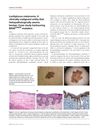
March 2015 in “Journal of the European Academy of Dermatology and Venereology” This letter to the editor shares a case study of lentiginous melanoma that appears clinically malignant but histopathologically benign, involving the BRAFV600R mutation.
 3 citations
,
March 2019 in “Case Reports”
3 citations
,
March 2019 in “Case Reports” This report highlights a case of possible association between myotonic dystrophy type 1 and basal cell carcinoma, urging clinicians to consider this link despite negative genetic testing for known hereditary BCC syndromes.

This study identified distinct and significant adverse event patterns across different drug classes used to treat benign prostatic hyperplasia, confirming known risks and suggesting novel safety signals for further investigation.
January 2025 in “Genetics in Medicine Open” In this case report, a 33-year-old male with symptoms resembling Neuromyelitis Optica was treated with 10 mg biotin daily, which may reverse certain ophthalmologic and myelopathy findings. The researchers emphasize the need for further research on biotinidase deficiency in patients misdiagnosed with similar conditions.
January 2018 in “VCU Scholars Compass (Virginia Commonwealth University)” In this study using Xenopus laevis embryos, reduced levels of the desmosomal protein desmoplakin led to defects in epidermal and cardiac structures, suggesting its crucial role in tissue integrity.
 1 citations
,
March 2023 in “Frontiers in Cardiovascular Medicine”
1 citations
,
March 2023 in “Frontiers in Cardiovascular Medicine” A specific gene variant is linked to heart disease, increased heart muscle, curly hair, and thick skin on palms and soles.
3 citations
,
April 2020 in “PubMed” This study found that DEB-BACE combined with systemic chemotherapy was more effective than chemotherapy alone for unresectable lung squamous cell carcinoma, reducing side effects and improving survival rates.
 February 2018 in “Journal of Aesthetic Nursing”
 This editorial emphasizes the critical need for laser protection supervisors in the aesthetic sector due to a rise in laser-related claims attributed to inadequate training and safety protocol adherence, highlighting that better understanding and supervision can help mitigate risks.
 February 2026 in “Molecules”
 This study reported that a novel nanomedicine combining berberine and sinapic acid significantly inhibited the growth of mouse mammary carcinoma cells and demonstrated an anti-tumor effect in vivo, without significant systemic toxicity after 28 days, suggesting a promising, low-toxicity therapeutic strategy for breast cancer.
 March 2026 in “Dermatopathology”
 This study found that sebaceous gland-derived cutaneous adnexal carcinomas exhibited the highest frequency of genomic alterations compared to other tumor types.

This study investigated the molecular mechanisms behind the formation of drug-polymer inclusion complexes and found that carbamazepine can self-assemble into stable channel structures without guest polymers, unlike griseofulvin, which requires guest molecules for structural stability.
 September 2016 in “Journal of Dermatological Science”
 This study investigated the mechanism responsible for pili torti formation in Björnstad syndrome using a transmission electron microscope, but did not establish a definitive explanation.
January 2004 in “Journal of Clinical Dermatology”  April 2019 in “The journal of investigative dermatology/Journal of investigative dermatology”
 In this study, the researchers observed significant metabolic dysregulation in central centrifugal cicatricial alopecia, particularly involving lipid metabolism and the downregulation of AMPK-related genes.
July 2026 in “Pediatric Allergy and Immunology” 26 citations
,
October 2019 in “JNCI Cancer Spectrum” This clinical study observed that in patients with advanced breast cancer and BRCA1/2 mutations, talazoparib provided significantly better progression-free survival, objective response, clinical benefit, and patient-reported outcomes compared to physician’s choice chemotherapy, despite common side effects like anemia and fatigue.