22 citations
,
July 2024 in “Frontiers in Oncology” This study found that FLASH radiation within a Spread-out Bragg Peak retained its normal tissue-sparing effect compared to conventional radiation, with a 40% reduction in acute skin damage and an 18% reduction in fibrotic development in mice.
 June 2024 in “British Journal of Dermatology”
 This review by the British Hair and Nail Society reported that their national grand round for complex hair disorders has led to diagnosis changes in 38% of cases and has suggested novel treatments, emphasizing its role in aiding complex diagnostic and therapeutic decisions.
April 2019 in “Journal of Investigative Dermatology” 12 citations
,
March 2013 in “The American journal of dermatopathology/American journal of dermatopathology” This article reports on three new cases of Birt–Hogg–Dubé Syndrome and emphasizes the role of genetic analysis in its diagnosis due to clinical challenges.
 August 2025 in “Fabad Journal of Pharmaceutical Sciences”
 This review highlights that bicalutamide, a non-steroidal antiandrogen used in prostate cancer treatment, is mainly effective through its (R)-enantiomer and emphasizes the need to monitor its adverse effects despite its targeted antiandrogenic action.
This study identified a 14,883 bp genomic deletion affecting the Plcd1 and Vill genes as likely responsible for the abnormal phenotype observed in snthr-1Bao mice.
 November 2023 in “Indian Journal of Dermatology”
 This study from North-East India analyzed 21 cases of frontal fibrosing alopecia, noting a high prevalence in post-menopausal women and distinct histological features such as perifollicular lymphocytic infiltrate and hydropic degeneration.
50 citations
,
February 2007 in “The Journal of Pathology” This study found a rare germline mutation in the Birt–Hogg–Dubé gene in a Japanese patient with renal cell carcinoma, suggesting distinct biological features and challenging current renal tumor classifications.
 January 2024 in “Genetics in Medicine Open”
 In this report, two adult patients with Tatton-Brown-Rahman syndrome exhibited new cardiac features, such as atrial fibrillation and ventricular and atrial dilatation, highlighting the importance of cardiovascular follow-up in adults with this condition.
 63 citations
,
October 2011 in “Archives of Dermatology”
63 citations
,
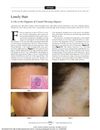
October 2011 in “Archives of Dermatology” Isolated long hairs at the original hairline can help diagnose Frontal Fibrosing Alopecia.
November 2015 in “Journal of the Korea Academia-Industrial cooperation Society” This study established a stable cell line for CRF1 receptor screening, which can be used to develop functional cosmetics and modulators potentially affecting hair re-growth.
December 2021 in “Figshare” This study found that BBS7 downregulation in occlusal hypofunctional periodontal ligament tissue is associated with reduced Sonic hedgehog signaling activity, potentially playing a key role in maintaining PDL homeostasis.
22 citations
,
March 1994 in “Journal of Heredity” In this study, researchers identified a mutation in mice that causes hair loss and immune system issues, located on chromosome 18.
5 citations
,
February 2016 in “Sultan Qaboos University medical journal” This case report describes a patient with a severe pruritic rash and hair loss in both axillary regions, with no fluorescence under a Wood's lamp and hair follicle-centred papules observed through dermoscopy.
4 citations
,
June 2024 in “Journal of Cosmetic Dermatology” In this study, fractional radiofrequency treatment was found to be effective, safe, and well-tolerated for patients with erythematotelangiectatic rosacea, with high satisfaction rates.
1 citations
,
January 1999 in “Proceedings of the British Society of Animal Science” This research investigates apoptosis and bcl 2 expression in hair follicles cultured with and without biotin, but it reports no new results.
3 citations
,
January 2011 in “Yearbook of Dermatology and Dermatologic Surgery”  2 citations
,
April 2023 in “Cutis”
2 citations
,
April 2023 in “Cutis” This systematic review discusses the treatment characteristics and outcomes for frontal fibrosing alopecia specifically in Black patients with skin of color, addressing a gap in clinical evidence due to underrepresentation in studies.
 1 citations
,
January 2019 in “Acta dermato-venereologica”
1 citations
,
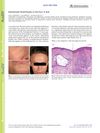
January 2019 in “Acta dermato-venereologica” The woman's skin and hair symptoms were confirmed as frontal fibrosing alopecia, and while facial papules are common in such cases, there's no effective local treatment, but systemic treatments can help.
 1 citations
,
December 2018 in “Journal of genetic medicine”
1 citations
,
December 2018 in “Journal of genetic medicine” In this case report, a 20-year-old male with tricho-rhino-phalangeal syndrome was found to have a de novo frameshift mutation in the TRPS1 gene, highlighting the challenges in diagnosing this rare disorder.
November 2014 in “International Society of Hair Restoration Surgery” This announcement explains the Fellow designation for hair restoration surgeons meeting specific educational criteria, without reporting new research findings.
 21 citations
,
January 2018 in “Anticancer Research”
21 citations
,
January 2018 in “Anticancer Research” This study suggests that NBCCS and BFHS may be the same genetic condition, which could help improve identification and management of misdiagnosed cases with specific surveillance strategies.
 February 2024 in “Skin research and technology”
 The researchers in this study identified molecular mechanisms involved in frontal fibrosis alopecia, highlighting immune response and fatty acid metabolism, and developed a four-gene diagnostic model showing high accuracy in distinguishing affected individuals from controls.
 June 2026 in “Journal of health economics and outcomes research”
 This study found that ritlecitinib 50 mg offered a lower cost per responder than baricitinib 2 or 4 mg for treating severe alopecia areata at Weeks 24 and 52, potentially influencing reimbursement decisions.
 166 citations
,
April 2012 in “Journal of The American Academy of Dermatology”
166 citations
,
April 2012 in “Journal of The American Academy of Dermatology” This study reviewed clinical data from 60 patients with frontal fibrosing alopecia and found increasing prevalence and generally poor response to treatment, with the cause remaining unclear.
 11 citations
,
March 2014 in “Journal of Investigative Dermatology”
11 citations
,
March 2014 in “Journal of Investigative Dermatology” In this study, basal cell carcinoma developed in Ptch-deficient mice only after chemical treatment, not skin wounding, suggesting a second unknown event is necessary for tumor formation.
November 2024 in “Dermatology and Therapy” In this review, cosmetic practices such as non-ablative lasers, autologous fat injections, and oral isotretinoin may help alleviate certain symptoms of frontal fibrosing alopecia, while treatments like deep chemical peels and ablative laser therapies are contraindicated due to potential scarring risks.
23 citations
,
October 2008 in “Journal of medicinal chemistry” This study suggests that PF-0998425 is an effective androgen receptor antagonist for sebum control and androgenetic alopecia with rapid metabolism reducing the risk of systemic side effects.
62 citations
,
March 2017 in “Journal of Investigative Dermatology” Mutations in the ACTB gene cause Becker’s nevi and may lead to muscle issues in Becker’s nevus syndrome.
4 citations
,
December 2017 in “Journal of zoo and wildlife medicine” This study proposes that seasonal alopecia and reproductive changes in six female fossas at the San Diego Zoo may be linked to hormonal changes associated with reproductive activity.