 July 2026 in “Zenodo (CERN European Organization for Nuclear Research)”
 In this study, a herbal shampoo using bael extract was formulated and found to have good cleansing efficiency and stable properties, suggesting it as a safe and eco-friendly alternative to synthetic shampoos with potential benefits for scalp health.
1 citations
,
October 1993 in “PEDIATRICS” This article recounts a series of "hair burning syncope" cases in black girls experiencing seizures during hair grooming with hot irons, without presenting new research findings.
 December 2024 in “Frontiers in Pediatrics”
 This case report details the first use of baricitinib in a pediatric patient with immune thrombocytopenia and alopecia areata, showing successful treatment with increased platelet counts.
February 2026 in “ACS Applied Materials & Interfaces” This study developed a novel treatment method using carbon dots from Cinnamomum burmannii leaves, which improved hair regeneration and thickness in an AGA mouse model by promoting cell proliferation, angiogenesis, and reducing inflammation through multiple signaling pathways.
30 citations
,
July 1984 in “Journal of Animal Science” In this study, sows fed a diet with added biotin weaned more pigs per litter overall, though other reproductive and health metrics showed no improvement.
 16 citations
,
April 2012 in “Journal of mammalogy”
16 citations
,
April 2012 in “Journal of mammalogy” Among Australian fur seals at one colony, this study found that alopecia, primarily affecting juvenile females, is linked to hair shaft fractures associated with low tyrosine and zinc levels, as well as higher pollutant exposure.
March 2025 in “Journal of Investigative Dermatology” In this survey study, 44% of epidermolysis bullosa patients who tried cannabinoids reported effective symptom management, particularly pain relief, but concerns about cost, stigma, and accessibility remain significant. Further research is necessary to confirm these findings and optimize cannabinoid therapies for EB.
 1 citations
,
December 2023 in “Environmental pollution”
1 citations
,
December 2023 in “Environmental pollution” This study quantified around 60 organic pollutants in hair samples from mothers and infants in Spain, finding significant correlations between pollutant levels and factors like residence, dietary habits, and maternal age, with common exposure sources identified for several pollutant classes.
 January 2026 in “Journal of Clinical Practice and Research”
 This study observed that bitemporal alopecia often coincides with conditions such as androgenetic alopecia, seborrheic dermatitis, and telogen effluvium. The researchers suggest bitemporal hair loss could help predict and monitor these associated hair diseases.
May 2018 in “International Society of Hair Restoration Surgery” This announcement describes job openings at a boutique hair restoration center in Atlanta and reports no clinical results; it emphasizes quality over quantity in their procedures.

In this study, data from multiple sources found that Baricitinib significantly promoted hair regrowth and improved patient-reported outcomes in those with severe alopecia, with minimal side effects, over a 36-week period.
 3 citations
,
August 2021 in “Journal of Investigative Dermatology”
3 citations
,
August 2021 in “Journal of Investigative Dermatology” Baricitinib was more effective than a placebo in regrowing hair in adults with alopecia areata after 36 weeks.
February 2025 in “Canadian Journal of Health Technologies” This review assessed the clinical and cost-effectiveness of baricitinib, an oral treatment for severe alopecia areata in adults, to inform Canadian reimbursement recommendations, excluding Quebec.
 January 2023 in “Springer eBooks”
 This review discusses the causes, characteristics, and current management strategies for epidermolysis bullosa, emphasizing that while experimental therapies show promise, there are no definitive cures.
7 citations
,
September 2013 in “Familial cancer” This review discusses recent insights into Birt–Hogg–Dube syndrome, including the functions of the FLCN gene and clinical recommendations for screening and treatment, but it reports no new experimental results.
January 2026 in “Clinics and Practice” In this retrospective case series, baricitinib showed effectiveness in treating alopecia areata, with some potential benefits for psoriasis, but it may not be suitable for managing psoriatic arthritis in patients with these coexisting conditions.
31 citations
,
July 2012 in “Journal of Lipid Research” This study found that the acyl-CoA binding protein is essential for the production of very long chain free fatty acids in the stratum corneum and maintaining normal epidermal barrier function in mice.
 May 2022 in “International Journal of Biochemistry Research and Review”
 The researchers characterized a plant-based biotin supplement, SesZenBioTM, from Sesbania agati leaves, predicting it may enhance hair follicle growth more effectively than synthetic biotin based on molecular interactions and its biotin content.
 2 citations
,
October 2006 in “International Journal of Dermatology”
2 citations
,
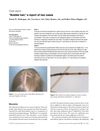
October 2006 in “International Journal of Dermatology” This study reports that discontinuing blow drying improved hair loss in two women with vacuolization in their hair shafts, suggesting a potential link between heat styling and alopecia.
November 1968 in “Journal of the American Pharmaceutical Association”  November 2025 in “SKIN The Journal of Cutaneous Medicine”
 In this study, baricitinib, a JAK inhibitor, was found to significantly improve scalp hair regrowth in both adults and adolescents with severe alopecia areata, with many achieving nearly full regrowth by weeks 36 or 52.
 5 citations
,
November 2015 in “Turk Pediatri Arsivi-turkish Archives of Pediatrics”
5 citations
,
November 2015 in “Turk Pediatri Arsivi-turkish Archives of Pediatrics” This report highlights a preterm newborn with hair-thread tourniquet syndrome affecting multiple toes, emphasizing the importance of early identification and removal to prevent severe complications.
 16 citations
,
March 2016 in “Clinical ophthalmology”
16 citations
,
March 2016 in “Clinical ophthalmology” In this study, bimatoprost 0.03% was effective and well-tolerated for improving eyelash hypotrichosis in healthy adolescents, but not for those with the condition due to chemotherapy or alopecia areata.
19 citations
,
November 1985 in “Archives of Dermatology” This case study documented a black male newborn developing large bullae that healed with hypopigmentation, suspecting proteolytic enzymes in keratinocytes caused the collagenolysis responsible for the condition.
 25 citations
,
November 2022 in “British journal of dermatology/British journal of dermatology, Supplement”
25 citations
,
November 2022 in “British journal of dermatology/British journal of dermatology, Supplement” In this analysis, safety data from two clinical trials showed that baricitinib for severe alopecia areata had predictable side effects like infections and elevated CPK, with some serious adverse events noted at low incidence rates; no deaths were reported.
May 2025 in “The Journal of Dermatology” This article includes visual documentation of eyebrow morphology during a disease course, but reports no new research findings.
 April 2023 in “Journal of Investigative Dermatology”
 This study found that adults with atopic dermatitis who were treated with baricitinib at doses of 2mg or 4mg experienced significant improvements in work productivity, potentially leading to substantial indirect cost savings for employers over 16 weeks.

In this study, researchers examined Baricitinib's role as a treatment for Alopecia Areata, contrasting it with conventional therapies, and found that while effective, Baricitinib may cause adverse reactions depending on individual patient health histories.
3 citations
,
May 2014 in “Journal of the Egyptian Women's Dermatologic Society /Journal of the Egyptian Women's Dermatologic Society” This study found that bimatoprost 0.03% solution may effectively reduce alopecia severity and promote cosmetically acceptable hair regrowth in some patients with scalp alopecia areata.
 June 1987 in “Pediatric Neurology Briefs”
 This report describes a case of a 5-year-old boy with acute somnolence, alopecia, keratoconjunctivitis, and perioral stomatitis linked to lactic acidaemia.