6 citations
,
June 2021 in “EClinicalMedicine” In this study, ALRV5XR significantly increased hair regrowth in women with androgenetic alopecia or telogen effluvium, with no adverse events reported.
 9 citations
,
October 2014 in “Clinical and Experimental Dermatology”
9 citations
,
October 2014 in “Clinical and Experimental Dermatology” Temporary hair loss can occur after brain AVM treatment but usually regrows in 8 weeks.
In this study, researchers developed an AI-powered platform called VitaDetect, which screens for vitamin deficiencies using image analysis of nails, tongue, and skin, aiming to provide an accessible and early-stage detection tool in resource-limited settings.
December 2025 in “Medical dosimetry” January 2012 in “Hacettepe University Institutional Repository (hacettepe.edu.tr)” This study found that using a contrast agent in Microbeam Radiation Therapy simulations increased the target dose but concluded that using a linear accelerator as an X-ray source did not preserve MRT advantages.
September 2026 in “Apollo Medicine” In this case report, researchers observed that a 35-year-old male with alopecia universalis achieved full regrowth of scalp, eyebrow, and facial hair with oral upadacitinib treatment after previous therapies failed to provide lasting relief.
In this review of autonomous robotic surgery, the authors explore the integration of AI and machine learning in surgical procedures, detailing both the advancements and challenges of these technologies, including ethical concerns and current regulatory frameworks.
 1 citations
,
September 2023 in “Journal of the American Academy of Dermatology”
1 citations
,
September 2023 in “Journal of the American Academy of Dermatology” This abstract introduces baricitinib as an approved treatment for adults with severe alopecia areata in the US, Europe, and Japan, but does not report any specific study results or findings.
3 citations
,
September 2021 in “EClinicalMedicine” In this study, ALRV5XR treatment significantly increased terminal hair density in men with androgenetic alopecia after 24 weeks, while also decreasing vellus hair density, and was well tolerated without adverse events, suggesting its potential efficacy over standard therapies.
 1 citations
,
August 2021 in “Journal of The American Academy of Dermatology”
1 citations
,
August 2021 in “Journal of The American Academy of Dermatology” This study evaluates the effectiveness and safety of 2-mg and 4-mg doses of baricitinib in patients with alopecia areata who have lost at least 50% of their scalp hair, comparing outcomes between those with early and late onset of the disease.
10 citations
,
June 2022 in “Biomedicine & Pharmacotherapy” This review examines the molecular mechanisms by which the proapoptotic protein ARTS inhibits tumorigenesis and discusses prospects for developing drugs that mimic its function, with no new experimental results reported.
 19 citations
,
May 2014 in “Molecules”
19 citations
,
May 2014 in “Molecules” This study found that the methanolic heartwood extract of Avicennia marina significantly inhibits 5α-reductase type 1, reducing 5α-DHT production by 52% in a cell-based assay with human hair dermal papilla cells.
In this study, researchers found that crude extracts from Avicennia marina and its component avicequinone C inhibit mechanisms contributing to androgenic alopecia in vitro, including 5α-reductase activity and DHT-AR interactions, potentially promoting hair growth and delaying the catagen phase in human dermal papilla cells.
This study found that the methanolic heartwood extract of Avicennia marina significantly inhibited the enzyme 5 alpha-reductase type 1 in a cell-based assay, suggesting potential anti-androgenic effects for treating androgenic alopecia.
12 citations
,
February 2022 in “Frontiers in Pharmacology” This study reports that Asparagus racemosus and Withania somnifera extracts significantly reduced paclitaxel-induced myelosuppression and morbidity in mice, suggesting their potential as therapeutic adjuvants in cancer management.
 46 citations
,
December 2010 in “The journal of investigative dermatology/Journal of investigative dermatology”
46 citations
,
December 2010 in “The journal of investigative dermatology/Journal of investigative dermatology” This study found that Acvr1b signaling is crucial for both hair follicle development and cycling in mice, with the genetic disruption leading to hair loss and a thickened epidermis.
 7 citations
,
July 2020 in “Immunological Investigations”
7 citations
,
July 2020 in “Immunological Investigations” This study observed that the rs231775 CTLA4 genetic variant was more prevalent in Alopecia Areata patients than controls, particularly among those with severe disease.
 5 citations
,
July 2020 in “Journal of Cosmetic Dermatology”
5 citations
,
July 2020 in “Journal of Cosmetic Dermatology” This study found that using a vibration anesthetic device during scalp mesotherapy significantly reduced pain in patients with androgenetic alopecia and alopecia areata compared to the non-vibration side.
This study found that Avicennia marina extract and its active compound avicequinone C inhibit enzymes and receptors related to androgenic alopecia, potentially supporting hair growth in cultured dermal papilla cells.
 35 citations
,
June 2005 in “The Milbank Quarterly”
35 citations
,
June 2005 in “The Milbank Quarterly” This article describes a framework for evaluating new health technologies by integrating quantitative evidence with qualitative assessments and using precedents to guide policy decisions, without reporting new clinical results.
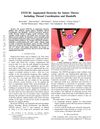 April 2024 in “arXiv (Cornell University)”
 In this study, the researchers developed an advanced robotic system called STITCH for performing suture tasks, which completed an average of 2.93 sutures autonomously and 4.47 sutures with human intervention in physical trials.
 February 2023 in “Indian Journal of Postgraduate Dermatology”
 This article outlines opportunities for academic growth provided by the Indian Association of Dermatologists, Venereologists, and Leprologists, reporting no new research findings.
 11 citations
,
January 2018 in “Acta dermato-venereologica”
11 citations
,
January 2018 in “Acta dermato-venereologica” In this study, oral tofacitinib showed higher efficacy and tolerability in treating refractory alopecia totalis and universalis compared to traditional treatments, achieving a 50% improvement in severity scores for 44.4% of patients over six months, with fewer adverse effects.
 April 2023 in “Neurology”
 This study examined treatments for emesis in young Alexander disease patients, finding that 95% responded positively to valproic acid, which was more effective than anti-reflux medications or cyproheptadine, though some adverse effects require monitoring.
November 2023 in “Bioengineering” This study found that autologous micrografts using AMT® technology effectively improved symptoms and mobility in patients with early-stage knee osteoarthritis, demonstrating safety and potential benefits at 1- and 6-months post-procedure.
 32 citations
,
February 2014 in “Psychopharmacology”
32 citations
,
February 2014 in “Psychopharmacology” This study found that dutasteride pretreatment reduced certain sedative effects of alcohol and may decrease drinking behavior in adult men, likely by impacting neuroactive steroid levels.
This study found that vinblastine's metabolites show binding affinities for receptors linked to nausea and alopecia, suggesting potential changes to its structure could minimize these side effects during chemotherapy.