 September 2023 in “Bangladesh Journal of Neurosurgery”
 This case report shares that a 25-year-old man with cerebral arteriovenous malformation was successfully treated with stereotactic radiosurgery in Bangladesh, achieving complete obliteration of the AVM without significant clinical symptoms.
 1 citations
,
June 2022 in “Jambura Journal of Mathematics”
1 citations
,
June 2022 in “Jambura Journal of Mathematics” This review analyzes the research on production delivery strategies using n-vehicle, highlighting recent developments and suggesting areas for future study, but it reports no new experimental findings.
May 2026 in “International Journal of Applied Pharmaceutics” This study developed a stable nanoemulsion of Avicennia marina heartwood extract showing promising anti-dandruff activity against Pityrosporum ovale and favorable physicochemical properties, which supports its potential use in topical formulations.
July 2017 in “OPAL (Open@LaTrobe) (La Trobe University)” In this study, researchers investigated the role of the ATX-LPA axis in asthma pathogenesis using human and mouse models and highlighted the potential for developing new ATX inhibitors as effective asthma treatments.
 1 citations
,
March 2024 in “Skin health and disease”
1 citations
,
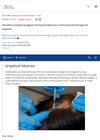
March 2024 in “Skin health and disease” This study found that vibration assisted analgesia reduced pain during intralesional corticosteroid therapy for hair loss, enabling treatment in a broader range of patients, including those with needle phobia.
January 2022 in “SSRN Electronic Journal” In this case study, a neoadjuvant therapy combining gemcitabine and Disitamab Vedotin proved effective and safe for a muscle-invasive bladder cancer patient with severe renal insufficiency, who could not tolerate platinum-based treatments. The study suggests this regimen may be a viable alternative, pending further research.
January 2025 in “Journal of Bioresource Management” This study found that inhibiting the ATR kinase with VE-822 impairs DNA repair capability in quiescent human keratinocytes exposed to solar-simulated UV radiation, suggesting ATR's critical role in facilitating effective DNA damage repair and cellular recovery under UV stress conditions.
December 2025 in “Drug Design Development and Therapy” This retrospective study reported that in HER-2-negative metastatic breast cancer patients, anlotinib combined with taxane/capecitabine showed superior disease control rate, progression-free survival, and overall survival compared to bevacizumab plus chemotherapy, with both treatments having tolerable safety profiles.
7 citations
,
March 2023 in “Lasers in Surgery and Medicine” This study found that a single ablative fractional laser treatment significantly reduced hedgehog pathway gene expression in microscopic murine basal cell carcinomas, nearly matching the effects of repeated topical vismodegib applications.
 7 citations
,
April 2021 in “Journal of The American Academy of Dermatology”
7 citations
,
April 2021 in “Journal of The American Academy of Dermatology” This study found that the implementation of the SAVe teledermatology model increased access to dermatologic care during COVID-19, reducing referral wait times significantly compared to in-person visits.
 April 2026 in “Dermatology Practical & Conceptual”
 This study suggests that autologous micrograft technology may be more effective than finasteride in promoting hair growth in patients with androgenetic alopecia.
71 citations
,
February 2012 in “The American Journal of Human Genetics” This study found that a heterozygous missense mutation in ATR is associated with a hereditary cancer syndrome, manifested by oropharyngeal cancer and other anomalies, in an autosomal-dominant inheritance pattern across a five-generation family.
This study found that Avicennia marina extract significantly increased hair growth in androgenic alopecia patients, suggesting its potential effectiveness by inhibiting 5 alpha-reductase and regulating relevant growth factors.

This abstract contains no research findings; it outlines website features and access options for the JAMA network's publications.
1 citations
,
April 2017 in “Journal of Investigative Dermatology” Abatacept may help some people with alopecia areata regrow hair.
November 2013 in “Journal of clinical & experimental dermatology research” Dutasteride can help treat hair loss in both men and women.
March 2026 in “Journal of the European Academy of Dermatology and Venereology” This study introduced and validated the VESALT, a visual extension of the Severity of Alopecia Tool, finding it offers improved reliability and user-friendliness over SALT by incorporating pattern recognition and broader coverage, including non-scalp regions, in assessing alopecia areata severity.
 15 citations
,
February 2019 in “Journal of clinical medicine”
15 citations
,
February 2019 in “Journal of clinical medicine” In this animal study, atorvastatin co-administered with trastuzumab reversed trastuzumab-induced cognitive impairment (chemo-brain) and improved its anti-cancer efficacy without causing hair loss.
 14 citations
,
May 2008 in “Journal of proteome research”
14 citations
,
May 2008 in “Journal of proteome research” This study found that dutasteride reduced β-amyloid plaque load in a cerebral amyloidosis model, seemingly linked to mitochondrial apoptosis and autophagy processes.
 September 2009 in “European Urology Supplements”
 Cone beam computed tomography can allow for smaller safety margins around the target area in prostate cancer radiation treatment if used for ongoing treatment checks.
November 2023 in “Baylor University Medical Center Proceedings” 
This thesis explores how optical coherence tomography and advanced imaging methods may address clinical needs in fields like interventional pulmonology and dermatology, highlighting their potential for disease assessment and staging.
 118 citations
,
October 2013 in “Trends in Genetics”
118 citations
,
October 2013 in “Trends in Genetics” The AUTS2 gene is linked to neurological disorders and may affect human brain development and cognition.
This study found that a mitoxantrone, vincristine, and prednisolone regimen effectively treated recurrent breast cancer with a 70% response rate, though it was associated with significant myelosuppression.
 3 citations
,
August 2020 in “Cutaneous and Ocular Toxicology”
3 citations
,
August 2020 in “Cutaneous and Ocular Toxicology” This study demonstrated that adenosine triphosphate may prevent vandetanib-induced skin toxicity in rats, suggesting potential for further research in other animal models and humans.
2 citations
,
July 2025 in “Scientific Reports” This study identified a novel Acinetobacter species, strain A1-4-2, with exceptional biodegradation abilities and low antibiotic resistance, found in diverse environments and potentially useful for ecological restoration by degrading organic pollutants.
43 citations
,
December 1988 in “International Journal of Bio-Medical Computing” May 2026 in “Journal of Clinical Oncology” This study found that nearly 40% of Hodgkin’s Lymphoma patients who received Brentuximab Vedotin with AVD chemotherapy experienced persistent alopecia more than two years after treatment, leading to significant psychosocial consequences such as reduced self-confidence and emotional distress.
12 citations
,
May 2010 in “Journal of Clinical Oncology” This study found that MK-5108 is well tolerated at high doses as monotherapy in cancer patients, showing stable disease and some antitumor activity, particularly in combination with docetaxel.
 6 citations
,
June 2018 in “PLOS ONE”
6 citations
,
June 2018 in “PLOS ONE” This study demonstrated that the Alopecia Areata Assessment Tool (ALTO) effectively identifies alopecia areata cases with high sensitivity and specificity in a dermatology clinic setting.