56 citations
,
March 2017 in “Plant and Cell Physiology” This study used light sheet fluorescence microscopy to successfully image and analyze calcium oscillations in the root hairs of Arabidopsis thaliana, finding that these oscillations correlate with the root hair growth rate and that auxin affects these properties.
24 citations
,
December 2010 in “Dermatologic surgery” In this study, BTXA injections did not effectively treat recalcitrant alopecia areata or improve hair regrowth in most patients, suggesting its limitations as an alternative therapy.
36 citations
,
July 2017 in “Journal of controlled release” In this study, a new formulation of all-trans retinoic acid bound to polyvinyl alcohol showed reduced skin inflammation and sustained drug release for up to six days compared to free ATRA in vitro and in vivo.
January 2015 in “Dermatología Venezolana” This review details the use of trichoscopy for analyzing hair and scalp structures to differentiate between types of alopecia but does not report new clinical results.
 8 citations
,
January 2015 in “International journal of trichology”
8 citations
,
January 2015 in “International journal of trichology” In this case report, the authors describe complete recovery from acute diffuse and total alopecia linked to Borrelia infection after treatment with intravenous ceftriaxone and topical clobetasol foam.
21 citations
,
January 2007 in “Journal of the European Academy of Dermatology and Venereology” This study reports that periocular pigmentation may occur with the use of travoprost for treating alopecia areata of the eyelashes.
This article reviews numerous drug reactions and interactions for various medications and does not present new research findings.
1 citations
,
March 2013 in “British Journal of Dermatology” This correspondence discusses eyebrow alopecia in the context of centrofacial trichoblastomatosis and reports no new clinical findings.
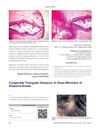 13 citations
,
January 2011 in “International Journal of Trichology”
13 citations
,
January 2011 in “International Journal of Trichology” CTA is often mistaken for AA but doesn't respond to steroids and may require hair transplantation.
 5 citations
,
January 2018 in “Skin Research and Technology”
5 citations
,
January 2018 in “Skin Research and Technology” This letter compares automated digital image analysis (TrichoScan) with manual marking of hairs in male patients with androgenetic alopecia but reports no new results.
 October 2022 in “Amplla Editora eBooks”
 Pre-natal, internal, and external factors may contribute to the development of Autism Spectrum Disorder (ASD).
August 2003 in “Special report” This report introduces Barcelona - TrichoScan as a novel software tool purported to effectively analyze hair growth in patients with androgenetic alopecia or androgenetic effluvium, but it provides no clinical data.
September 2021 in “CRC Press eBooks” This article discusses trichotillomania and trichoteiromania, focusing on their clinical presentation, main trichoscopic features, and similarities in hair loss patterns but reports no new research findings.
612 citations
,
February 2004 in “Nature” This study found that the OXI1 gene in Arabidopsis thaliana is vital for activating key protein kinases and is necessary for oxidative burst signal responses like pathogen resistance and root hair growth.
 19 citations
,
February 2023 in “Environmental and experimental botany”
19 citations
,
February 2023 in “Environmental and experimental botany” This review discusses the role of jasmonic acid and its conjugates in enhancing plant stress tolerance and balancing growth and defense mechanisms but provides no new experimental data.
15 citations
,
November 2020 in “International Journal of Molecular Sciences” This study found that multi-walled carbon nanotubes promoted root hair growth in certain plants, with results indicating they modulate nitric oxide and ethylene pathways crucial to this development.
5 citations
,
May 2025 in “Chemical and Biological Technologies in Agriculture” This study found that purified humic acids from oxidized coal enhance plant growth by modulating oxidative stress and influencing photobiological processes, with improved root growth and enzyme activity linked to antioxidant and pro-oxidant properties.
5 citations
,
October 2022 in “Biology” This study found that CAP1 plays a significant role in reducing ammonium toxicity in Arabidopsis thaliana by promoting shoot growth and maintaining reactive oxygen species homeostasis.
2 citations
,
August 2022 in “Animals” This review discusses the potential use of essential oils and melatonin as nutraceuticals in dogs, highlighting their promising applications for addressing conditions like stress, anxiety, sleep disorders, and alopecia.
This abstract introduces TrichoFoam™, a new foaming vehicle for compounding pharmacies, designed to be a gentle, non-irritating option for alopecia treatment, acknowledging that current topical treatments are limited and oral products may cause adverse effects.
July 2021 in “Journal of dermatology & dermatologic surgery” In this study, two patients with severe alopecia areata who did not respond well to oral tofacitinib showed more than 50% hair regrowth after a single dose of intramuscular triamcinolone acetonide.
 January 2022 in “Journal of Cutaneous and Aesthetic Surgery”
 Using truncal anesthesia on the supraorbital nerve reduces pain in hair loss treatments and improves patient comfort.
 December 2025 in “Therya notes”
 In this study, researchers documented the first instance of alopecia in bats within the Puebla region, specifically affecting two Artibeus jamaicensis and one Choeronycteris mexicana, possibly linked to environmental stress from human activities interfering with their nutrition.
 March 2018 in “Trends in Immunotherapy”
 In this study, triamcinolone acetonide injections led to partial hair regrowth in 60% of alopecia totalis patients, suggesting potential benefits when followed by immunotherapy.
January 2015 in “Annals of dermatology/Annals of Dermatology” This report describes a case where travoprost treatment for open-angle glaucoma was associated with periocular hypertrichosis, hyperpigmentation, and eyelash growth, which gradually improved after discontinuation.
February 2024 in “Therya notes” In this case report, researchers documented the first instance of alopecia in a bat from Veracruz, México, specifically in an individual of Artibeus jamaicensis, likely caused by a thoracic injury leading to an infection.
December 2025 in “Y HOC TP HO CHI MINH” This study found that Trichoscope can effectively reveal clinical features of alopecia areata and androgenic alopecia, making it a useful tool for diagnosis and monitoring.
75 citations
,
September 1971 in “British Journal of Dermatology” This study found that both intralesional triamcinolone acetonide and triamcinolone hexacetonide promote continuous hair growth in alopecia areata, with effects lasting at least 9 months after a single injection.
 January 2025 in “Surgical & Cosmetic Dermatology”
 This article reviews a case of alopecia triangularis temporalis, emphasizing the need for histopathological confirmation to avoid misdiagnosis and highlighting surgical correction as the preferred treatment for confirmed cases.