December 2025 in “Current Issues in Molecular Biology” In this systematic review, animal studies showed that cytarabine causes multi-organ toxicities, notably neurotoxicity, linked to oxidative stress and other mechanisms, though study quality raises concerns about reliability and translation to human outcomes.
 11 citations
,
August 2007 in “Bioorganic & Medicinal Chemistry Letters”
11 citations
,
August 2007 in “Bioorganic & Medicinal Chemistry Letters” This study found that among the tested analogs, compound 4e was the most effective in inhibiting wax esters in vivo in the Golden Syrian hamster ear model.
3 citations
,
December 2018 in “Biomedical and pharmacology journal/Biomedical & pharmacology journal” This study found that compound 3 derived from aza-bicyclo-carboxylic acid may exert a cardioprotective effect by reducing infarction area in myocardial ischemia-reperfusion injury, potentially involving A1-adenosine receptor activation and changes in cAMP levels.
In this study, researchers optimized the soft drug AR antagonist 14-P1 to create candidate 39, which demonstrated effective AR antagonism and safety in a hair-growth mouse model, showing similar efficacy to pyrilutamide but with quicker onset and a lower risk of systemic toxicity.
23 citations
,
October 2008 in “Journal of medicinal chemistry” This study suggests that PF-0998425 is an effective androgen receptor antagonist for sebum control and androgenetic alopecia with rapid metabolism reducing the risk of systemic side effects.
 September 2024 in “Journal of the American Academy of Dermatology”
 In this study, a novel compound named AH-001 demonstrated effective androgen receptor protein degradation, reducing hair loss progression in a mouse model of androgenetic alopecia, with minimal systemic exposure and side effects, suggesting potential for safer treatment.
August 2025 in “International Journal of Molecular Sciences” This study found that arginine vasotocin is evolutionarily conserved across diverse taxa and may play roles in neuroendocrine, immune, and stress signaling, with potential antimicrobial applications.
 8 citations
,
January 2013 in “Medicinal chemistry”
8 citations
,
January 2013 in “Medicinal chemistry” This study reported that among 10 tested 2-(4-chlorophenyl)-5-aryl-1,3,4-oxadiazole compounds, compound 4c showed the highest activity against cancer cell lines, with a 95.37% average growth rate.
 204 citations
,
February 2000 in “Current Medicinal Chemistry”
204 citations
,
February 2000 in “Current Medicinal Chemistry” This review discusses the use of antiandrogens like flutamide and its derivatives in prostate cancer treatment and highlights the need for next-generation antiandrogens for improved efficacy; it reports no new clinical results.
36 citations
,
July 2017 in “Journal of controlled release” In this study, a new formulation of all-trans retinoic acid bound to polyvinyl alcohol showed reduced skin inflammation and sustained drug release for up to six days compared to free ATRA in vitro and in vivo.
 688 citations
,
June 2007 in “Cell Stem Cell”
688 citations
,
June 2007 in “Cell Stem Cell” This study found that deleting the ATR gene in adult mice led to rapid onset of age-related traits such as hair graying and osteoporosis through reduced regenerative capacity.
 27 citations
,
January 2005 in “American Journal of Clinical Dermatology”
27 citations
,
January 2005 in “American Journal of Clinical Dermatology” This pilot study found that azelaic acid treatment for patchy alopecia areata had similar hair regrowth results as anthralin, suggesting it may be an effective topical therapy.
15 citations
,
July 2009 in “Biomedical Chromatography” This study developed and validated a sensitive liquid chromatography–mass spectrometry method to measure aristolochic acid‐I in rat plasma, successfully applying it to pharmacokinetic research.
 December 2024 in “Journal of Cancer Therapy and Research”
 In this study, researchers investigated the effects of Aqueous Artocarpus heterophyllus seed extract on testosterone enanthate-induced benign prostatic hyperplasia in adult Wistar rats, using three different dosages to assess its potential as an alternative therapy. Results are not reported in this abstract.
 1 citations
,
October 2020 in “Current Drug Discovery Technologies”
1 citations
,
October 2020 in “Current Drug Discovery Technologies” This study investigated various synthesized 5-reductase inhibitors and found that compound 6 had the highest anti-androgenic activity and receptor affinity compared to finasteride, showing potential due to its improved efficacy and bioavailability for further research in treating lower urinary tract symptoms.
April 2025 in “Journal of Ethnopharmacology” This study elucidated the multi-component and multi-target mechanisms by which TR and Am may provide therapeutic benefits for treating androgenetic alopecia.
 July 2025 in “Journal of Cosmetic Dermatology”
 In this clinical study involving individuals with localized alopecia areata, TrA injections were found to significantly outperform MTX, leading to better hair regrowth and higher patient satisfaction, though both treatments had similar mild side effects.
 June 2025 in “Mağallaẗ ʻulūm al-rāfidayn”
 This study found that certain pyrazole derivatives may serve as effective 5α-reductase inhibitors with potential use in the treatment of androgenetic alopecia, based on molecular docking analyses.
 6 citations
,
January 2017 in “Dermato-endocrinology”
6 citations
,
January 2017 in “Dermato-endocrinology” This study found that androsterone glucuronate (ADT-G) was the only androgenic metabolite sensitive to detecting differences between adult women with acne and controls, and its levels decreased with systemic treatment.
 34 citations
,
October 2024 in “Clinical Cosmetic and Investigational Dermatology”
34 citations
,
October 2024 in “Clinical Cosmetic and Investigational Dermatology” This review discusses azelaic acid's mechanisms and uses in dermatology, noting its effectiveness in treating conditions like rosacea, acne, and melasma, but reports no new clinical results.
 January 2026 in “Zenodo (CERN European Organization for Nuclear Research)”
 This study reports the discovery of LX-38, a new high-affinity non-steroidal antagonist that could provide the therapeutic benefits of current BPH and AGA treatments without the hormonal side effects, utilizing a distinct "Orthogonal T-Stacking" scaffold for binding.
19 citations
,
April 2017 in “Synapse” This study suggests that the neurosteroid allopregnanolone contributes to stress resistance in mice, and the ALLO mimetic drug alfaxalone may offer anxiolytic benefits without muscle-relaxant effects.
 July 2023 in “Zenodo (CERN European Organization for Nuclear Research)”
 In this study, the authors propose that drugs like trazodone and antipsychotics such as chlorpromazine, which can induce priapism, may help restore libido synaptic circuits, offering potential treatment for post-finasteride syndrome and post-SSRI sexual dysfunction.
 January 2017 in “Brazilian Journal of Pharmaceutical Sciences”
 This study identified neprilysin as a potential target of the pharmacological agent arteannuin, which may guide future research into its clinical applications, although experimental verification is needed.
April 2023 in “Journal of Investigative Dermatology” In this study, a novel AR protein degrader was shown to reverse DHT-induced hair regrowth delay in a mouse model of androgenetic alopecia, with minimal circulation and potential side effects.
 January 2023 in “Postępy Dermatologii i Alergologii”
 This review provides an overview of azelaic acid's dermatological uses, mechanisms, and its potential in skin cancer treatment, but reports no new clinical results.
 January 2010 in “Yearbook of Endocrinology”
 Two new compounds can block androgen receptor activity in different ways and may lead to new treatments for androgen-related diseases.
15 citations
,
April 2011 in “The journal of investigative dermatology/Journal of investigative dermatology” This study found that A(3)B(5) downregulates melanin production and suppresses melanoma cell growth by promoting proteasomal degradation of TRP-2.
 4 citations
,
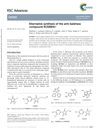
January 2014 in “RSC Advances”
4 citations
,
January 2014 in “RSC Advances” A new, less toxic and more efficient method to create the anti-baldness compound RU58841 was developed in 2014.