12 citations
,
July 2016 in “Journal of dermatology” This study found that intramuscular triamcinolone acetonide may be an effective and safe treatment option for managing refractory alopecia areata, showing a 63% response rate in patients and hair regrowth negatively correlated with initial scalp involvement.
This review emphasizes the importance of accurately distinguishing between diffuse alopecia areata and telogen effluvium in dermatological practice due to differing treatment implications and long-term patient expectations, but reports no new clinical results.
May 2025 in “OPAL (Open@LaTrobe) (La Trobe University)” The researchers reported that in a mouse model of alopecia areata, tofacitinib treatment influenced disease progression by modulating CD8+ T cell infiltration through the linoleic acid metabolism and magnesium ion pathway, offering insights into potential treatment approaches.
7 citations
,
March 2004 in “Journal of the American Academy of Dermatology” Tiger tail banding and hair abnormalities are reliable indicators for diagnosing trichothiodystrophy.
 1 citations
,
October 2022 in “Molecular therapy”
1 citations
,
October 2022 in “Molecular therapy” This study found that betibeglogene autotemcel significantly improved transfusion independence in 89% of patients with transfusion-dependent beta-thalassemia, although the high cost and manufacturing challenges may limit widespread adoption.
40 citations
,
September 2014 in “Journal of cosmetic and laser therapy” This case series found that combining ablative fractional resurfacing and acoustic pressure ultrasound with triamcinolone treatment led to complete recovery in patients with areata alopecia.
January 2023 in “Cutaneous and Ocular Toxicology” This study found that ATP may help reduce ribociclib-induced skin damage in rats by mitigating biochemical changes associated with oxidative stress.
April 2023 in “Journal of Investigative Dermatology” Contact immunotherapy can change immune responses in alopecia areata, suggesting new treatment targets.
July 2024 in “Journal of Investigative Dermatology” ITK inhibitors may effectively treat alopecia areata.
 29 citations
,
January 2003 in “Dermatology”
29 citations
,
January 2003 in “Dermatology” This study suggests a new subtype of alopecia, termed 'acute diffuse and total alopecia of the female scalp' (ADTAFS), characterized by acute and total hair loss in women with a favorable recovery profile.
 78 citations
,
March 2017 in “JAMA Dermatology”
78 citations
,
March 2017 in “JAMA Dermatology” Tofacitinib helped regrow hair in people with severe alopecia, but side effects occurred and benefits stopped after treatment ended.
 13 citations
,
October 2013 in “Dermatologic Therapy”
13 citations
,
October 2013 in “Dermatologic Therapy” This study found that severe diets, iron deficiency, and thyroid dysfunction are significant predictors of acute telogen effluvium's association with female androgenetic alopecia.
 3 citations
,
March 2020 in “International Journal of Dermatology”
3 citations
,
March 2020 in “International Journal of Dermatology” This correspondence about the treatment of chronic alopecia areata with tildrakizumab reports no clinical results; the authors present an open-label pilot study setup.
July 2025 in “Journal of Investigative Dermatology” Ritlecitinib reduces alopecia areata symptoms by blocking JAK3/TEC signaling and T-cell activity.
 13 citations
,
March 2002 in “Pediatric Dermatology”
13 citations
,
March 2002 in “Pediatric Dermatology” This article discusses temporal triangular alopecia, emphasizing the need for increased awareness to prevent misdiagnosis and ineffective treatment, but reports no new clinical results.
3 citations
,
November 2020 in “Dermatologic Therapy” This study found that intralesional triamcinolone acetonide was more effective than saline for hair regrowth in scalp alopecia areata, with 10 mg/mL showing the best response but more side effects.
 16 citations
,
January 2010 in “American Journal of Neuroradiology”
16 citations
,
January 2010 in “American Journal of Neuroradiology” This case report describes a 3-year-old boy with trichothiodystrophy, highlighting specific MRI findings of diffuse dysmyelination and osteosclerosis that may be unique to the disorder.
1 citations
,
May 2023 in “The Journal of Dermatology” This case report describes a patient with severe alopecia totalis and atopic dermatitis who showed almost complete hair regrowth and improved skin lesions after receiving subcutaneous allergen-specific immunotherapy using house dust mites.
1 citations
,
November 2018 in “immuneACCESS” This study found that in alopecia areata, treatment with the oral JAK-inhibitor tofacitinib decreased clonally expanded CD8⁺ T cells in the scalp, but many expanded clones did not completely disappear, potentially leading to relapse after stopping treatment.
 13 citations
,
January 2011 in “International Journal of Trichology”
13 citations
,
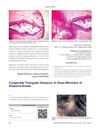
January 2011 in “International Journal of Trichology” CTA is often mistaken for AA but doesn't respond to steroids and may require hair transplantation.
 1 citations
,
February 2022 in “Clinical, Cosmetic and Investigational Dermatology”
1 citations
,
February 2022 in “Clinical, Cosmetic and Investigational Dermatology” In this study, researchers found that the thyroxine receptor agonist TDM10842 accelerated the onset of anagen, a hair growth phase, in C3H mice, potentially through activation of the Wnt/beta-catenin and Hedgehog pathways, with Pclaf playing a key role in this process.
 May 2017 in “Journal of The American Academy of Dermatology”
 An intact skin barrier is crucial to prevent infection in cases of tether-induced tenosynovitis.
January 2026 in “International Journal of Dermatology” This study reports two cases where acquired perforating dermatosis was localized to the scalp and coincided with acute diffuse alopecia, suggesting perifollicular inflammation may link the two conditions.
35 citations
,
September 2011 in “The Journal of Dermatology” This article discusses the trichoscopic diagnosis of temporal triangular alopecia, but reports no new clinical results.
2 citations
,
December 2017 in “Theriogenology” This study found that V-ATPase plays a role in the acidification of vas deferens fluid under the influence of testosterone in orchidectomized rats.
 August 2020 in “Ugeskrift for Læger”
 This case report describes a 43-year-old male with alopecia totalis who successfully regrew all his hair after six months of treatment with tofacitinib, with no relapse at one year.
 April 2012 in “Informa Healthcare eBooks”
 Temporal triangular alopecia is a lifelong condition with hairless patches on the side of the head that may be present from birth.
May 2026 in “Dermatology The American Medical Journal” This lecture abstract discusses a career driven by a commitment to helping patients with vitiligo and hidradenitis suppurativa but reports no scientific findings.
 July 2025 in “Dermatology and Therapy”
 This study found that patients with alopecia areata showing low treatment burden responded better to baricitinib compared to those with higher previous systemic treatment exposure.
 April 2020 in “Trends in Immunotherapy”
 In this study, 60% of patients with alopecia totalis showed partial hair regrowth after being treated with triamcinolone acetonide injections, with one patient achieving complete regrowth and responding well to further immunotherapy.