 November 2025 in “SKIN The Journal of Cutaneous Medicine”
 In this phase 3 trial, baricitinib showed effectiveness and safety in both adolescents and adults with severe alopecia areata, with adolescents achieving higher response rates despite more severe baseline conditions, suggesting the advantages of early treatment.
 June 2026 in “International Journal of Molecular Sciences”
 This study found that shallot (Allium ascalonicum) extracts reduced oxidative stress in human nasal epithelial cells caused by PAH exposure by decreasing ROS generation, suppressing lipid peroxidation, and restoring SOD activity, with quercetin being a key antioxidant component.
 December 2013 in “The journal of investigative dermatology. Symposium proceedings/The Journal of investigative dermatology symposium proceedings”
 This article reviews the National Alopecia Areata Foundation's biennial research summits, aimed at advancing treatment development for alopecia areata, and reports no new results.
January 2022 in “International Journal of Pharmacognosy and Pharmaceutical Sciences” This review examines the ethanomedicinal uses and pharmacological properties of Semecarpus anacardium, commonly used in traditional medicine, and does not provide new clinical results; it highlights a range of potential benefits including anti-inflammatory and antioxidant activities.
 14 citations
,
March 2014 in “Journal of The European Academy of Dermatology and Venereology”
14 citations
,
March 2014 in “Journal of The European Academy of Dermatology and Venereology” This study found that androgenetic alopecia in asymptomatic young men was associated with increased arterial stiffness, as measured by the cardio-ankle vascular index.
2 citations
,
July 2024 in “Indian Journal of Dermatology Venereology and Leprology” This study reported that Taiwanese pre-teens and teenagers with atopic diseases, such as food allergies and asthma, had a significantly increased risk of developing alopecia areata, with the risk being 9.66 times higher compared to their peers without atopic conditions.
1 citations
,
October 2024 in “Medicina” In this genetic study, the researchers found that variants in the CLEC4D gene are significantly associated with the development of alopecia areata among individuals in the Jordanian population, pointing to a potential genetic influence on the disease's pathogenesis.

research A
1 citations
,
January 2001 This article discusses the symptoms, diagnostic methods, and complications associated with achalasia and reports no new clinical findings.

In this case report, researchers diagnosed a 12-year-old girl with a nevus sebaceus of Jadassohn, characterized by a yellowish-pink plaque on the scalp and a genetic variant, following previous misdiagnosis as alopecia areata.
 July 1994 in “Annals of Pharmacotherapy”
 Cromolyn sodium's effectiveness for treating asthma in children under 2 is unclear, possibly more beneficial for older children, and further research is needed.
 March 2009 in “Hair transplant forum international”
 This document is a placeholder for an abstract and contains no scientific findings or results.
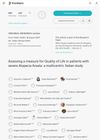 August 2024 in “Frontiers in Public Health”
 In this study, researchers developed and tested an Italian version of the Skindex-16AA to assess Health-Related Quality of Life in patients with moderate-to-severe Alopecia Areata, emphasizing the importance of patient perception in evaluating their mental health and quality of life.
5 citations
,
March 2020 in “Thoracic Cancer” In this phase I study, CT-707, a new ALK inhibitor, showed a 77% response rate among Chinese patients with advanced ALK-rearranged non-small cell lung cancer, suggesting clinical effectiveness despite some adverse events like diarrhea and liver enzyme elevation.
 September 2013 in “Hair transplant forum international”
 This document only provides affiliation and role information for individuals associated with hair centers in Charlotte, North Carolina, and does not contain any research results or conclusions.
5 citations
,
September 2012 in “BMJ case reports” This case study reports that a woman with non-classical adrenal hyperplasia who self-treated with Ashwagandha for six months experienced biochemical improvements and reduced scalp hair loss.
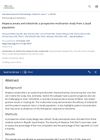 9 citations
,
October 2021 in “International Journal of Dermatology”
9 citations
,
October 2021 in “International Journal of Dermatology” This study found that tofacitinib effectively induced hair regrowth in 62.2% of severe alopecia areata patients in Saudi Arabia after six months, with higher baseline Severity of Alopecia Tool scores and past steroid use linked to reduced response.
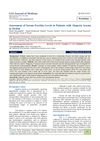 November 2022 in “SAS journal of medicine”
 This study found that serum ferritin levels were significantly higher in Jordanian patients with alopecia areata compared to controls, but still within the normal range.
 6 citations
,
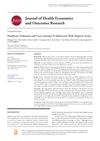
July 2022 in “Journal of health economics and outcomes research”
6 citations
,
July 2022 in “Journal of health economics and outcomes research” This study found that US adolescents with alopecia areata, especially those with alopecia totalis or universalis, experience significantly higher healthcare costs and resource use compared to matched controls.
 April 2017 in “The journal of investigative dermatology/Journal of investigative dermatology”
 This study identified intramembrane proteolysis as a key feature of Astrotactin2 maturation, providing insights into its role in planar cell polarity hair patterning.
 6 citations
,
April 2013 in “Assiut Veterinary Medical Journal/Maǧallaẗ Asyūṭ al-ṭibiyyaẗ al-baytariyyaẗ”
6 citations
,
April 2013 in “Assiut Veterinary Medical Journal/Maǧallaẗ Asyūṭ al-ṭibiyyaẗ al-baytariyyaẗ” This study found that 67.11% of cats treated for otitis at Assiut University's Small Animal Clinic completely recovered, with ivermectin injections and topical treatments being commonly used.
 December 2022 in “Lebanese Science Journal”
 This study observed that among Lebanese adults with alopecia, lifestyle factors like smoking and alcohol use were common, and willingness to use hair loss treatments was influenced by age, education level, and family history.
 June 2023 in “Dermatology and therapy”
 This study found that most dermatologists in the Middle East manage mild to severe alopecia areata primarily with potent topical corticosteroids and identified long-term disease control and improved efficacy as key unmet needs.

In this study, no significant association was found between androgenetic alopecia and increased risks of hypertension or hyperaldosteronism among male participants in Saudi Arabia, suggesting that AGA should not be considered an indicator for these conditions.
 January 2021 in “ABC Heart Failure & Cardiomyopathy”
 This article discusses the coexistence of amyloidosis and aortic stenosis in elderly patients and explores potential therapeutic strategies, without reporting new clinical results.
 March 2026 in “Zenodo (CERN European Organization for Nuclear Research)”
 This study reports a novel geometric medicine solution, N‑K GM SERIES, claiming to eliminate aflatoxin, offer a universal cancer cure, and provide numerous health benefits, including increased life expectancy, with deployment focused on the "Aflatoxin Belt" regions like Sudan.
 July 2015 in “Hair transplant forum international”
 This article summarizes the events and discussions from the 4th Scientific Meeting of the Asian Association of Hair Restoration Surgeons held in Bangkok, reporting no new research findings.
 17 citations
,
February 2009 in “Journal of Ethnopharmacology”
17 citations
,
February 2009 in “Journal of Ethnopharmacology” This study found that Asiasari radix extract may reduce hyperalgesia in mice by modulating NMDA and GABAA receptor activities without affecting cyclooxygenase activity.
This review discusses drug repositioning for cardiometabolic disorders and reports no new clinical findings; the authors emphasize its potential benefits, such as known safety profiles and reduced development costs compared to new drug development.
This chapter reviews alopecia areata treatments, highlighting factors like age and disease extent in choosing management strategies, but reports no new clinical findings.