 1 citations
,
February 2002 in “Dermatologic Surgery”
1 citations
,
February 2002 in “Dermatologic Surgery” A cheap stainless steel container from a retail store can store liquid nitrogen effectively for 8-12 hours, saving money for medical practitioners.
 1 citations
,
January 2001 in “Dermatologic Surgery”
1 citations
,
January 2001 in “Dermatologic Surgery” Pulsed dye laser and hydrogel dressings effectively treat hypertrophic scars.
 1 citations
,
August 1995 in “Archives of Disease in Childhood”
1 citations
,
August 1995 in “Archives of Disease in Childhood” This personal narrative from "Archives of Disease in Childhood" 1995 underscores that empathy, explanation, and reassurance may be more effective than medication for those experiencing delayed puberty and related social challenges; no clinical results are provided.
 April 2026 in “Dermatology and Therapy”
 This study evaluated baricitinib 4 mg treatment in severe to very severe alopecia areata, reporting significant scalp hair regrowth by Week 52, especially in short-duration episodes, suggesting treatment should continue for at least a year before assessing failure.
 April 2026 in “npj Parkinson s Disease”
 This study found that VPS13C variants are significantly enriched in patients with idiopathic REM sleep behavior disorder (iRBD), associating these variants with more severe symptoms, autonomic dysfunction, and faster progression from iRBD to overt α-synucleinopathy in the iRBD-first disease subtype.
 January 2026 in “Sciences and Clinical Pharmacy Research Journal”
 In this study, a 15% ethanol extract of Moringa oleifera leaves was most effective in improving wound healing, scab formation, and hair growth in hyperglycemic rats, compared to povidone iodine and lower extract concentrations.
 November 2025 in “SKIN The Journal of Cutaneous Medicine”
 In this study, UPA at doses of 15 mg and 30 mg showed higher efficacy than placebo for treating severe alopecia areata in adults and adolescents over 24 weeks, with a safety profile similar to approved uses.
 October 2025 in “Dermatology and Therapy”
 This study evaluates the efficacy and safety of a higher dose (100-mg) of ritlecitinib for treating severe alopecia areata, comparing it to external and synthetic placebo control groups.
 March 2025 in “SKIN The Journal of Cutaneous Medicine”
 Certain patient characteristics can help predict hair regrowth success with ritlecitinib in alopecia areata.
 January 2025 in “American Journal of Stem Cells”
 This review discusses the role of melanocyte stem cells in skin pigmentation and potential regenerative therapies, but reports no new clinical results.
 January 2025 in “International Journal of Advancement in Life Sciences Research”
 In this cross-sectional study at a hospital in Nandyala, researchers identified nine drugs with potential new uses, noting that Aspirin and Dapagliflozin were most frequently repurposed, and observed changes in indications, dosage, and frequency, suggesting further clinical validation is needed for safety and efficacy.
 August 2024 in “Journal of Animal Science and Technology”
 This study identified specific keratin-associated protein genes that are highly expressed in different varieties and sexes of Angora goats, providing insights for improving mohair development through targeted breeding strategies.
 August 2024 in “Biomedical Journal of Scientific & Technical Research”
 This review discusses the role of steroid 5 alpha reductase 2 in converting testosterone to DHT and its association with conditions like benign prostatic hyperplasia and prostate cancer; it reports no new results.
 January 2024 in “American journal of clinical dermatology”
 This study reports that ritlecitinib, when used for up to 24 months in patients aged 12 and older with alopecia areata, has an acceptable safety profile, with a similar proportion of adverse events in both ritlecitinib and placebo groups in the placebo-controlled cohort.
 November 2023 in “European medical journal. Dermatology”
 This review found mixed evidence regarding platelet-rich plasma's effectiveness in various medical applications, noting significant limitations like small sample sizes and lack of standardization that necessitate further research.
 August 2023 in “International journal of medical science and clinical research studies”
 This review discusses platelet-rich plasma (PRP) therapy for pediatric surgical wound care, evaluating its potential as an adjunctive treatment, but reports no new clinical results.
 January 2023 in “International Journal of Pharmaceutical and Clinical Research”
 This review highlights the potential of follicular targeting as a novel approach for treating hirsutism, focusing on its ability to improve outcomes and reduce side effects, but reports no new clinical results.

This study found that all examined biomarkers and clinical features were elevated in systemic lupus erythematosus patients, particularly ANA and Anti-dsDNA autoantibodies, but no single biomarker was sensitive or specific enough for diagnosis.
This genetic study identified a potential interval for the Marie Unna hypotrichosis gene but found no mutations in the nearby hr gene, suggesting its involvement remains unconfirmed.
 November 2019 in “Harper's Textbook of Pediatric Dermatology”
 This review discusses potential causes of alopecia and hair overgrowth in pediatric patients, detailing diagnostic techniques and treatments, but presents no new research findings.
 January 2019 in “Springer eBooks”
 This review discusses drugs and mechanisms possibly responsible for chemical- and drug-induced hair loss but presents no new research findings.
 July 2018 in “European Medical Journal”
 This meeting review discusses recent advances in systemic psoriasis treatments, emphasizing the impact of dimethylfumarate monotherapy on understanding psoriasis and treatment strategies; it reports no new clinical results.
 January 2016 in “Research Explorer (The University of Manchester)”
 Activating the Eda/Edar pathway improves wound healing by enhancing hair follicle growth.
 July 2026 in “Organoid Research”
 In this review, researchers summarize key factors in constructing skin organoids, including cell source and assembly methods, and emphasize advances such as air-liquid interface culture for improving tissue development, aiming to guide standardized protocols and future clinical applications.
 June 2026 in “Institutional Repositories DataBase (IRDB)”
 Crickets have genetically controlled hair plates that help them sense and move their antennae.
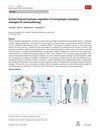
This review highlights that surface mechanical regulation can program macrophage behavior through specific mechanical cues on material surfaces, potentially advancing immunotherapies and regenerative medicine by enabling precise control over macrophage functions.
 April 2026 in “Inflammopharmacology”
 This study found that Punica granatum ethanolic leaf extract may alleviate skin fibrosis in rats by modulating inflammation-related pathways and reducing dermal alterations.

This study found that the human hairline is closely linked to several cranial, cerebral, and vascular structures, enabling precise localization of key neuroanatomical landmarks, which could assist in planning neurosurgical procedures.
 April 2026 in “npj Regenerative Medicine”
 This review discusses the processes of melanocyte stem cell quiescence and activation, focusing on their interaction with hair follicle stem cells, and highlights current research on hair graying mechanisms; it reports no new results.
 March 2026 in “Journal of Clinical and Basic Psychosomatics”
 This review, sourced from expert panel discussions and literature analysis, suggests Tianmeng oral liquid may improve sleep, reduce anxiety and depression, and enhance well-being in psychosomatic disorder patients, though further research is necessary.