 24 citations
,
November 2023 in “NEWPORT INTERNATIONAL JOURNAL OF SCIENTIFIC AND EXPERIMENTAL SCIENCES”
24 citations
,
November 2023 in “NEWPORT INTERNATIONAL JOURNAL OF SCIENTIFIC AND EXPERIMENTAL SCIENCES” This article reviews the various short- and long-term side effects of antiretroviral therapy for HIV, highlighting issues like dyslipidemia and hypertension, but reports no new clinical results.
 July 2022 in “Media Dermato Venereologica Indonesiana”
 In this case study, a 29-year-old man with alopecia areata experienced satisfactory hair regrowth after five months of combined intralesional triamcinolone acetonide and platelet-rich plasma therapy.
 5 citations
,
January 2021 in “iScience”
5 citations
,
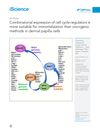
January 2021 in “iScience” Using a combination of specific cell cycle regulators is better for safely keeping hair root cells alive indefinitely compared to cancer-related methods.
 August 2022 in “MEDICINUS”
 This case study reports a 22-year-old homosexual man coinfected with secondary syphilis, condyloma acuminata, and HIV, highlighting the coexistence and increased STI risks associated with HIV and HPV infection.
 January 2026 in “Frontiers in Medicine”
 This article questions whether frontal fibrosing alopecia and fibrosing androgeneic patterned hair loss are overlapping conditions or stages of the same process, calling for further research to clarify their underlying factors.
November 2006 in “評価・診断に関するシンポジウム講演論文集” This study found that KSR1 is essential for v-Ha-ras-mediated skin tumor formation in mice but not for MT-driven mammary tumor genesis, suggesting its potential as a therapeutic target in Ras/MAPK signaling.
 November 2023 in “The journal of investigative dermatology/Journal of investigative dermatology”
 This study found that engineered high-affinity soluble CD200R agonists, including ARQ-234, showed superior efficacy in reducing immune responses in various preclinical models of inflammatory conditions, suggesting potential as a therapeutic for atopic dermatitis and other related diseases.
28 citations
,
September 2014 in “Journal of Veterinary Internal Medicine” This study found that the novel drug VDC-1101 showed a 45% objective response rate in treating canine cutaneous T-cell lymphoma, offering a potential treatment option for this challenging disease.
23 citations
,
December 2013 in “Molecular cancer therapeutics” This study found that AR-positive breast cancer cell lines are more sensitive to the dual PI3K/mTOR inhibitor NVP-BEZ235 compared to AR-negative cells.
12 citations
,
May 2010 in “Journal of Clinical Oncology” This study found that MK-5108 is well tolerated at high doses as monotherapy in cancer patients, showing stable disease and some antitumor activity, particularly in combination with docetaxel.
 25 citations
,
November 2022 in “British journal of dermatology/British journal of dermatology, Supplement”
25 citations
,
November 2022 in “British journal of dermatology/British journal of dermatology, Supplement” In this analysis, safety data from two clinical trials showed that baricitinib for severe alopecia areata had predictable side effects like infections and elevated CPK, with some serious adverse events noted at low incidence rates; no deaths were reported.
March 2025 in “Journal of Investigative Dermatology”  1 citations
,
January 2013 in “MedChemComm”
1 citations
,
January 2013 in “MedChemComm” This study characterized the SARM PF-05314882, finding it demonstrates anabolic activity in rats with minimal effects on the prostate, seminal vesicles, and luteinizing hormone levels.
 1 citations
,
September 2023 in “Journal of the American Academy of Dermatology”
1 citations
,
September 2023 in “Journal of the American Academy of Dermatology” This abstract introduces baricitinib as an approved treatment for adults with severe alopecia areata in the US, Europe, and Japan, but does not report any specific study results or findings.
2 citations
,
November 2025 in “Pharmacology Research & Perspectives” This study analyzed post-marketing data from the U.S. FDA Adverse Event Reporting System and identified both known and new safety concerns for Avacopan, an anti-neutrophil cytoplasmic antibodies-associated vasculitis treatment, emphasizing the need for monitoring during early treatment stages.
 February 2017 in “Cancer Causes & Control”
 In this study, Swedish men carrying the AR haplotype H2 were found to have a significantly lower risk of prostate cancer compared to those with the more common H1 variant.
 3 citations
,
May 2015 in “Journal of The American Academy of Dermatology”
3 citations
,
May 2015 in “Journal of The American Academy of Dermatology” Adalimumab significantly improves quality of life for patients with moderate to severe hidradenitis suppurativa.
 March 2010 in “Ejc Supplements”
 This article discusses the paradoxical effects of valproic acid on hair, reporting both drug-induced hair loss and the potential for hair growth when used topically, but presents no original research findings.
June 2026 in “Iraqi Journal of Pharmaceutical Sciences ( P-ISSN 1683 - 3597 E-ISSN 2521 - 3512)” This study observed that while the androgen receptor is expressed in 65.6% of breast cancer patients in Iraq, it is not significantly associated with conventional clinicopathological characteristics, suggesting limited prognostic value.
In an outpatient cardiology center, this study found that introducing the AHA/ACC ABI screening protocol significantly increased the frequency of ABI ordering by 31.6% for symptomatic patients.
 6 citations
,
June 2018 in “Journal of pediatric endocrinology & metabolism/Journal of pediatric endocrinology and metabolism”
6 citations
,
June 2018 in “Journal of pediatric endocrinology & metabolism/Journal of pediatric endocrinology and metabolism” In this study, eight patients with hereditary vitamin D-resistant rickets who share a specific VDR mutation showed improved clinical symptoms except alopecia after up to 11 years of treatment.
1 citations
,
September 2010 in “UEF eRepo (University of Eastern Finland)” This study provides insight into AR-mediated gene activation and the molecular mechanisms of prostate cancer progression and drug resistance, identifying potential avenues for developing new therapies.
August 2026 in “Ebers Papyrus” This study concluded that allele-specific PCR (AS-PCR) is more reliable than tetra-primer ARMS-PCR for genotyping the SNP rs1998076 due to better stability and interpretability.
 February 2026 in “Frontiers in Immunology”
 This case report highlights significant improvement in a patient with severe alopecia areata who responded well to ivarmacitinib after a suboptimal response to another JAK inhibitor, tofacitinib, suggesting ivarmacitinib as a potential alternative for tofacitinib-refractory cases.
 November 2025 in “SKIN The Journal of Cutaneous Medicine”
 In this phase 3 trial, baricitinib showed effectiveness and safety in both adolescents and adults with severe alopecia areata, with adolescents achieving higher response rates despite more severe baseline conditions, suggesting the advantages of early treatment.
 December 2024 in “Journal of Applied Toxicology”
 This study evaluated the potential toxicity of oral dihydroartemisinin in SD rats, finding that female rats experienced greater toxic effects than males, particularly at higher doses, but these effects were reversible after a 4-week recovery period.
March 2008 in “The Knowledge Bank (The Ohio State University)” This study found that AR-007 degrades faster and has a stronger association with hsp70 than AR-014, suggesting it is less stable when bound to the androgen receptor.
2 citations
,
September 2022 in “Annals of Oncology” This study observed that MIRV improved gastrointestinal symptoms and other quality of life measures in patients with platinum-resistant ovarian cancer compared to chemotherapy.
Ivarmacitinib effectively regrows hair in severe alopecia areata.
 9 citations
,
September 2014 in “Cancer Epidemiology, Biomarkers & Prevention”
9 citations
,
September 2014 in “Cancer Epidemiology, Biomarkers & Prevention” This study found that men without prostate cancer carrying the A-allele of SNP rs1204038 had a 65% higher risk of PSA levels above 3 ng/mL compared to those with the G-allele, increasing referrals for further examination.