2 citations
,
November 2004 in “Blood” In this study, researchers reported that the Pinkie mutation in mice, affecting RXRa activity, leads to skewed Th1 development and suggests RXRa's role in Th2 differentiation, impacting immune responses.
April 2025 in “Anais Brasileiros de Dermatologia” Abrocitinib effectively treats severe alopecia areata with significant improvement and no side effects.
February 2026 in “Toxicology Letters” This study used an in silico/in vitro approach to identify potential inhibitors of the enzyme SRD5A2, finding that the androgen receptor modulator MK-0773 is a moderate inhibitor, although it does not act as a covalent inhibitor like finasteride.
November 2024 in “Skin Appendage Disorders” This review provides insights and guidelines for clinicians and patients on assessing the risks and benefits of ritlecitinib for adolescents with alopecia areata, emphasizing shared decision-making and management strategies.
3 citations
,
May 2017 in “Bioorganic & medicinal chemistry letters” This study identified compounds 11d and 11k as potential dual 5α-reductase inhibitors and AR antagonists with significant anti-proliferative effects on prostate cancer cell lines, suggesting they may offer therapeutic value.
April 2019 in “The Journal of urology/The journal of urology” After the FDA's 2011 warning about a potential prostate cancer risk with 5-alpha reductase inhibitors, this study observed a significant decrease in their prescriptions, notably a 49% drop among men with benign prostatic hyperplasia, while primary care providers reduced prescriptions by 60%.
 1 citations
,
January 2022 in “European Journal of Pharmacology”
1 citations
,
January 2022 in “European Journal of Pharmacology” In this study, FMN was found to inhibit androgen receptor function and androgen-regulated gene expression in prostate cancer cells, suggesting potential as an antiandrogen therapy.
4 citations
,
October 2013 in “Botanics Targets and Therapy” In this animal study, a herbal preparation demonstrated moderate anti-inflammatory and immunomodulating properties, suggesting its potential usefulness for preventing and treating alopecia.
This study reports that the newly optimized AR antagonist 39 demonstrated effective hair growth and safety in a mouse model of androgenetic alopecia, showing comparable efficacy to pyrilutamide with faster response and favorable pharmacokinetics, due to innovative structural design and dual metabolic inactivation strategy.
 December 2024 in “Journal of Medicinal Chemistry”
 In this study, researchers discovered a compound called C6 that exhibits excellent skin retention and androgen receptor degradation properties, significantly promoting hair regeneration in a mouse model of androgenetic alopecia following non-invasive topical application, suggesting potential for broader use of PROTACs in treating skin diseases.
January 2024 in “Pharmacoepidemiology” This study found that patients with rheumatoid arthritis taking tofacitinib had higher rates of serious adverse events compared to those with alopecia areata, highlighting the need for careful assessment when using it off-label for alopecia areata.
 33 citations
,
May 2013 in “Andrologia”
33 citations
,
May 2013 in “Andrologia” This study identified several herbs, including Ganoderma lucidum and Urtica dioica, that showed promising 5α-reductase inhibitory activity suggesting potential use in managing androgenic disorders.
 1 citations
,
March 2026 in “American Journal of Clinical Dermatology”
1 citations
,
March 2026 in “American Journal of Clinical Dermatology” In this Italian retrospective study, ritlecitinib 50 mg/day showed effectiveness and good tolerability for treating severe alopecia areata over 24 weeks, achieving significant hair regrowth particularly in adolescents, as well as improvements in eyebrows, eyelashes, nails, and quality of life, with mostly mild adverse effects.
July 2026 in “Dermatology and Therapy” In this retrospective study, baricitinib and ritlecitinib showed similar effectiveness and safety over 52 weeks for treating severe alopecia areata, with non-severe adverse events more common for baricitinib, driven by weight gain.
 2 citations
,
January 2022 in “bioRxiv (Cold Spring Harbor Laboratory)”
2 citations
,
January 2022 in “bioRxiv (Cold Spring Harbor Laboratory)” This study found that low temperatures and nitrogen deficiency trigger root hair elongation through a molecular mechanism involving the receptor kinase FERONIA and the TOR Complex 1.
 4 citations
,
October 2020 in “Toxicology Mechanisms and Methods”
4 citations
,
October 2020 in “Toxicology Mechanisms and Methods” This study found that in male rats, hesperidin co-administration ameliorated finasteride-induced testicular toxicity by reducing oxidative stress and improving antioxidant status, sperm parameters, and enzyme activity compared to finasteride treatment alone.
8 citations
,
June 2017 in “Steroids” This study evaluated novel steroid compounds for their ability to inhibit 5α-reductase, showing that compound 16a significantly reduced rat prostate weight more than epristeride and exhibited excellent in vitro inhibitory potency, indicating its potential as a lead candidate for further benign prostatic hyperplasia drug research.
 January 2021 in “Journal of Cancer Therapy”
 This study described the safety profile of tyrosine kinase inhibitors in treating various solid tumors, finding that the observed toxicities were consistent with existing literature.
This study concluded that the combination of all-trans-retinoic acid and tocopherol-α is not recommended for treating del(5q) myelodysplastic syndromes due to low efficacy and high incidence of adverse effects.
 March 2026 in “Frontiers in Veterinary Science”
 This study found that all-trans retinoic acid (ATRA) inhibits proliferation and promotes apoptosis in secondary hair follicle-derived dermal papilla cells from cashmere goats, likely via the TGF-β2/Smad2/3 signaling pathway.
 January 2024 in “Biological & clinical sciences research journal”
 This review of 355 articles found that apigenin, a compound found in many plants and vegetables, is mainly researched for its anti-inflammatory, neuroprotective, and anti-cancer properties, with enhanced efficacy when combined with allopathic drugs.
 108 citations
,
November 1980 in “British Journal of Dermatology”
108 citations
,
November 1980 in “British Journal of Dermatology” This article reviews the current status of oral retinoids in dermatology and reports no new clinical findings.
 34 citations
,
July 2011 in “Journal of Dermatological Treatment”
34 citations
,
July 2011 in “Journal of Dermatological Treatment” This study found that a combination of 5% hexane extract of Curcuma aeruginosa and 5% minoxidil slowed hair loss and increased hair growth in men with androgenetic alopecia.
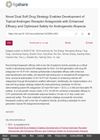
In this study, a dual soft drug design strategy improved the AR antagonist candidate 39, showing potent AR antagonism and good safety in a mouse hair-growth model, with similar efficacy to pyrilutamide but faster response.
 January 2026 in “Frontiers in Bioscience-Landmark”
 This study reported that, in a laboratory setting, araliadiol derived from Centella asiatica activated antioxidant pathways, mitigating urban particulate matter-induced oxidative stress and skin damage.
 January 2024 in “American journal of clinical dermatology”
 This study reports that ritlecitinib, when used for up to 24 months in patients aged 12 and older with alopecia areata, has an acceptable safety profile, with a similar proportion of adverse events in both ritlecitinib and placebo groups in the placebo-controlled cohort.
July 2026 in “Skin Appendage Disorders” In this study, patients with treatment-refractory alopecia areata who received oral ritlecitinib 50 mg daily experienced significant hair regrowth, with 52.6% achieving complete scalp regrowth and improved Severity of Alopecia Tool scores, indicating its potential effectiveness in real-world settings.
This study found that the Padina arborescens extract and its component MOGG may prevent hair loss by inhibiting 5α-reductase activity, promoting cell proliferation, opening the KATP channel, and increasing PGE2 production in laboratory settings.
 6 citations
,
February 2023 in “Advances in Therapy”
6 citations
,
February 2023 in “Advances in Therapy” This study found that patients with rheumatoid arthritis, atopic dermatitis, and alopecia areata receiving baricitinib had low incidence rates of adverse events, especially among low-risk individuals, with varying rates among those at higher risk.
 5 citations
,
March 2005 in “Journal of The American Academy of Dermatology”
5 citations
,
March 2005 in “Journal of The American Academy of Dermatology”