28 citations
,
January 2016 in “Current Pharmaceutical Biotechnology” This review discusses the traditional uses and biological activities of Aristotelia chilensis, summarizing its phytochemical composition and various potential health benefits, but reports no original research findings and highlights the need for further studies.
15 citations
,
July 2009 in “Biomedical Chromatography” This study developed and validated a sensitive liquid chromatography–mass spectrometry method to measure aristolochic acid‐I in rat plasma, successfully applying it to pharmacokinetic research.
 1 citations
,
July 2015 in “The European research journal”
1 citations
,
July 2015 in “The European research journal” This case report describes reversible hair loss in a patient taking aripiprazole, suggesting this side effect may be common among psychotropic medications.
 1 citations
,
December 2014 in “Klinik Psikofarmakoloji Bülteni-Bulletin of Clinical Psychopharmacology”
1 citations
,
December 2014 in “Klinik Psikofarmakoloji Bülteni-Bulletin of Clinical Psychopharmacology” This study reports that a 15-year-old with trichotillomania showed improvement with aripiprazole treatment, though no consensus on treatment exists in the literature.
 April 2024 in “The Journal of urology/The journal of urology”
 In this study, researchers found that methylation of the SRD5A2 gene in blood and tissue samples can serve as a biomarker to predict men's clinical response to finasteride treatment for benign prostatic hyperplasia, offering a non-invasive method for assessing potential treatment success.
 3 citations
,
May 2018 in “Journal of nutritional health & food science”
3 citations
,
May 2018 in “Journal of nutritional health & food science” This review discusses the potential of a low-dose comprehensive cyclical nutrient therapy for enhancing hair growth and strengthening hair roots, but reports no new experimental results.
 15 citations
,
November 2015 in “Pharmacopsychiatry”
15 citations
,
November 2015 in “Pharmacopsychiatry” This review discusses sexual dysfunction as a side effect of α-blockers and 5-ARIs for BPH/LUTS, highlighting methodological flaws in existing studies and the need for more rigorous research.
 13 citations
,
February 2006 in “Clinical and Experimental Dermatology”
13 citations
,
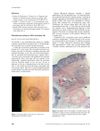
February 2006 in “Clinical and Experimental Dermatology” A benign tumor developed at a girl's BCG vaccination site, not previously linked to the vaccine.
5 citations
,
August 2021 in “Journal of Ethnobiology and Ethnomedicine” This study found that the population of Smilax aristolochiifolia in the Poblano Totonacapan region of Mexico has decreased over the past 50 years, mainly due to land-use changes and herbicide use.
 December 2025 in “Clinical & Experimental Dermatology and Therapies”
 This study reported that Cosmerna ARI significantly improved androgenetic alopecia in Europeans over a 6-month period compared to a placebo, according to a double-blind, randomized, placebo-controlled clinical trial.

This review reports that extracts from the plant Eclipta alba, traditionally used in herbal medicine, may promote hair growth by inhibiting TGF-β1 expression and functioning as a 5α-reductase inhibitor, potentially benefiting androgenic alopecia treatment.
This study found that while Smilax aristolochiifolia continues to hold socio-economic importance within the Totonac culture in Puebla, low abundance and land use changes pose challenges to its conservation.
35 citations
,
September 2006 in “American Journal Of Pathology” In this study, researchers found that overexpression of the Hedgehog signaling effector Gli2 in mice led to odontogenic keratocysts development, implicating GLI transcription factors in human keratocyst pathogenesis.
15 citations
,
May 2008 in “British Journal of Dermatology” Chronic scalp inflammation can turn into cancer, so regular check-ups are important.
12 citations
,
January 2000 in “Journal of cutaneous medicine and surgery” This case study suggests that overgrowth of microorganisms with hyperkeratosis may contribute to the induction of lichen planopilaris by disrupting the immune privilege of hair follicles.
 6 citations
,
July 2011 in “British Journal of Dermatology”
6 citations
,
July 2011 in “British Journal of Dermatology” This paper reports a case of sebaceous carcinoma developing at the site of chronic candidiasis in a patient with keratitis–ichthyosis–deafness syndrome, without presenting new generalizable findings.
 4 citations
,
January 2020 in “Journal of Cutaneous and Aesthetic Surgery”
4 citations
,
January 2020 in “Journal of Cutaneous and Aesthetic Surgery” This case report highlights keloid formation as a rare complication at the donor site after follicular unit extraction hair transplantation, suggesting practitioners should be aware of procedure-associated risks.
3 citations
,
May 2024 in “BMC Medical Genomics” This study is the first to identify a de novo heterozygous frameshift insertion variant in the ARID1B gene as a cause of Coffin-Siris syndrome with an association to excessive early-onset high myopia.
 3 citations
,
May 2011 in “Journal of Obstetrics and Gynaecology”
3 citations
,
May 2011 in “Journal of Obstetrics and Gynaecology” This review discusses the characteristics of benign biphasic ovarian neoplasms called adenofibromas and reports no new clinical findings.
2 citations
,
November 2022 in “Veterinary sciences” This study found that the interdigital gland of Vembur sheep has larger secretory lobules in males than females, producing various compounds for chemical communication and foot protection.
2 citations
,
August 2022 in “Viruses” This study found that cutaneous squamous cell carcinomas in mice infected with murine papillomavirus preferentially arise from Lgr5+ progenitor cells, while squamous cell dysplasia does not.
2 citations
,
May 2018 in “Dermatologic Surgery” This overview outlines the Dermatologic Surgery journal's comprehensive focus on cosmetic and reconstructive procedures, but it does not present any new research findings.

This study found that chemically induced skin tumors in mice predominantly originated from Lgr6 + and/or Lrig1 + stem cells of the upper hair follicle rather than from other stem cell populations.
April 2026 in “Skin Appendage Disorders” This case report documents the first known occurrence of basal cell carcinoma at the site of repeated microneedling use for male androgenetic alopecia, underscoring the need for further studies on the long-term safety of such devices.
 March 2026 in “Scientific Journal”
 This case study reported a 15-year-old girl with a nevus sebaceus of Jadassohn, where a secondary neoplasm potentially developed into either pigmented trichoblastoma or pigmented basal cell carcinoma, highlighting the importance of early recognition and evaluation of such lesions for effective management.
October 2023 in “Cancers” In this retrospective study, patients with cutaneous squamous cell carcinoma located in highly sun-exposed areas had a higher risk of local recurrence compared to those with tumors in less sun-exposed areas, though metastasis rates did not differ between the groups.
 August 2022 in “JAAD case reports”
 This case report describes a 36-year-old woman with hidradenitis suppurativa whose condition progressed to rapidly fatal squamous cell carcinoma, highlighting the potential for aggressive tumor development linked to specific protein markers.
 June 2019 in “Asian Journal of Medical Research”
 This study reports that while both dermaroller and fractional CO2 laser treatments for acne can lead to hyperpigmentation, itching was specifically noted only after fractional CO2 laser treatment.
March 2018 in “Dermatologic Surgery” This overview describes the Dermatologic Surgery journal's comprehensive focus on dermatologic surgical procedures, but it reports no new research findings.
212 citations
,
August 2004 in “Proceedings of the National Academy of Sciences” This study found that nestin-driven GFP labels blood vessels originating from hair follicles in mice, which could be used to study early events in skin angiogenesis and for antiangiogenesis drug screening.