May 2023 in “Advanced medical journal” In this study, researchers found that hair changes, particularly anagen effluvium, were the most common mucocutaneous side effects in cancer patients undergoing chemotherapy, occurring in 31.71% of cases, followed by skin, nail, and mucosal changes, highlighting the morbidity associated with antineoplastic drug side effects.
32 citations
,
December 1963 in “Pharmacological Reviews” This article reviews how various chemical agents affect human hair and skin, suggesting the need for more research on their pharmacologic and dermatologic effects; it does not report new experimental results.
 147 citations
,
April 1994 in “Drug Safety”
147 citations
,
April 1994 in “Drug Safety” Some drugs can cause hair loss or increase hair growth, but these effects are usually reversible when the drug is stopped.
 63 citations
,
March 1995 in “International Journal of Dermatology”
63 citations
,
March 1995 in “International Journal of Dermatology” Some drugs can cause hair loss, and stopping these drugs often leads to hair regrowth.
 January 2003 in “American Journal of Clinical Dermatology”
 In 2002, various skin reactions were reported due to different drugs, including allergies, hair loss, skin lesions, and other skin conditions.
1 citations
,
February 2020 in “The Journal of clinical investigation/The journal of clinical investigation” This study elucidates a mechanism for acne-like skin toxicity caused by EGFR/MEK inhibitors, involving an interaction with skin bacteria to trigger inflammation, which supports existing antibiotic treatment practices.
January 2016 in “한국공업화학회 연구논문 초록집” This study modified nanocomposites with citric acid and hydrazine for potential dual use in cancer imaging and treatment, suggesting they might reduce side effects of traditional chemotherapy.
2 citations
,
January 2016 in “SANGYO EISEIGAKU ZASSHI” This study found that nearly all nurses caring for chemotherapy patients showed detectable levels of cyclophosphamide in their urine, indicating significant occupational exposure to this antineoplastic drug.
 January 2026 in “Frontiers in Pharmacology”
 This pharmacovigilance study identified 19 drugs with high potential risk for causing male infertility, including hormonal agents, antineoplastic drugs, and antidepressants, emphasizing the need for fertility counseling and possible sperm cryopreservation in reproductive-age males before using such treatments.
 55 citations
,
November 2004 in “Expert opinion on drug safety”
55 citations
,
November 2004 in “Expert opinion on drug safety” This review describes the variety of mucocutaneous side effects caused by antineoplastic chemotherapy, with emphasis on skin, nails, and mucous membranes, while highlighting potential severity and the possibility of needing to adjust or interrupt treatment in rare cases; it presents no new clinical results.
5 citations
,
January 2024 in “Egyptian Dental Journal /Egyptian Dental Journal” This study discusses various anti-cancer therapies, including chemotherapy and immunotherapy, emphasizing the challenges in classifying these medications due to their diverse chemical compositions, mechanisms of action, and effectiveness against different types of cancer.
 85 citations
,
April 2007 in “Dermatologic Clinics”
85 citations
,
April 2007 in “Dermatologic Clinics” This article reviews drug-induced hair changes, highlighting that while many drugs are occasionally linked to hair loss, this connection has been conclusively established for only a few, and such hair loss is typically reversible.

Using data from the FDA's adverse event reporting system, this study identified 59 drugs linked to reduced male semen quality, with finasteride, dutasteride, and tamsulosin among the most frequently reported.
 4 citations
,
January 2012 in “Elsevier eBooks”
4 citations
,
January 2012 in “Elsevier eBooks” The document concludes that various skin conditions have specific treatments, ranging from antihistamines for urticaria to surgery and medication for tumors and chronic skin diseases.
 June 2023 in “Revista médica hondureña”
 In this study conducted at the Pediatric Hematology-Oncology Ward, 65% of hospitalized pediatric cancer patients developed dermatological lesions, predominantly alopecia and mucositis, possibly due to the administration of plant alkaloid chemotherapy, consistent with existing literature.
70 citations
,
May 2023 in “Molecules” This source reviews recent research on Ginkgo biloba, highlighting its medicinal benefits due to compounds in the leaves and concerns over toxic alkylphenols in seeds. It also discusses patents for its food production uses and ongoing studies on toxicity and drug interactions.
 79 citations
,
January 1982 in “The American Journal of Medicine”
79 citations
,
January 1982 in “The American Journal of Medicine” This study reports that VP-16-213 (etoposide) shows significant therapeutic activity in several cancers including small cell bronchogenic carcinoma and certain leukemias, with hematologic toxicity being the primary side effect.
46 citations
,
July 2022 in “Frontiers in Oncology” This review discusses recent advancements in cold atmospheric plasma therapies for dermatology, covering optimization, treatment of skin diseases, safety, and does not report new clinical outcomes; it calls for continued research in the field.
 85 citations
,
March 2012 in “Revista Brasileira de Farmacognosia”
85 citations
,
March 2012 in “Revista Brasileira de Farmacognosia” This review discusses the pharmacological benefits and chemical compounds of the Sophora genus, noting its traditional use and wide pharmacological actions, but reports no new clinical results.
This study reported that various medications, including known agents like finasteride and testosterone as well as unexpected ones like certain psychotropics and statins, are linked to male infertility cases in the Vigibase database.
 310 citations
,
November 2011 in “Environment International”
310 citations
,
November 2011 in “Environment International” This study suggests that increased use of anticancer drugs from 2004 to 2008 has led to higher environmental release, necessitating expanded monitoring and research on their ecotoxicological impacts.
 August 1994 in “Drugs & Therapy Perspectives”
 The document concludes that H2-antagonists and proton pump inhibitors are highly effective for ulcers, eradicating Helicobacter pylori is important to prevent recurrence, and misoprostol helps with NSAID-related ulcers.
 24 citations
,
November 2018 in “International Journal of Molecular Sciences”
24 citations
,
November 2018 in “International Journal of Molecular Sciences” This review discusses ethosomes as lipid carriers that enhance drug penetration into deep skin layers and underscores the need for advanced research on their pharmaceutical applications, but it reports no clinical outcomes.
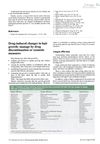 August 1994 in “Drugs & Therapy Perspectives”
 Some drugs can cause hair loss or growth, but hair usually returns to normal after stopping the drug.
 40 citations
,
August 2006 in “Current Drug Safety”
40 citations
,
August 2006 in “Current Drug Safety” This article reviews how various drugs may cause hair loss, stimulate growth, or alter hair characteristics, but reports no new clinical results; drug-induced hair loss is typically reversible.
 39 citations
,
April 2020 in “IntechOpen eBooks”
39 citations
,
April 2020 in “IntechOpen eBooks” The authors describe drug repurposing as a promising strategy for finding new uses for existing drugs, noting it is efficient, cost-effective, and poses lower risks than traditional drug discovery processes, potentially aiding in the treatment of rare and difficult-to-treat diseases.
 17 citations
,
January 2013 in “Indian Journal of Pharmacology”
17 citations
,
January 2013 in “Indian Journal of Pharmacology” This case report highlights an interest in exploring the relationship between serum levels of sodium valproate and hair loss, though no case reports currently establish this link.
 12 citations
,
June 2003 in “Journal of the European Academy of Dermatology and Venereology”
12 citations
,
June 2003 in “Journal of the European Academy of Dermatology and Venereology” This review discusses the range and management of adverse cutaneous reactions to psychotropic medications and emphasizes the need for awareness among clinicians, concluding with a call for careful monitoring and patient education.
 4 citations
,
January 2012 in “Chemical Immunology”
4 citations
,
January 2012 in “Chemical Immunology” This paper discusses the challenges of diagnosing drug eruptions, emphasizing the nonspecific patterns and unclear pathomechanisms, and calls for further research using new biologic drugs to understand these reactions better.
 1 citations
,
May 2021 in “Scientific Reports”
1 citations
,
May 2021 in “Scientific Reports” This study identified several anticancer drugs, including vinblastine and bortezomib, that significantly increase the risk of developing chemotherapy-induced peripheral neuropathy, with variations in time-to-onset among different drug categories.