This review discusses the pathology and treatment of hair and scalp conditions in African Americans, including "hot comb" alopecia and other scarring disorders, but reports no new clinical results.
September 2015 in “Pediatrics in review” This case study reports that a 7-month-old boy's diffuse rash and hair loss were attributed to zinc deficiency and resolved with zinc supplementation.
September 2015 in “Pediatrics in review” The 7-month-old boy has a persistent rash that doesn't improve with typical skin treatments.
 August 2015 in “Dermatología Argentina”
 This study reviewed 18 postmenopausal women with frontal fibrosing alopecia, noting frontotemporal hairline recession and eyebrow loss, often treated with steroids, triamcinolone, and other medications.
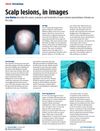 January 2015 in “Independent Nurse”
 Different scalp conditions can lead to hair loss or tumors, with treatments varying from creams to surgery; early detection is crucial.
January 2015 in “Lume (Universidade Federal do Rio Grande do Sul)” This literature review addresses generalized juvenile demodicosis in dogs, describing a case in a 10-month-old Dachshund where corticosteroid treatment worsened the condition, leading to severe pyoderma, intense itching, and widespread hair loss; it reports no new clinical findings.
 February 2013 in “Journal of the American Academy of Dermatology”
 This case report found that intense focused skin tightening ultrasound reduced excessive underarm sweating by nearly 80% in two patients and was associated with temporary side effects like tenderness and redness.

This article presents a dermatological case involving a 36-year-old woman with ambiguous alopecia, evaluated using videodermatoscopy, but it reports no new research findings or clinical outcomes.

Infliximab was effective in treating a scalp condition that did not respond to other treatments.
 April 2012 in “Informa Healthcare eBooks”
 Syphilitic alopecia is a rare hair loss condition in secondary syphilis that looks similar to another condition but can be diagnosed with specific tests and responds to antibiotics.
 April 2012 in “Informa Healthcare eBooks”
 Lichen planopilaris is a rare, chronic condition causing hair loss, mainly in middle-aged women, and early treatment is important to prevent permanent baldness.
 January 2012 in “Yearbook of Dermatology and Dermatologic Surgery”
 Acne treatment, including isotretinoin, improves quality of life and does not worsen depression.
September 2011 in “Chinese Journal of Dermatology” This case report describes a 69-year-old man diagnosed with folliculotropic mycosis fungoides after initially being treated for folliculitis, highlighting emerging skin lesions despite subsequent photochemotherapy and acitretin treatment.
 January 2011 in “Elsevier eBooks”
 Alopecia in animals can be hereditary, congenital, or acquired, with treatments and outcomes varying widely.
September 2010 in “Urology” The effectiveness of finasteride for preventing chronic bacterial prostatitis is unclear.
 January 2010 in “Actas Dermo-Sifiliográficas”
 A woman was allergic to quinine in her anti-hair loss lotion.
 May 2007 in “Dermatologic Therapy”
 Hair care practices like using relaxers and tight braiding can lead to permanent hair loss in black women.
December 2004 in “Microbial Ecology in Health and Disease” This study found that Pityriasis amiantacea was associated with Staphylococcus aureus infection, especially in young women of Bedouin origin, and responded well to antibiotic and topical treatments.
October 2004 in “Emergency Medicine News” This article reviews the treatment and characteristics of skin infections like carbuncles and furuncles related to Staphylococcus aureus, but presents no new clinical findings.
August 2004 in “Veterinary Dermatology” This case report describes a Brittany spaniel that developed erythema multiforme possibly linked to cephalexin and then pemphigus foliaceus, which improved with prednisolone without relapse for four years.
 July 2002 in “JOGC/Journal of obstetrics and gynaecology Canada”
 Birth control pills help treat acne, especially when caused by excess male hormones, and are safe to use with antibiotics.
 March 2000 in “Aesthetic Surgery Journal”
 This article discusses the art and technique of hair transplantation, noting the importance of donor hair density and improved hairline designs, and reports no new clinical results.
January 1990 in “Journal of dermatological treatment” This study found no significant relationship between clinical markers of hyperandrogenism and lack of response to conventional antibiotic therapy in women with acne.
 March 1987 in “Journal of The American Academy of Dermatology”
 Oral spironolactone and isotretinoin are effective for treating acne.
December 1976 in “PubMed” This review discusses the histology of pilo-sebaceous follicles, androgen receptors, and various treatments for hirsutism and acne in women, but it reports no new clinical results.
February 2023 in “Archives of Dermatological Research” This study found that despite challenges, a combination of oral antibiotics, anti-androgens, oral retinoids, biologics, and surgery were important in managing hidradenitis suppurativa in patients with intellectual and developmental disabilities.
December 2022 in “Research Square (Research Square)” In this study, a comprehensive treatment approach involving multiple therapies was found to play a crucial role in managing hidradenitis suppurativa in patients with intellectual and developmental disorders despite practical challenges.
July 2022 in “Journal of Investigative Dermatology” This study identified that bacterially-induced metabolic changes in keratinocytes enhance skin and hair follicle regeneration, suggesting that modifying skin microbiome interactions may improve wound healing.
 January 2012 in “The Year book of dermatology”
 Finasteride 5mg/day improves hair loss in normoandrogenic Asian women.
256 citations
,
March 2019 in “Journal of the American Academy of Dermatology” This review provides graded evidence and a therapeutic algorithm for managing hidradenitis suppurativa, but does not present new clinical results.