 51 citations
,
July 2013 in “Bioorganic & Medicinal Chemistry Letters”
51 citations
,
July 2013 in “Bioorganic & Medicinal Chemistry Letters” This study found that compound 2 from Polygonum multiflorum significantly increased dermal papilla cell proliferation and hair-fiber length, suggesting potential as a therapeutic agent for alopecia.
 2 citations
,
June 2016 in “Korean journal of veterinary research”
2 citations
,
June 2016 in “Korean journal of veterinary research” This study found that topical application of emodin promoted hair regrowth in mice, with effects comparable to minoxidil.
 15 citations
,
April 2022 in “Biointerface Research in Applied Chemistry”
15 citations
,
April 2022 in “Biointerface Research in Applied Chemistry” This review presents current evidence on medicinal plants and their phytoconstituents, such as phenolic compounds, used in acne treatment, highlighting their potential as alternatives to conventional therapies due to issues like antibiotic resistance and high cost.
 10 citations
,
January 2022 in “Scholars international journal of anatomy and physiology”
10 citations
,
January 2022 in “Scholars international journal of anatomy and physiology” This review discusses Aloe Vera's traditional uses and active components but reports no new clinical results, emphasizing its potential benefits from wound healing to hair growth.
12 citations
,
September 2015 in “Drug Design Development and Therapy” This study found that the DOX derivative AD198 more effectively inhibited cell viability and induced apoptosis in canine cancer cell lines K9TCC and K9OSA compared to DOX in vitro.
2 citations
,
September 2025 in “Frontiers in Nutrition” This review reports that various bioactive compounds in Aloe vera demonstrate significant anti-inflammatory, antioxidant, antibacterial, and immunomodulatory effects, supporting its validated use in treating metabolic disorders, gastrointestinal recovery, dermatological conditions, and wound healing due to its nutritional and therapeutic properties.
45 citations
,
July 2022 in “Frontiers in Pharmacology” This review discusses the mechanisms and targets of natural products for treating nonhealing wounds and reports no new experimental results, highlighting potential pathways and cytokines involved.
 3 citations
,
November 2017 in “International Journal of Pharmacy and Pharmaceutical Sciences”
3 citations
,
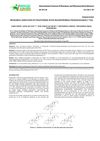
November 2017 in “International Journal of Pharmacy and Pharmaceutical Sciences” This study identified new oxidative derivatives of finasteride, including a newly discovered metabolite, by using the fungus Macrophomina phaseolina.
 21 citations
,
May 1989 in “Advanced Drug Delivery Reviews”
21 citations
,
May 1989 in “Advanced Drug Delivery Reviews” This review discusses the enhanced permeability and retention (EPR) effect as a mechanism for targeted drug delivery in cancer therapy and reports no new clinical results.
 9 citations
,
July 2021 in “Journal of Natural Medicines”
9 citations
,
July 2021 in “Journal of Natural Medicines” This review summarizes research finding over 150 new molecules with various biological activities from traditional herbal medicines studied in China, Mongolia, Uzbekistan, and Bangladesh.
 1 citations
,
May 2025 in “International Journal of Advanced Biochemistry Research”
1 citations
,
May 2025 in “International Journal of Advanced Biochemistry Research” This review discusses the phytochemical, pharmacological, and medicinal properties of Hibiscus rosa sinensis Linn. and reports no new clinical findings.
22 citations
,
December 2020 in “mSphere” This study identified a fungal sulfotransferase enzyme, FgSULT1, from *Fusarium graminearum*, expanding the sulfotransferase superfamily and offering new biocatalytic methods for producing bioactive sulfates.
 January 1989 in “Side effects of drugs annual”
 This chapter reviews studies on the side effects of cytostatics and immunosuppressive drugs, detailing various toxicities such as cardiovascular, pulmonary, and neurotoxicity, but provides no new clinical results.
 1 citations
,
January 2017 in “Organic chemistry”
1 citations
,
January 2017 in “Organic chemistry” This article reviews the traditional uses and documented properties of Tridax procumbens in medicine but reports no original research findings, emphasizing its potential therapeutic applications.
 1 citations
,
January 2016 in “Springer briefs in molecular science”
1 citations
,
January 2016 in “Springer briefs in molecular science” This chapter reviews the chemistry and potential benefits of plant-based hair dyes in cosmetics, but it reports no new clinical results.
 May 2019 in “International journal of advanced chemistry”
 In this study, researchers formulated a green depilatory cream from natural extracts like turmeric and aloe vera, finding it reduced hair growth by 25% in mice without causing skin irritation, suggesting it may be safer than conventional options.
 31 citations
,
September 2014 in “International Journal of Dermatology”
31 citations
,
September 2014 in “International Journal of Dermatology” This article reviews anthralin's pharmacology, mode of action, and its use for psoriasis and other dermatoses, but reports no new clinical results.
 16 citations
,
September 2018 in “Journal of Ethnopharmacology”
16 citations
,
September 2018 in “Journal of Ethnopharmacology” This review discusses the role of inheritance, androgens, and microinflammation in androgenetic alopecia and suggests some plant-based folk remedies may help address these factors but reports no new clinical results.
 August 2022 in “International journal of research in pharmacy and chemistry”
 This review summarizes the chemical composition and pharmacological properties of Teak (Tectona grandis) but presents no new research findings, emphasizing its use in traditional medicine and therapeutic potentials.
 170 citations
,
September 2019 in “Evidence-based Complementary and Alternative Medicine”
170 citations
,
September 2019 in “Evidence-based Complementary and Alternative Medicine” This review discusses the use of 36 medicinal plant species for cutaneous wound healing and reports no new clinical results; the authors highlight the potential for these traditional practices to inform modern therapies.
 60 citations
,
June 1997 in “Drugs & Aging”
60 citations
,
June 1997 in “Drugs & Aging” Mitoxantrone with a corticosteroid helps manage symptoms for some advanced prostate cancer patients but doesn't extend life.
 19 citations
,
May 2014 in “Molecules”
19 citations
,
May 2014 in “Molecules” This study found that the methanolic heartwood extract of Avicennia marina significantly inhibits 5α-reductase type 1, reducing 5α-DHT production by 52% in a cell-based assay with human hair dermal papilla cells.
 5 citations
,
March 2024 in “Acta Scientiarum Polonorum Technologia Alimentaria”
5 citations
,
March 2024 in “Acta Scientiarum Polonorum Technologia Alimentaria” This study synthesized existing research on 11 tropical seed varieties, underscoring their potential in food, pharmaceutical, and agricultural industries due to their phytochemicals and nutrients, such as phenolics and vitamins, which could reduce waste and support sustainable practices.
 December 2024 in “Asian Journal of Pharmaceutical and Clinical Research”
 This study reviews the performance and safety of synthetic medications like minoxidil and finasteride compared to herbal remedies such as saw palmetto for treating alopecia, highlighting the need for more research to better understand their therapeutic roles and optimize patient care.
 May 2022 in “Research Square (Research Square)”
 This review summarizes research on individual Chinese herbal extracts that may inhibit mechanisms of renal fibrosis, but it reports no new experimental findings.
 September 1983 in “Journal of The American Academy of Dermatology”
 Experts discussed hair care, genetic hair defects, hair loss treatments, nail surgery, lupus treatments, skin infections, and cosmetic allergies.
 11 citations
,
February 2021 in “Trends in Food Science and Technology”
11 citations
,
February 2021 in “Trends in Food Science and Technology” This review explores the potential of edible flowers, particularly the genus Impatiens, for their chemical, nutritional, and bioactive properties but does not report new clinical findings.
 1 citations
,
December 2021 in “Annals of phytomedicine”
1 citations
,
December 2021 in “Annals of phytomedicine” This study found that a herbal hair dye formulated with a 1:2 ratio of henna and indigo successfully colored unpigmented hair dark brown to black, with favorable attributes compared to synthetic dyes.
 5 citations
,
July 2022 in “International Journal of Health Sciences”
5 citations
,
July 2022 in “International Journal of Health Sciences” In this study, researchers formulated a hair tonic using various herbal extracts and reported effective antifungal and antibacterial properties, along with good consistency, spreadability, homogeneity, appearance, and pH balance.
 1 citations
,
December 2022 in “Middle East Journal of Science”
1 citations
,
December 2022 in “Middle East Journal of Science” This review covers hair dye formulations, their mechanisms, and potential applications, but reports no new findings; the authors highlight the process of oxidative dyeing and repairing damaged hair.