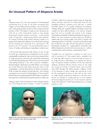
 January 2014 in “International Journal of Trichology”
 A man had an unusual type of hair loss that didn't match known patterns and didn't improve with treatment.
 March 2018 in “Surgical and Radiologic Anatomy”
 High-resolution imaging is crucial for diagnosing and planning treatments in clinical anatomy and aging.
January 2022 in “Consultant” June 2025 in “British Journal of Dermatology” This case series highlighted three pediatric patients with congenital nail anomalies, revealing underlying developmental or genetic issues such as symbrachydactyly and potential Adams–Oliver syndrome, underscoring the critical role of dermatologists in early detection and diagnosis of these conditions.
 1 citations
,
December 2017 in “Anais Brasileiros de Dermatologia”
1 citations
,
December 2017 in “Anais Brasileiros de Dermatologia” This article discusses the DOAJ, a comprehensive index of international open access journals, and emphasizes its role in providing free quality content online without presenting new research findings.
13 citations
,
February 2002 in “Archives of dermatology” This abstract contains no research findings; it describes website service information and options for accessing content from JAMA Dermatology.
January 2025 in “Medical Research Archives” This study found that alopecia areata often affects beard hair as frequently as scalp hair, leading the authors to propose a new scoring system and a subtype called alopecia subuniversalis for extensive hair involvement.
May 2016 in “DOAJ (DOAJ: Directory of Open Access Journals)” This study found that vertex accentuation is the second most common pattern of female pattern hair loss in Asian women, following the diffuse type.
2 citations
,
February 2023 in “International Journal of Cosmetic Science” In this study, evidence suggested that hair loss occurs more frequently in multi-hair follicular units on the scalp, particularly in men.
 January 2014 in “Pathology”
 Non-scarring hair loss can be diagnosed with two 4mm punch biopsies, one cut vertically and the other transversely.
 March 2022 in “Journal of The American Academy of Dermatology”
 This study characterized the incidence of hair loss patterns among men of different races, highlighting a lack of direct racial comparisons in previous research.
 3 citations
,
April 2012 in “Osteoporosis International”
3 citations
,
April 2012 in “Osteoporosis International” This study reports a case of a 62-year-old woman who experienced headache and hair loss after starting strontium ranelate for osteoporosis, with hair regrowth beginning two months after discontinuation of the drug.
16 citations
,
May 2022 in “New England Journal of Medicine” This Italian study observed that one third of patients with 25 to 50% scalp hair loss from alopecia areata still experienced active patchy disease at long-term follow-up, and another third progressed to more severe forms like alopecia totalis or universalis, with limited recovery.
November 2024 in “Journal of Investigative Dermatology” Changes in hair follicle structure may help diagnose and monitor alopecia.
 5 citations
,
July 2020 in “Curēus”
5 citations
,
July 2020 in “Curēus” This case study reports complete beard hair regrowth in a man with beard alopecia areata after six months of treatment with 0.1% triamcinolone acetonide cream.
 March 2024 in “Cancer Research”
 This meta-analysis found that men with vertex balding at age 40 or older may have a modestly increased risk of prostate cancer, with a pooled relative risk of 1.08, but no significant association was observed with frontal balding.
 18 citations
,
February 2014 in “PubMed”
18 citations
,
February 2014 in “PubMed” This article reviews current diagnostic and treatment approaches for androgenetic alopecia but reports no new results, focusing on its progression and medical management options.
3 citations
,
December 2010 in “Annals of tropical paediatrics” In this study, the authors reported that while conventional treatment improved rickets in a boy with vitamin D-dependent rickets type II, it also resulted in unexpected improvement in his alopecia.
 November 2022 in “Journal of the Endocrine Society”
 This report discusses the challenges of interpreting bone mineral density in transgender individuals undergoing hormone therapy and highlights the lack of guidelines for assessing fracture risk or BMD results in this population.
 10 citations
,
December 2010 in “British Journal of Dermatology”
10 citations
,
December 2010 in “British Journal of Dermatology” This study reports two distinct patterns of hair changes in postmenopausal women, linking diffuse generalized scalp hair loss to older age and frontal hair loss to higher facial hair scores and younger age.
 March 2012 in “Journal of The American Academy of Dermatology”
 This study found that white females with female pattern hair loss had higher hair density in the occipital scalp area, while Asian females had thicker hair diameters in both frontal and occipital areas.
 January 2021 in “Türkiye klinikleri dermatoloji dergisi”
 This study found that eyebrow involvement in frontal fibrosing alopecia was more common among postmenopausal females with comorbidities, without a significant link to age or disease duration.
 44 citations
,
September 2012 in “Archives of Dermatology”
44 citations
,
September 2012 in “Archives of Dermatology” This study observed that hair breakage may indicate early central centrifugal cicatricial alopecia in African American women, suggesting that it should be considered in their differential diagnosis.
26 citations
,
October 2002 in “Journal of Investigative Dermatology” This study identifies a mutation in the hairless gene that may impact thyroid receptor interaction, contributing to alopecia universalis congenita in an Arab Israeli patient.
 31 citations
,
April 2010 in “British journal of dermatology/British journal of dermatology, Supplement”
31 citations
,
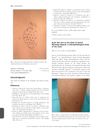
April 2010 in “British journal of dermatology/British journal of dermatology, Supplement” This report describes two patients with frontal fibrosing alopecia who developed acute hair loss on their limbs, revealing that the limb alopecia had similar histological features to scalp alopecia.
November 2023 in “Scientific Repository of Open Access of Portugal (RCAAP)” This study reports on a severe case of alopecia areata in a healthy eight-year-old boy, highlighting persistent hair loss over four years of treatment before full regrowth, and noting that alopecia areata might indicate the early onset of autoimmune disease symptoms.
 8 citations
,
March 2017 in “Experimental Dermatology”
8 citations
,
March 2017 in “Experimental Dermatology” In this exploratory study, researchers found slightly increased levels of inflammatory markers in scalp skin affected by androgenetic alopecia, suggesting differential gene expression involved in hair cycle and keratin production.
 August 2015 in “Dermatología Argentina”
 This study reviewed 18 postmenopausal women with frontal fibrosing alopecia, noting frontotemporal hairline recession and eyebrow loss, often treated with steroids, triamcinolone, and other medications.
20 citations
,
January 2012 in “Indian Journal of Endocrinology and Metabolism” This study found that 76.19% of patients with acquired hypoparathyroidism had mucocutaneous manifestations, with common features including loss of hair and xerotic skin.