January 2023 in “Figshare” This study reported that postmenopausal patients with advanced breast cancer prioritize quality of life, overall survival, and progression-free survival over therapy-related side effects when considering cancer treatment decisions.
 4 citations
,
September 2024 in “BMC Cancer”
4 citations
,
September 2024 in “BMC Cancer” In this prospective phase II clinical trial, researchers are investigating whether adding dutasteride to combined androgen blockade can improve the response rate and clinical outcomes for patients with androgen receptor-positive recurrent or metastatic salivary duct carcinoma.
 February 2024 in “Journal of the American Academy of Dermatology”
 Vascular patterns in dermoscopy help tell apart malignant and benign skin tumors.
 May 2023 in “Surgical Case Reports”
 This case report describes a rare instance of thymoma associated with alopecia areata in a 60-year-old woman who had no signs of myasthenia gravis, highlighting the need for thoracic surgeons to consider alopecia in such cases due to its impact on quality of life.
 January 2025 in “Annals of Thoracic and Cardiovascular Surgery”
 This case report describes a 55-year-old woman with alopecia areata whose condition improved rapidly and did not recur after the surgical resection of a thymoma, suggesting a potential immunological link between alopecia areata and thymoma that warrants further investigation.
32 citations
,
January 2000 in “International Journal of Cancer” In this study, the researchers observed significant down-regulation of Transglutaminase-3 expression in esophageal cancer tissues compared to normal tissues, suggesting its alteration is a common event in esophageal cancer development.
February 2026 in “BMJ Open” This study found that the most significant negative emotional responses among cancer patients during consultations were related to treatment delays and the possibility of hair loss.
 October 2023 in “Journal of the Endocrine Society”
 This case report details a 73-year-old woman with significant hirsutism and hair loss linked to a rare ovarian Leydig cell tumor, which was resolved by bilateral salpingo-oophorectomy, normalizing her testosterone levels and addressing her symptoms.
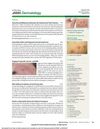 September 2016 in “JAMA Dermatology”
 In a randomized clinical trial, Robinson et al found that patients with melanoma and their partners could effectively perform skin self-examinations after participating in a 30-minute structured skills training, potentially aiding early detection of additional melanomas.
2 citations
,
November 1999 in “Journal of Cutaneous Medicine and Surgery” 38 citations
,
October 2005 in “Expert opinion on therapeutic patents” This review discusses nonsteroidal selective androgen receptor modulators and their potential therapeutic applications but reports no new clinical findings.
2 citations
,
September 2025 in “Frontiers in Endocrinology” This review critically evaluates the evidence for SARMs' tissue selectivity and suggests their clinical benefits over traditional androgens are not yet well-supported by robust evidence, underscoring the need for further head-to-head trials.
 July 1976 in “Archives of Dermatology”
 This letter argues that the lymphangitis reported from using cantharidin on warts is instead a case of aseptic necrosis common to other aggressive wart treatments.
1 citations
,
September 2025 in “The Oncologist” This review discusses the management of adverse events associated with sacituzumab govitecan use in real-world settings and provides no new clinical results; it emphasizes practical strategies for clinicians treating breast cancer patients.
November 2023 in “Skin Appendage Disorders” This case report describes a rare instance of pityriasis amiantacea and cutis verticis gyrata occurring in a 32-year-old man with B-cell acute lymphoblastic leukemia, highlighting this previously unreported dermatological manifestation and stressing the importance of clinical awareness.
1 citations
,
August 2015 in “AACE Clinical Case Reports” This case report identifies a novel AR gene mutation in an adolescent with primary amenorrhea, suggesting that CAIS should be considered when evaluating patients with a female phenotype and breast development.
1 citations
,
August 2009 in “ACTUALIDAD MEDICA” In this study, early-onset androgenetic alopecia patients showed a higher prevalence of metabolic syndrome and carotid atheromatosis compared to a control group, suggesting the need for cardiovascular risk screening in this population.
2 citations
,
May 2023 in “Journal of Immunotherapy” In this case study, a 65-year-old male with hepatocellular carcinoma treated with the PD-1 inhibitor Sintilimab developed alopecia universalis alongside significant tumor regression and complete remission, highlighting a rare immune-related adverse event with effective anti-tumor outcomes.
 234 citations
,
September 2004 in “Clinical cancer research”
234 citations
,
September 2004 in “Clinical cancer research” In this Phase II study, BAY 43–9006, taken orally for renal cell carcinoma, stabilized disease in 30% of patients, with 40% responding positively, although the targets remain unclear.
2 citations
,
December 2016 in “PubMed” This paper reviews adrenocortical carcinoma, discussing its prevalence, symptoms, diagnosis, and treatment options, but reports no new clinical results.
 July 1976 in “Archives of Dermatology”
 This correspondence reports that using cantharidin on warts can result in lymphangitis, and dermatologists should consider all potential complications of treatments.
10 citations
,
July 2021 in “International Journal of Women’s Dermatology” In this review, the authors detailed various dermatologic adverse events associated with aromatase inhibitors in postmenopausal women and discussed strategies to potentially prevent these events, aiming to minimize interruptions in breast cancer treatment.
2 citations
,
September 2022 in “Annals of Oncology” This study observed that MIRV improved gastrointestinal symptoms and other quality of life measures in patients with platinum-resistant ovarian cancer compared to chemotherapy.
August 2022 in “F1000Research” This case report describes digital gangrene as a rare primary manifestation of late-onset systemic lupus erythematosus in a 56-year-old man, with marked lesion improvement following rituximab treatment.
3 citations
,
December 2023 in “Aging” In liver cancer cells, this study found that upregulating hsa_circ_0002980 inhibits cell proliferation, metastasis, and EMT by modulating the miR-1303/CADM2 axis, suggesting it as a potential therapeutic target.
147 citations
,
October 2021 in “Cancer Communications” This study found that the novel anti-HER2 antibody RC48 demonstrated promising activity and manageable safety in patients with HER2-overexpressing, advanced gastric or gastroesophageal junction cancer after at least two prior chemotherapy lines.
January 2018 in “대한피부과학회지” This case report details a 54-year-old woman with metastatic non-small-cell lung cancer who experienced severe hair loss and exanthematous drug eruption, potentially linked to erlotinib hypersensitivity.
 July 2004 in “Hair transplant forum international”
 This report describes an extremely rare case of arteriovenous fistula appearing after hair restoration surgery, observed in just one instance.
This study found that GNAQQ209L expression in mouse melanocytes led to reduced survival in the interfollicular epidermis due to paracrine signaling, while GNAQQ209L boosted survival in a different microenvironment.
 May 2015 in “Journal of The American Academy of Dermatology”
 A woman with Parry-Romberg syndrome developed new curly hair on one side of her scalp, a condition not previously linked to the syndrome.