 February 2022 in “International journal of research in dermatology”
 This case series describes seven distinct hair shaft disorders, highlighting the importance of accurate diagnosis since these conditions are often treated incorrectly as alopecias without improvement.
This review discusses how dermoscopy enhances diagnostic accuracy in hair and scalp disorders, particularly distinguishing between conditions such as cicatricial and non-scarring alopecia, and offers insights into its practical uses in hair transplantation; it reports no new clinical results.
 January 2016 in “Journal of The Korean Medical Association”
 This paper discusses alopecia areata, its autoimmune nature, factors influencing susceptibility, diagnostic challenges, and treatment limitations, concluding that no current therapy is curative or preventive; it reports no new clinical results.
 January 2012 in “Else Kröner-Fresenius Symposia”
 This symposium reported that DNA damage accumulation in aging stem cells affects genome integrity, highlighting novel mechanisms like Bmi1's role in DNA repair and the involvement of BATF in lymphoid differentiation.
August 2009 in “Belarusian State Pedagogical University repository (Belarusian State Pedagogical University)” This article reviews the multifactorial etiology and treatment options for alopecia in children, including potential genetic and autoimmune contributions, but provides no new clinical findings.
 February 1990 in “Journal of The American Academy of Dermatology”
 This review summarizes therapeutic advances reported in English-language literature from December 1987 to December 1988 and states no new clinical results.
 128 citations
,
August 2015 in “Cell Stem Cell”
128 citations
,
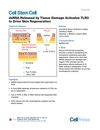
August 2015 in “Cell Stem Cell” The researchers reported that dsRNA from damaged skin activates TLR3, promoting hair follicle regeneration, while TLR3-deficient animals fail to initiate this process, suggesting potential therapeutic approaches for hair neogenesis.
 56 citations
,
January 2008 in “Dermatology”
56 citations
,
January 2008 in “Dermatology” This article discusses the controversy over serum ferritin levels in diagnosing iron deficiency in women with hair loss but reports no new findings, emphasizing the need for consistent reference ranges.
 27 citations
,
April 2017 in “Journal of Investigative Dermatology”
27 citations
,
April 2017 in “Journal of Investigative Dermatology” The researchers reported that noncoding double-stranded RNA promotes wound-induced hair neogenesis in mice by modulating prostaglandin and Wnt levels.
 16 citations
,
January 2016 in “Journal of Investigative Dermatology”
16 citations
,
January 2016 in “Journal of Investigative Dermatology” This study found that IL-6 knockout mice exhibited increased wound-induced hair neogenesis compared to wild-type mice, likely due to enhanced STAT3 activation facilitated by compensatory cytokine activity.
15 citations
,
November 2009 in “Journal of Comparative Pathology” Epidermolysis bullosa in calves was not caused by mutations in the keratin genes bKRT5 and bKRT14.
11 citations
,
May 2006 in “Journal of the European Academy of Dermatology and Venereology” Combining paroxetine and triamcinolone effectively treats both alopecia areata and depression.
 9 citations
,
July 1995 in “Veterinary Clinics of North America: Small Animal Practice”
9 citations
,
July 1995 in “Veterinary Clinics of North America: Small Animal Practice” This review discusses causes of hair loss in cats, highlighting self-inflicted trauma due to flea allergy dermatitis, and presents no new clinical findings.
 7 citations
,
January 2018 in “International Journal of Dermatology”
7 citations
,
January 2018 in “International Journal of Dermatology” Syphilis can cause hair loss without other symptoms and should be considered when diagnosing unexplained hair loss.
 6 citations
,
May 2022 in “Journal of Infection”
6 citations
,
May 2022 in “Journal of Infection” Long-COVID symptoms can last more than a year and change over time.
2 citations
,
May 2025 in “Frontiers in Epidemiology” In this study, researchers emphasized the need for standardized definitions and improved methodologies in assessing LC prevalence, suggesting that future research explore prospective cohorts to refine estimates and examine long-term health outcomes.
 1 citations
,
December 2010 in “The journal of small animal practice/Journal of small animal practice”
1 citations
,
December 2010 in “The journal of small animal practice/Journal of small animal practice” This article discusses hair loss disorders in domestic animals, but it contains no abstract or new research findings.
March 2026 in “Journal of Investigative Dermatology” November 2025 in “Journal of Investigative Dermatology” Certain CD8+ T cells attack hair follicles in alopecia areata, suggesting they could be targeted for treatment.
 February 2024 in “BMJ Open”
 This study at Luigi Sacco University Hospital identified three key macro symptoms of long COVID—neurological, sensorial, and physical—and found that their development is associated with comorbidities, medications during acute COVID-19, and demographic factors like age and gender.
 November 2023 in “The journal of investigative dermatology/Journal of investigative dermatology”
 In this study, researchers used a mouse model of alopecia areata to demonstrate that both ruxolitinib and baricitinib, oral JAK inhibitors, reduced hair loss, CD8+ cell infiltration, and expression of disease-related markers, with baricitinib showing greater effectiveness.
April 2017 in “The journal of investigative dermatology/Journal of investigative dermatology” This study found that TLR3-mediated damage sensing can stimulate prostaglandin and Wnt pathways, potentially coordinating hair follicle regeneration in mice with large skin wounds.
January 2007 in “Bristol Research (University of Bristol)” This study diagnosed epidermolysis bullosa in eight calves across four UK farms, characterized by skin lesions and excluding mutations in keratin genes as the cause.
 54 citations
,
November 2017 in “Scientific Reports”
54 citations
,
November 2017 in “Scientific Reports” In this study, researchers observed that hyperandrogenic PCOS patients exhibited distinct miRNA and TGFβ signaling gene expression patterns in granulosa cells, suggesting these factors may play a role in PCOS pathogenesis.
 52 citations
,
November 2013 in “European Journal of Pharmaceutical Sciences”
52 citations
,
November 2013 in “European Journal of Pharmaceutical Sciences” This study examined different polymersome systems for topical finasteride delivery and found that chitosan-decorated C7 polymersomes may enhance skin retention and provide controlled drug release compared to non-decorated systems in laboratory settings.
 49 citations
,
October 1994 in “Annals of Oncology”
49 citations
,
October 1994 in “Annals of Oncology” Minoxidil not effective in preventing chemotherapy-induced hair loss.
 24 citations
,
March 2017 in “Archives of Gynecology and Obstetrics”
24 citations
,
March 2017 in “Archives of Gynecology and Obstetrics” The study found that women with hyperandrogenic PCOS have higher levels of AKT1 and AKT2 proteins in their cells, which may lead to cell dysfunction.
19 citations
,
July 2024 in “Journal of Cellular and Molecular Medicine” In this study, women with PCOS who took 12 mg of Astaxanthin daily for 8 weeks showed a reduction in certain inflammatory markers and apoptosis-related genes, suggesting potential benefits for managing PCOS, though effects on symptoms like BMI and hirsutism were not significant.
 April 2024 in “JCT research” October 2025 in “International Journal of Advanced Pharmaceutical Sciences and Research”
 This review found that intermittent fasting might benefit skin health by enhancing skin regeneration, delaying aging, and improving inflammatory skin conditions; however, most evidence is based on preclinical data, indicating a need for more human trials to confirm these findings.